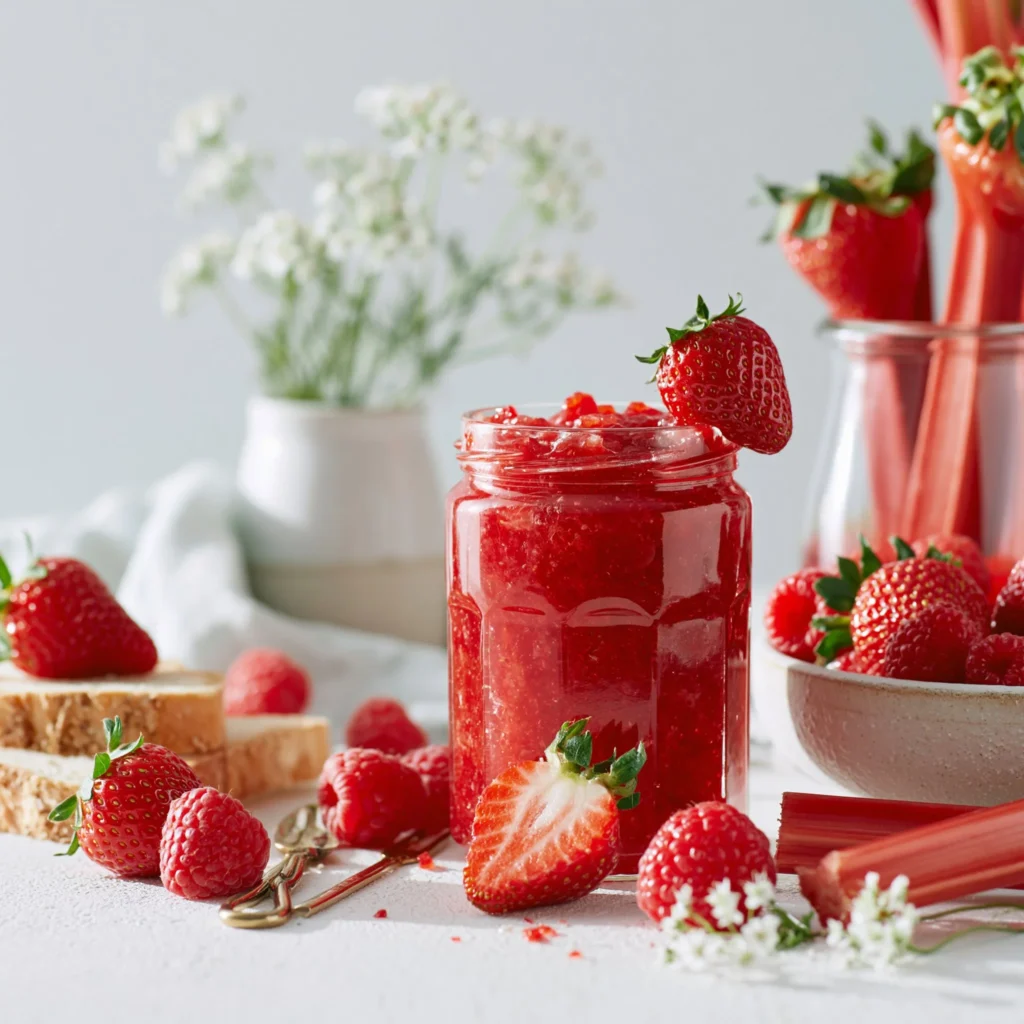
The quickest way I know to bottle “late spring” is to cook strawberries and rhubarb down into a jam that’s bright, tangy, and unapologetically pink. This version is straightforward: you macerate the fruit with sugar, add lemon and pectin, then boil until it turns glossy and thick enough to cling to a spoon.
I love that it tastes balanced instead of candy-sweet—the rhubarb keeps the strawberries honest. Make a batch, and suddenly everything from toast to yogurt feels like dessert. If you’re already in a strawberry mood, this jam is also a dreamy side project for days you’re baking chocolate strawberry cookies.
Why You’ll Love This Recipe
- Real strawberry flavor with a tart edge from an even split of strawberries and rhubarb (2 cups each).
- Quick set without guesswork thanks to a full packet (1.75 oz) fruit pectin—no hours-long simmering.
- Glossy, spreadable texture that thickens in 10–15 minutes once it hits a rolling boil.
- Aroma payoff: the pot smells like strawberries first, then turns more citrusy-bright once the lemon juice goes in.
- Giftable and make-ahead friendly—it cools right in sterilized jars and keeps well in the fridge.
The Story Behind This Recipe
I make this when I’ve got ripe strawberries that are sweet but not super fragrant on their own—rhubarb does the heavy lifting for flavor contrast, and the lemon juice sharpens everything so the jam tastes fresh instead of flat.
What It Tastes Like
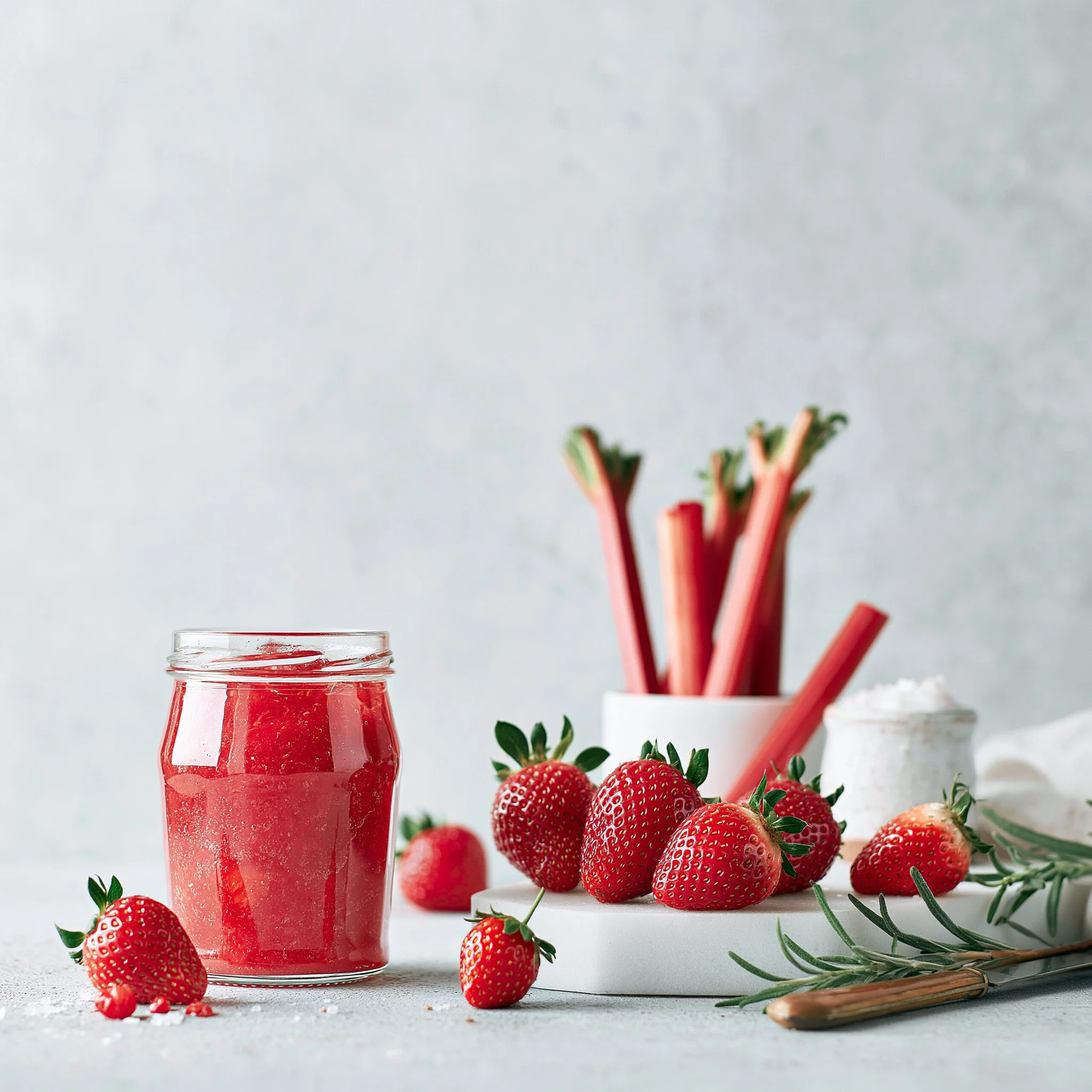
This jam lands in the sweet-tart sweet spot: pleasantly sweet from the cup of sugar, but with a distinct rhubarb tang and a little lemon brightness. The texture is thick and glossy with soft fruit pieces—spoonable when warm, then more firmly spreadable once chilled.
Ingredients You’ll Need
Because this jam relies on just a handful of ingredients, each one matters. The strawberries bring jammy sweetness, the rhubarb adds that signature tart zip, and the lemon juice helps the flavor pop. The fruit pectin is what gives you a reliable set quickly—especially helpful since strawberries and rhubarb can vary a lot in natural pectin.
- 2 cups strawberries, hulled and chopped
- 2 cups rhubarb, chopped
- 1 cup sugar
- 1 tablespoon lemon juice
- 1 packet (1.75 oz) fruit pectin
How to Make Strawberry Rhubarb Jam
Macerate the fruit. In a large pot, combine the chopped strawberries, chopped rhubarb, and sugar. Stir well, then let it sit for 20 minutes.
What you’re looking for: the sugar will start pulling out juices, and you’ll see liquid pooling at the bottom—this helps the fruit cook evenly without scorching.Add the lemon and pectin. Stir in the lemon juice and the packet of fruit pectin until you don’t see any dry pockets.
Quick note: take a minute here—pectin likes to clump if it isn’t mixed in thoroughly.Bring to a boil. Set the pot over medium-high heat and bring the mixture to a boil, stirring constantly.
What it should look like: active bubbling across the surface, not just a few lazy bubbles at the edges.Boil to thicken (10–15 minutes). Once it’s boiling, keep it cooking for 10–15 minutes, stirring the whole time to prevent sticking.
Doneness cues: the jam will look glossier, the bubbles will seem a little slower and thicker, and it should coat the back of a spoon instead of running off like juice.Jar it up. Remove the pot from the heat and ladle the hot jam into sterilized jars.
Tip while filling: work carefully—hot jam clings and stays hot longer than you think.Seal and cool. Seal the jars and let them cool to room temperature, then refrigerate. The jam will continue to thicken as it cools.
Tips for Best Results
- Chop the rhubarb fairly evenly. When pieces are similar in size, they soften at the same rate and you don’t end up with stringy chunks mixed with mush.
- Stir constantly once it heats up. With sugar and pectin in the pot, the mixture can catch on the bottom quickly—steady stirring prevents a scorched taste.
- Don’t rush the maceration. That 20-minute rest creates enough juice to get a smooth simmer-to-boil transition without dry fruit sticking.
- Watch the boil, not the clock. Start counting the 10–15 minutes after you see a true boil across the surface; thickening happens fast once it’s there.
- Expect it to set more after cooling. If it looks a touch loose while hot, that’s normal—chilling is where you’ll see the final spreadable texture.
Variations and Substitutions
- Chunky vs. smoother jam: Keep the fruit pieces as-is for a more rustic, spoonable texture, or chop the strawberries and rhubarb a bit smaller at the start for a more uniform spread.
- Sweeter or tarter balance: You can nudge the flavor by choosing riper strawberries for more sweetness or slightly greener rhubarb for more tang; the base method stays the same.
How to Serve It
- Spoon it over plain yogurt—the tangy rhubarb plays especially nicely with creamy dairy.
- Swirl it into oatmeal while it’s hot so the jam melts into glossy ribbons.
- Spread it thick on toast, then use the extra to tuck into pastries like oven-baked strawberry danish pastry.
- Use it as a fruity layer alongside richer bakes—try it with a slice of strawberry Italian cream pound cake or as a bright contrast on the side of brown butter strawberry peach pie.
- If you’re filling something like carnival buns with strawberry cheesecake filling, a thin swipe of jam adds punch without making the bun soggy.
How to Store It
Once the sealed jars have cooled, refrigerate the jam. Keep it in the fridge and use clean utensils when scooping to help it stay fresh. You can make it a few days ahead—the flavor actually tastes a bit more blended and “jammy” after a night in the refrigerator.
Final Thoughts
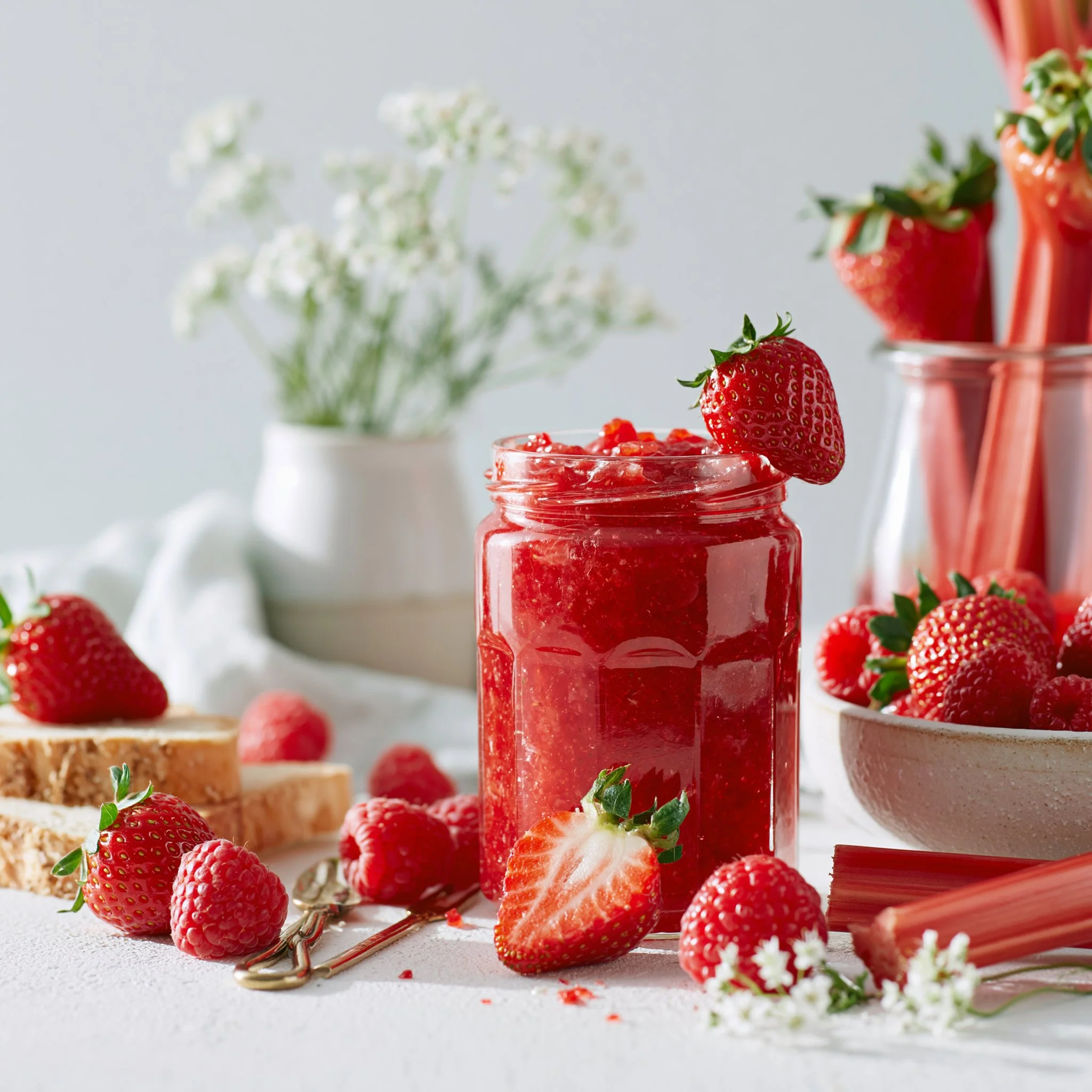
If you’ve never made jam before, this is a friendly place to start: a short ingredient list, a quick boil, and that unmistakable strawberry-rhubarb tang that makes even a plain piece of toast feel special.
Conclusion
If you want to compare methods and get extra perspective, I’ve found it helpful to read a few solid references like Strawberry Rhubarb Jam – Self Proclaimed Foodie, Strawberry Rhubarb Jam (for canning!) – Heartbeet Kitchen, and Strawberry-Rhubarb Jam Recipe – Allrecipes—they’re great for understanding how small tweaks in boil and set can change the final texture.