The Memory Behind This Treat
The first time I baked a Pink Champagne Cake, it wasn’t for a wedding or a fancy party. It was for my mom’s “just because” birthday dinner, the kind where the guest list was basically family, one slightly wobbly card table, and a vase of grocery store flowers doing their best. I remember whisking the egg whites and sneaking tiny sips of the pink champagne, trying to decide if I should make the color just barely blush or go full-on ballerina pink. When the layers came out of the oven—soft, fluffy, and the faintest shade of rose—I knew this wasn’t just another vanilla cake with a party hat. It felt like a celebration baked right into the crumb.
As I brushed the cooled layers with a bit of extra bubbly and whipped up that silky champagne buttercream, I realized what makes a Pink Champagne Cake so special: it tastes like a toast in dessert form. It isn’t overly boozy or loud; instead, it’s quietly festive, with a delicate flavor and a texture that feels almost like a hug on a plate. I used to save cakes like this for big moments—bridal showers, milestone birthdays, engagement parties—but the older I get, the more I believe you deserve a slice of something fancy on an ordinary Tuesday, too. This is the same spirit behind my favorite celebration bakes, from a towering black forest cake to a nostalgic strawberry poke cake that stains every plate the happiest shade of pink.
Now, whenever I make this Pink Champagne Cake, I think about the little things that turn a simple dessert into a memory: the sound of the champagne fizzing as it hits the measuring cup, the swirl of pink frosting on the offset spatula, the collective “ooooh” when you slice into those tender layers. It’s the kind of cake that makes people lean in closer, ask for the story, and then for the recipe. And that’s really why I keep coming back to it—because every time I bake it, there’s another moment, another table, another celebration (planned or not) that it turns into something a little more magical.
How To Make It (Mix & Ingredients)
To build this Pink Champagne Cake, start by getting your ingredients in the right shape and temperature. Bring the butter, egg whites, sour cream, and champagne to room temp; cold ingredients are the #1 reason batters curdle or bake up dense. In one bowl, sift together the cake flour, baking powder, baking soda, and salt so everything blends evenly and you don’t end up with little pockets of leavening. In a separate, larger bowl, beat the softened butter and sugar until they’re very light and fluffy—think pale, almost whipped, about 3–4 minutes. This step traps air and gives you those soft, bakery-style layers. While mixing, don’t rush it; if the butter still looks grainy or stiff, keep going.
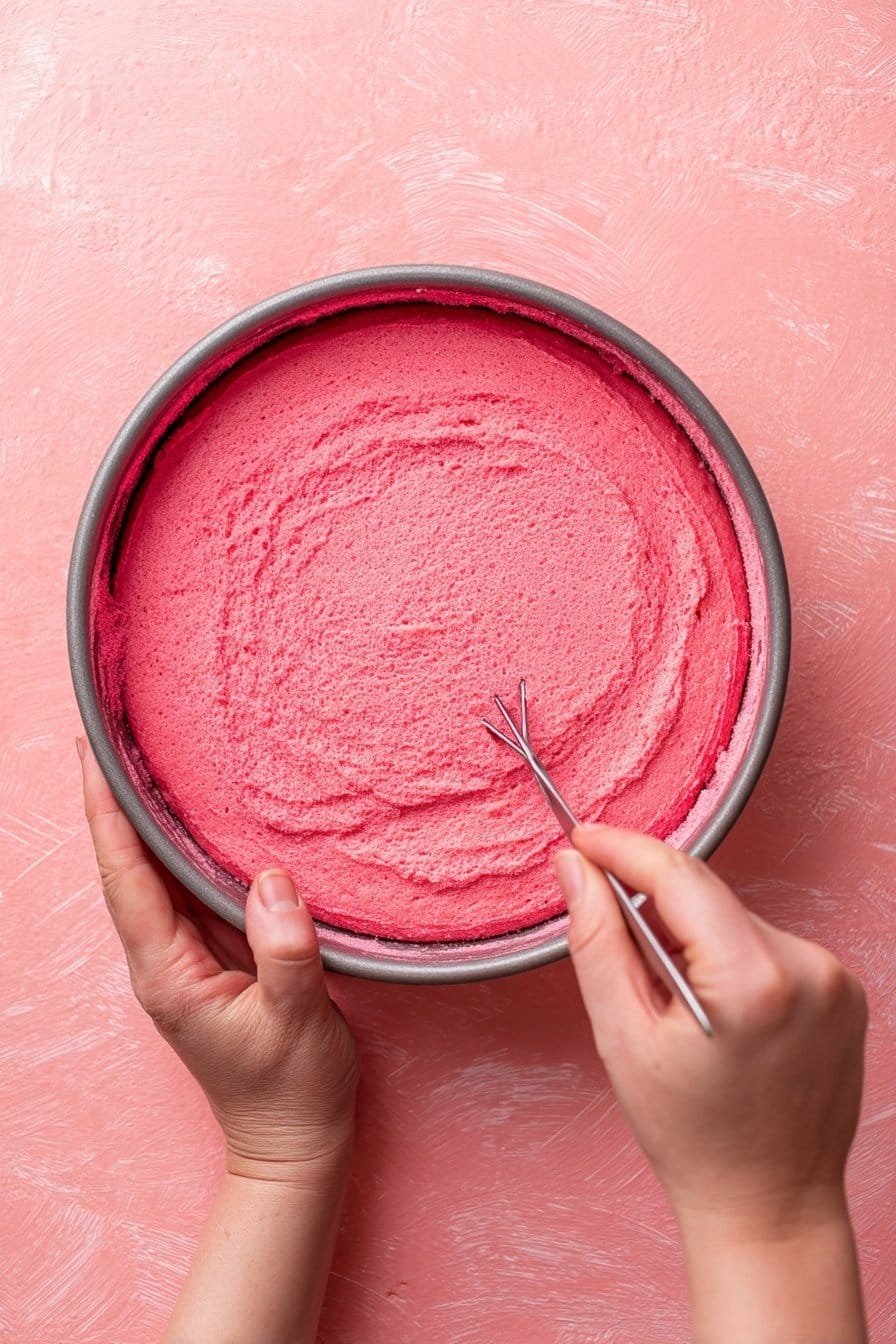
Instructions Process of Pink Champagne Cake
Next, add the egg whites one at a time, letting each one fully mix in before adding the next so your batter stays smooth. Stir in the vanilla bean paste and almond extract (if using); that tiny bit of almond quietly boosts the champagne flavor. Now you’ll alternate the dry ingredients with a mixture of champagne and sour cream: add ⅓ of the dry mix, then half of the champagne-sour cream, and repeat, ending with the dry. Mix on low and stop as soon as everything looks combined—overmixing makes a tough cake. If you’d like a deeper rosy color, fold in a small drop of pink gel food coloring at the end; a little goes a long way. Your batter should look thick but silky, ready to divide evenly into the prepared pans for baking into those pretty, celebratory layers.
Make-Ahead & Storage
A Pink Champagne Cake is exactly the kind of dessert you want to plan ahead, so you can relax and enjoy the celebration instead of frosting in a panic. You can bake the cake layers up to 2 days in advance: let them cool completely, then wrap each layer tightly in plastic wrap and store at room temperature. For longer storage, freeze the wrapped layers (plus a layer of foil or a freezer bag) for up to 2 months; thaw them in the fridge overnight, then bring to room temp before assembling. The champagne buttercream can be made 3–4 days ahead and chilled in an airtight container—when you’re ready to use it, let it soften on the counter and re-whip for a couple of minutes until fluffy and smooth. If you love planning party menus, this Pink Champagne Cake pairs beautifully with other celebration desserts like a classic vanilla birthday cake or a rich chocolate layer cake.
Once your Pink Champagne Cake is fully assembled and frosted, you can leave it at cool room temperature for up to 6 hours if your kitchen isn’t hot or humid. After that, cover it loosely (a cake dome works best so you don’t ruin your piping) and refrigerate for up to 3 days. For the best texture and champagne flavor, let chilled slices sit at room temperature for 30–45 minutes before serving so the buttercream softens and the cake doesn’t taste “fridge-cold.” Leftover slices can be wrapped individually and stored in the fridge, or frozen (well-wrapped) for up to 1 month—perfect for those late-night “chef’s treat” moments. Just keep in mind: the color and texture will stay beautiful, but the champagne flavor is most vibrant in the first couple of days, so try to serve your Pink Champagne Cake close to the big event.
Best Ingredients & Party Variations
When you’re making a Pink Champagne Cake, the ingredients you choose matter more than you’d think. Use a good-quality pink champagne or sparkling rosé that you’d happily drink; if it tastes flat in the glass, it will taste flat in the cake. Cake flour keeps the crumb ultra-soft and tender, while room-temperature egg whites whip into the batter smoothly for that delicate, bubbly texture. I also love adding a tiny splash of almond extract along with vanilla bean paste—it doesn’t make the cake taste like almond cake, but it deepens the flavor and makes the champagne notes feel fancier. For color, stick to a pink gel food coloring so you can control the shade without watering down your batter or buttercream.
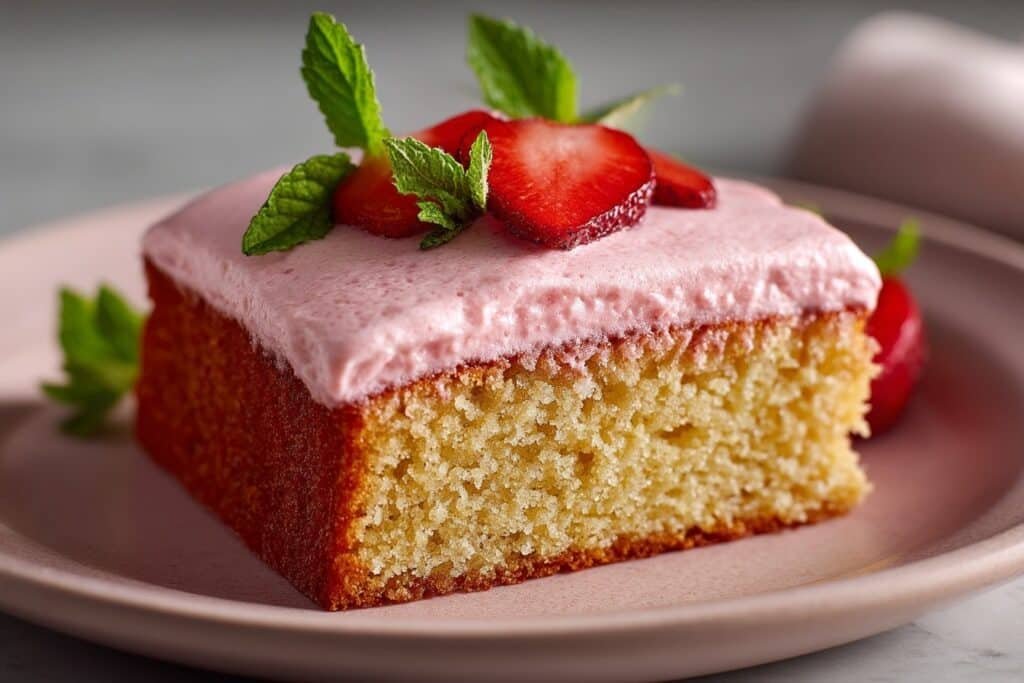
This Pink Champagne Cake dresses up beautifully for just about any party. For a bridal shower or engagement party, keep it simple with pale pink frosting, a few fresh berries, and a dusting of edible glitter. Turning it into a champagne birthday cake is as easy as adding colorful sprinkles between the layers and topping it with tall, dramatic candles. For baby showers, you can tint half the frosting a slightly deeper pink and pipe rosettes for a soft, feminine look, and for New Year’s Eve, garnish with white chocolate curls and gold sugar for extra sparkle. You can even bake the batter as cupcakes for a dessert table, pair them with something like a rich chocolate cake or strawberry shortcake, and let your guests pick their own celebration slice.
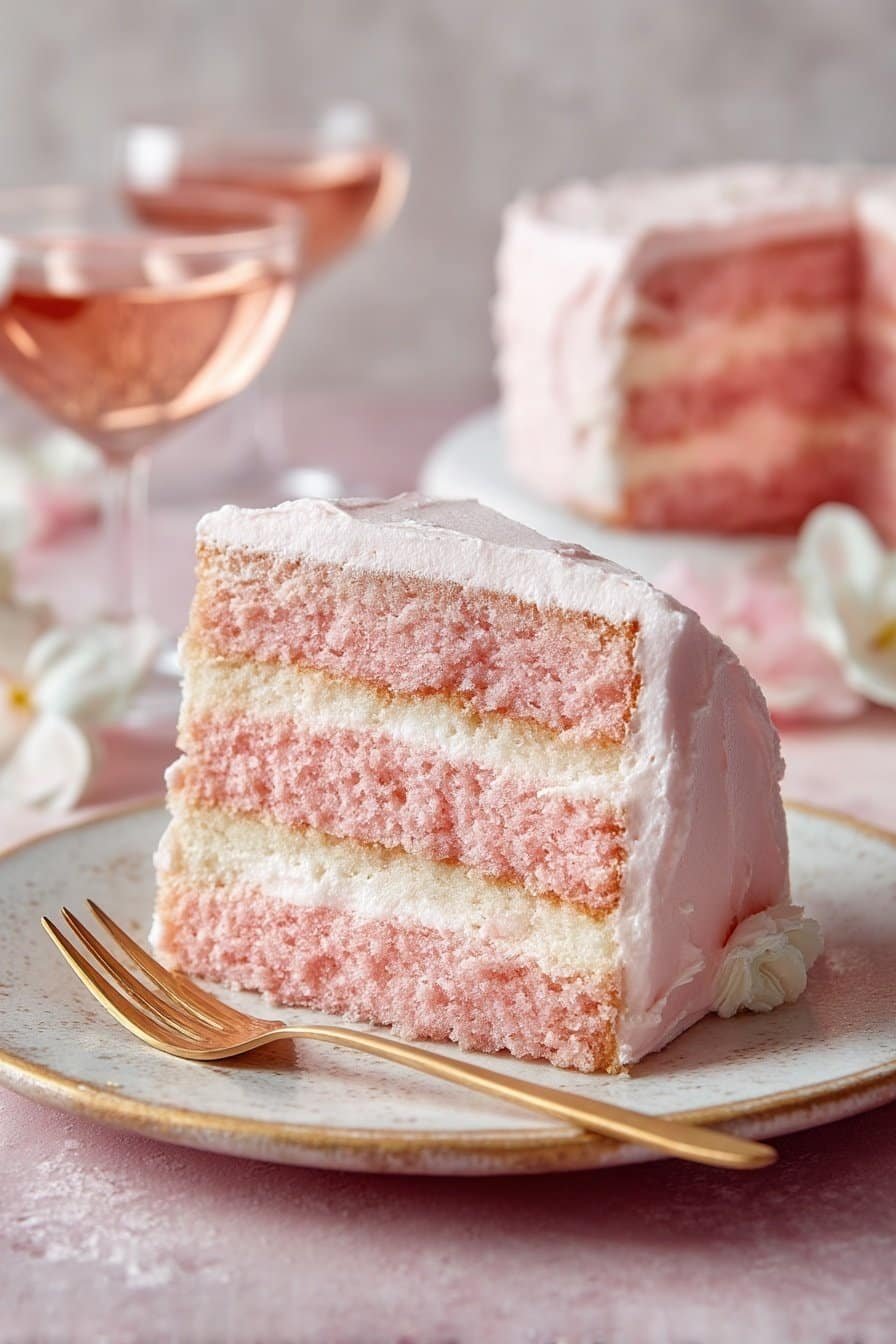
Serving of Pink Champagne Cake
Conclusion
Every time I pull this cake from the oven, I’m reminded that little moments can feel like big celebrations. There’s something magical about those tender pink crumbs, the soft swirl of frosting, and the way everyone leans just a bit closer when you bring it to the table. Whether you’re toasting an engagement, a birthday, or just a Tuesday that needed some sparkle, this Pink Champagne Cake has a way of turning “just dessert” into a memory.
I hope you feel excited—and totally capable—to make this yourself. You don’t need a special occasion, just a desire to share something beautiful and a bit nostalgic with the people you love. Try the recipe, take your time, savor the process, and then watch how fast the slices disappear. That first bite, followed by the quiet “wow” around the room, is worth every dish in the sink.
For more delicious recipes like this, follow us on social media!
What is Pink Champagne Cake and what does it taste like?
Pink Champagne Cake is a light, tender layer cake made with pink champagne or sparkling rosé in both the batter and the buttercream. The champagne doesn’t make the cake boozy; instead, it adds a soft, slightly fruity, almost floral note. Think of it as a vanilla‑almond celebration cake with a whisper of bubbles and a pretty blush color. It’s elegant without being fussy and feels right at home at birthdays, bridal showers, and New Year’s Eve parties.
What kind of champagne is best for Pink Champagne Cake?
Use a pink champagne or sparkling rosé that you actually enjoy drinking, because its flavor will gently carry through the cake and frosting. A dry or off‑dry bottle usually works best so the cake doesn’t become overly sweet. You don’t need anything fancy or expensive—save the vintage bottle for sipping and choose a solid mid-range option. Avoid very sweet or very cheap bubbly, which can taste artificial once baked.
How can I get a pretty pink color in my Pink Champagne Cake?
Champagne alone will give you only the faintest blush, so food coloring helps if you want that classic Pink Champagne Cake look. Use pink gel food coloring and add it a tiny bit at a time to both the batter and the frosting, mixing well between additions. Gel color is stronger than liquid, so you can achieve a vibrant hue without thinning the batter. Aim for slightly lighter than your “perfect” pink in the bowl; it deepens a touch as it bakes and sets.
Recipe
Pink Champagne Cake
Ingredients
Ingredients
- 2 3/4 cups cake flour sifted
- 1 tbsp baking powder
- 1/2 tsp baking soda
- 1/2 tsp salt
- 3/4 cup unsalted butter softened
- 1 3/4 cups granulated sugar
- 4 large egg whites room temperature
- 1 tsp vanilla bean paste
- 1/2 tsp almond extract
- 1 cup pink champagne or sparkling rosé room temperature
- 1/2 cup sour cream room temperature
- 1/8 tsp pink gel food coloring
- 1 1/2 cups unsalted butter softened
- 5 cups powdered sugar sifted
- 6 tbsp pink champagne or sparkling rosé
- 1 tsp vanilla bean paste
- 1/8 tsp salt
- 1/8 tsp pink gel food coloring
Instructions
- Preheat the oven to 350°F and grease and line three 8-inch round cake pans with parchment paper.
- In a medium bowl, whisk together the cake flour, baking powder, baking soda, and salt.
- In a large mixing bowl, beat 3/4 cup softened butter and the granulated sugar on medium speed for 3 to 4 minutes until light and fluffy.
- Add the egg whites one at a time, mixing well after each addition.
- Mix in 1 tsp vanilla bean paste and 1/2 tsp almond extract until combined.
- In a separate bowl, whisk together 1 cup pink champagne and the sour cream until smooth, then stir in 1/8 tsp pink gel food coloring.
- Add one-third of the dry ingredients to the butter mixture and mix on low just to combine.
- Add half of the champagne-sour cream mixture and mix on low until incorporated.
- Repeat with another third of the dry ingredients, then the remaining champagne mixture, ending with the last third of the dry ingredients, mixing just until the batter is smooth.
- Divide the batter evenly among the three prepared pans and smooth the tops.
- Bake for 22 to 26 minutes, or until a toothpick inserted in the center comes out clean.
- Cool the cakes in the pans for 10 minutes, then turn out onto wire racks to cool completely.
- For the buttercream, beat 1 1/2 cups softened butter in a large bowl on medium speed until smooth and creamy.
- Gradually add the powdered sugar, about 1 cup at a time, mixing on low speed after each addition until combined.
- Add 6 tbsp pink champagne, 1 tsp vanilla bean paste, and 1/8 tsp salt, then increase the speed to medium-high and beat for 2 to 3 minutes until light and fluffy.
- Beat in 1/8 tsp pink gel food coloring until the frosting is evenly pink.
- Once the cake layers are completely cool, level the tops if needed.
- Place one layer on a serving plate and spread a generous layer of buttercream over the top.
- Add the second layer, spread more buttercream, then top with the third layer.
- Frost the top and sides of the cake with the remaining buttercream, smoothing or swirling as desired.
- Chill the assembled cake for 20 minutes before slicing for cleaner slices.
Notes
- You can bake the cake layers up to 2 days ahead and wrap them well once cooled.
- The buttercream can be made 3 to 4 days in advance and re-whipped before using.
- Pink gel food coloring gives the best color without thinning the batter or frosting.
- This cake is best served at room temperature for the softest texture.