Why You Will Love Lemon Poppy Seed Cheesecake Cookies
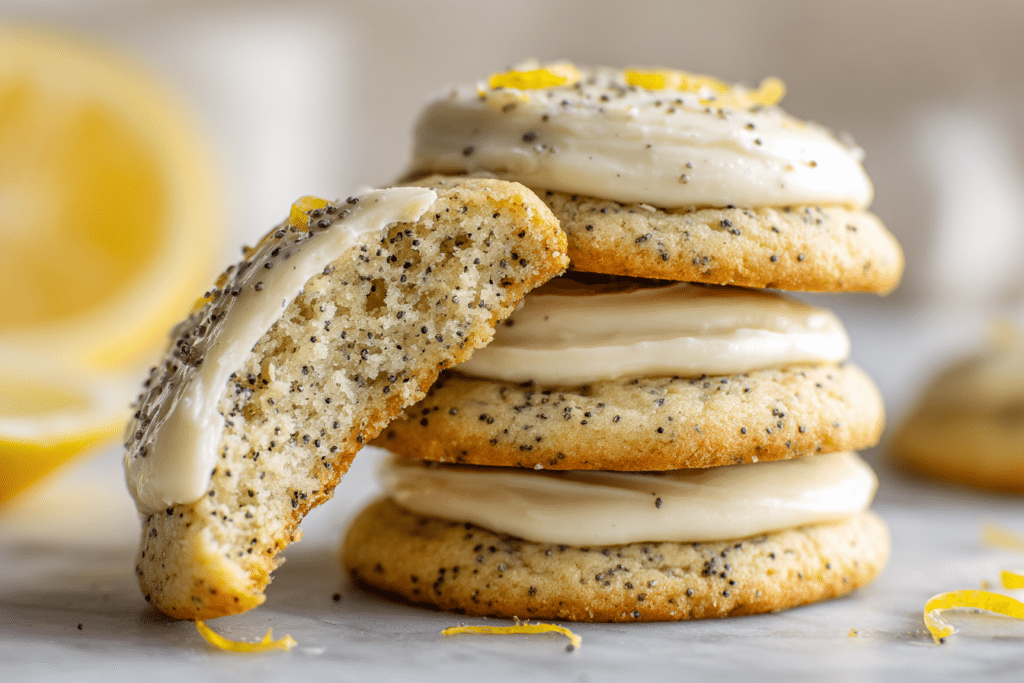
Lemon Poppy Seed Cheesecake Cookies bring together three things that belong together anyway: bright citrus, nutty crunch, and creamy cheesecake richness. The cookies bake up with crisp edges and a soft, almost velvety center that tastes like cheesecake tucked inside a lemon sugar cookie. The poppy seeds add tiny pops of texture and a gentle nuttiness that keeps each bite interesting, not just sweet. Fresh lemon zest and juice keep the flavor clean and sharp, so the cookies never feel heavy despite the cream cheese.
This recipe works well for bakers who like clear steps and predictable results. The dough chills nicely, the cookies spread in a controlled way, and you can bake them soft and pale or a little more golden. You can serve them plain, with a dusting of powdered sugar, or with a thin lemon glaze if you want more tang. They hold up well on a dessert tray, but they also feel special enough to wrap as gifts or bring to a brunch table.
Ingredients and Flavor Notes
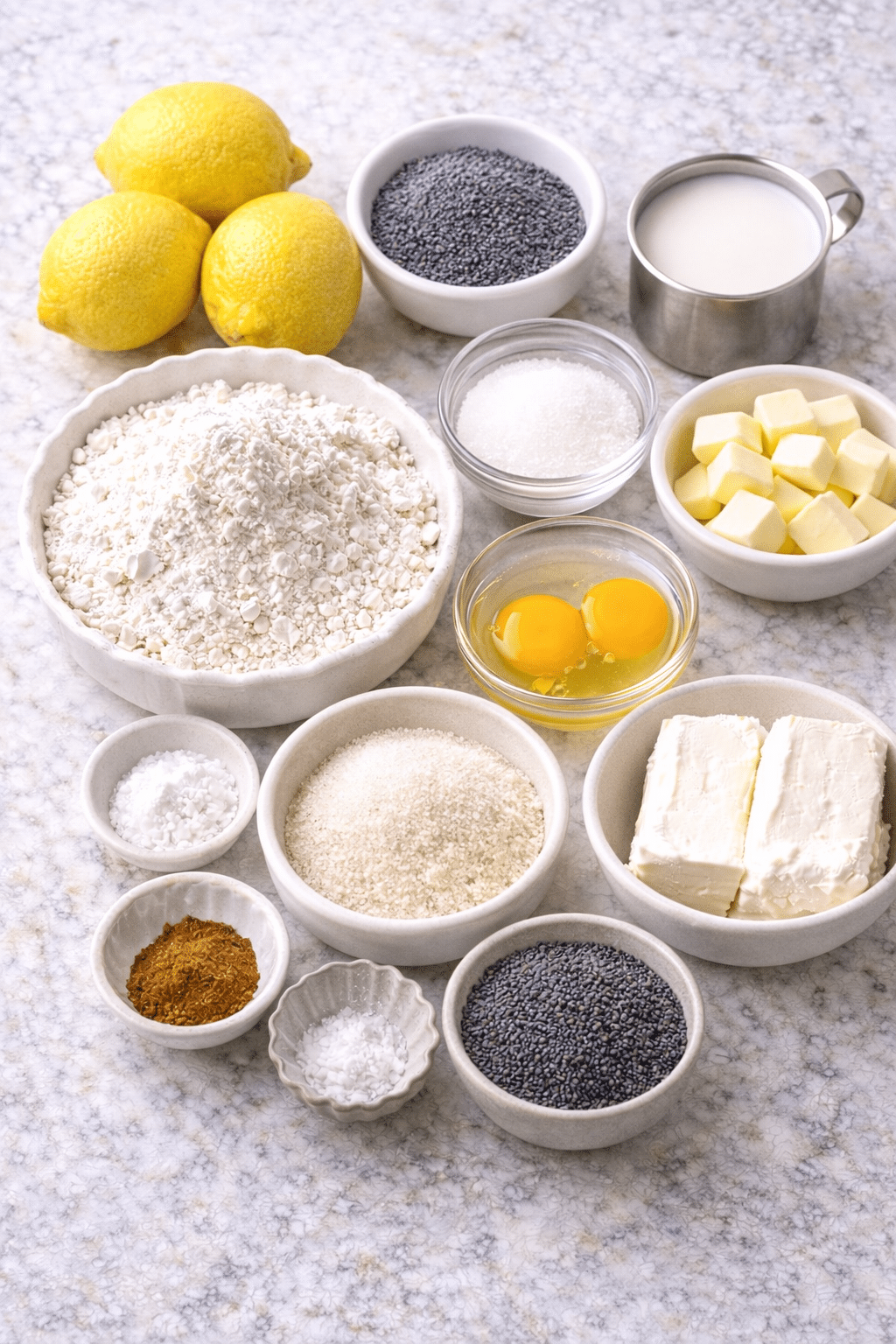
Lemon Poppy Seed Cheesecake Cookies start with a simple butter and sugar base. Use unsalted butter, softened to cool room temperature, so it presses easily but does not look shiny or greasy. Cream cheese brings the cheesecake flavor and a tender, almost fudgy crumb, so pick full fat block cream cheese, not the spreadable tub. Granulated sugar keeps the cookie edges crisp, while a little brown sugar, if you choose to add it, deepens the flavor and helps with chew.
Fresh lemon zest does most of the heavy lifting for lemon flavor. Rub the zest into the sugar with your fingertips before you add it to the butter, so the oils release and perfume the dough. A tablespoon or two of fresh lemon juice adds tang and a bit of moisture, but you do not want enough to make the dough sticky or cause spreading problems. Poppy seeds add a gentle crunch and a slight nuttiness, and they also make the cookies look like the lemon loaf at a good bakery.
For structure, you need all purpose flour, baking powder, and a pinch of baking soda. The baking powder gives the cookies a soft lift, while the baking soda helps browning and a slight chew. A generous pinch of fine salt keeps the sweetness in check and makes the lemon taste brighter. Vanilla extract rounds out the cheesecake profile, and you can add a tiny drop of almond extract if you like, but keep it subtle so it does not overpower the lemon.
If you want a stronger cheesecake effect, you can swirl in a spoonful of sour cream or Greek yogurt with the cream cheese. That extra tang plays well with lemon and keeps the center plush. For a richer cookie, use an extra egg yolk, which adds tenderness and color without extra spreading. If you need a small swap, you can use lime zest instead of lemon, or a mix of both, but keep the total zest amount the same so the dough texture stays consistent.
How to Make Lemon Poppy Seed Cheesecake Cookies with Fresh Lemon Zest
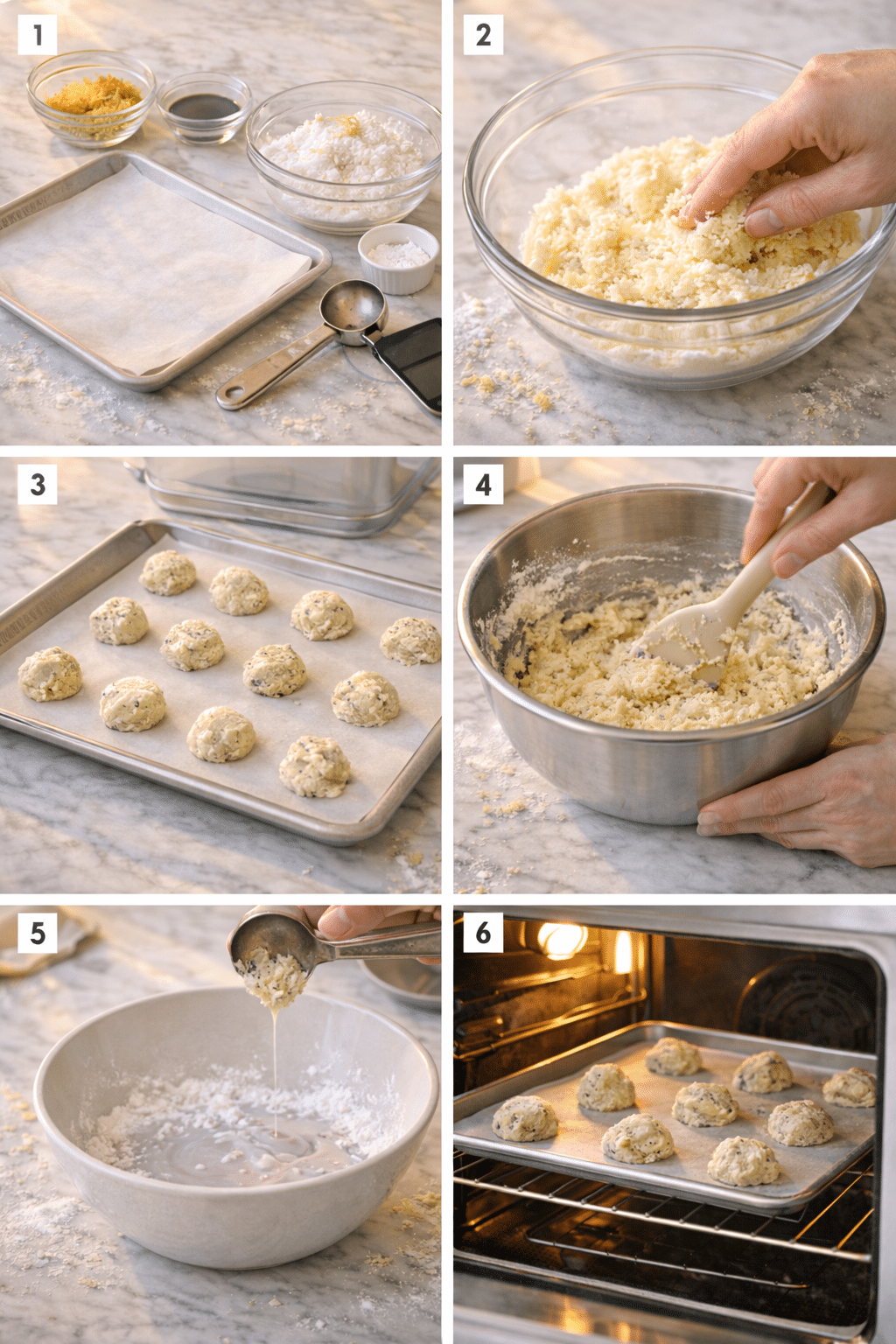
Start by bringing your butter and cream cheese to cool room temperature. You want them soft enough to beat smoothly, but not so warm that they slump. In a small bowl, combine your sugar and fresh lemon zest, then rub them together with your fingertips until the sugar feels slightly damp and smells strongly of lemon. This step wakes up the zest oils and gives your Lemon Poppy Seed Cheesecake Cookies a more vivid citrus flavor.
In a large bowl, beat the butter and cream cheese together until smooth and slightly fluffy, about 2 to 3 minutes with a hand mixer on medium speed. Add the lemon sugar and beat again until the mixture looks pale and creamy, scraping the bowl as needed. Beat in the egg, egg yolk if using, vanilla, and lemon juice, mixing just until combined. The mixture should look silky and thick, not curdled, which tells you the fats and liquids have emulsified properly.
In a separate bowl, whisk together flour, baking powder, baking soda, salt, and poppy seeds. Add the dry ingredients to the wet mixture in 2 additions, mixing on low speed or by hand with a spatula until no dry streaks remain. The dough will feel soft and slightly sticky, but it should hold its shape in a scoop. If it seems very loose, cover and chill it for about 15 minutes before shaping.
Chill the dough, covered, for at least 1 hour and up to 24 hours. Chilling lets the flour hydrate and the fats firm up, which keeps the cookies thick and prevents excessive spreading. When you are ready to bake, preheat your oven to 175 °C and line baking sheets with parchment. Scoop the chilled dough into balls about 4 centimeters across, then roll lightly between your palms to smooth the surface.
Space the dough balls about 5 centimeters apart on the trays. For a more bakery style look, you can roll the tops in a little extra sugar mixed with poppy seeds before baking. Bake one tray at a time for 10 to 13 minutes, until the edges look set and just turning light golden, while the centers still look slightly soft and puffed. The cookies will firm up as they cool, so resist the urge to bake until fully golden, or you will lose that cheesecake like center.
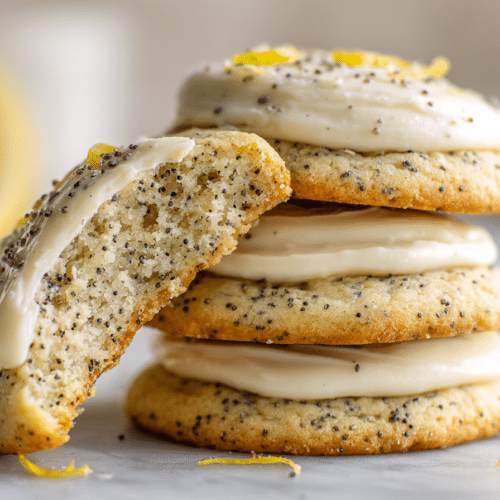
Let the cookies cool on the baking sheet for 5 minutes, then transfer them to a rack to cool completely. If you want a lemon glaze, whisk powdered sugar with a bit of lemon juice until it flows in a thin ribbon, then drizzle over cooled cookies. For a lighter touch, dust with powdered sugar and a pinch of extra lemon zest right before serving. Once cooled and set, the texture should be crisp at the edges, soft in the middle, and dotted with tiny poppy seed crunch.
Make Ahead, Storage, and Serving Tips
You can make the dough for Lemon Poppy Seed Cheesecake Cookies a day ahead and keep it chilled, tightly covered, in the refrigerator. If the dough firms up too much, let it sit at room temperature for 10 to 15 minutes so you can scoop it without cracking. For longer storage, scoop the dough into balls, freeze them on a tray until solid, then transfer to a bag and freeze for up to 2 months. Bake from frozen, adding 1 to 2 minutes to the baking time, and watch for the same lightly golden edges.
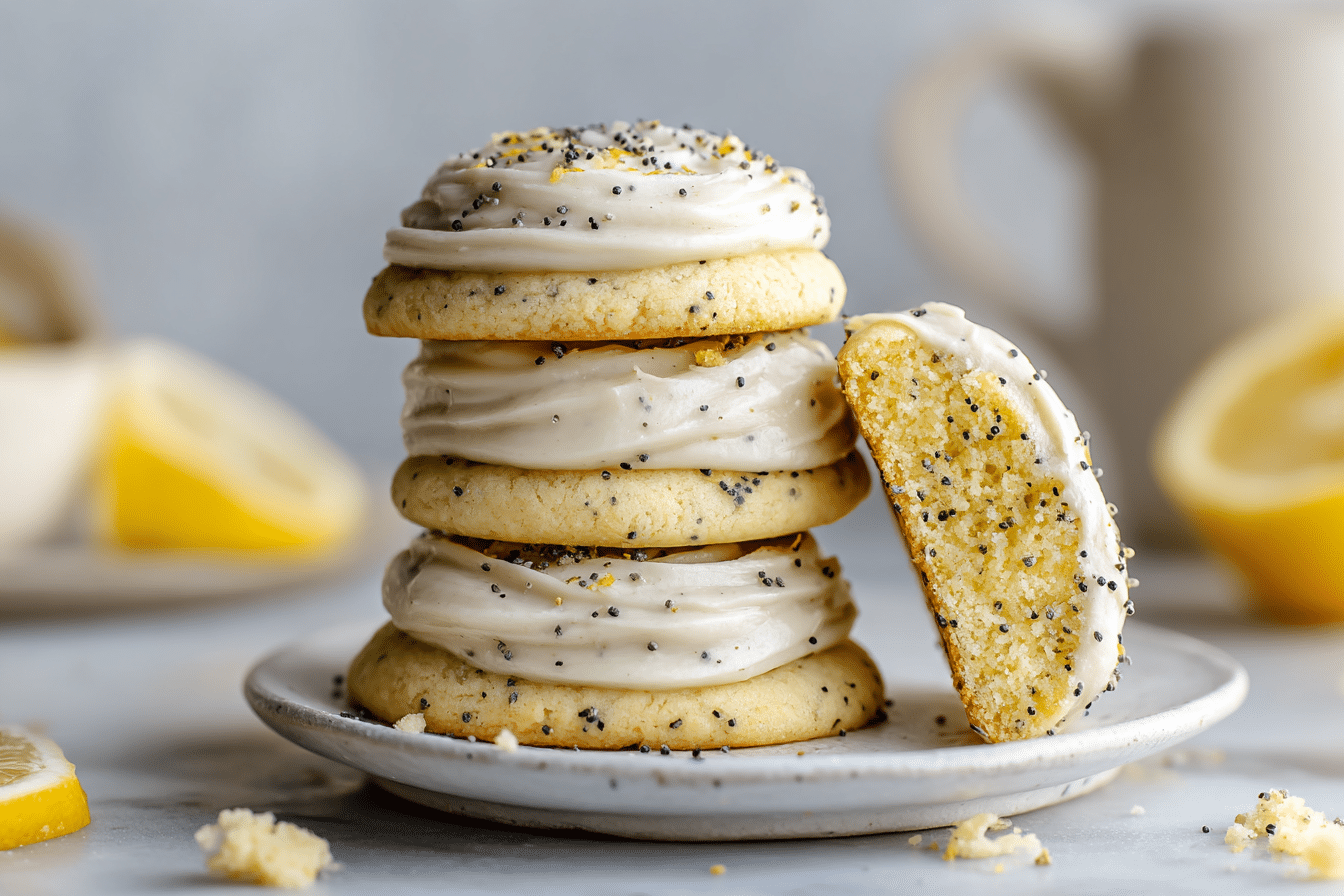
Store baked cookies in an airtight container at cool room temperature for up to 3 days. Slip a small piece of parchment between layers if you glazed them, to prevent sticking. For a slightly firmer, more cheesecake like center, you can refrigerate the cookies after they cool, then bring them back toward room temperature before serving. If they dry out a little on day 3, a brief 10 second burst in the microwave softens the center again.
You can adjust the flavor to match the rest of your dessert spread. For a stronger lemon punch, add a bit more zest, or finish with a thin lemon icing that sets to a soft shell. For a more subtle cookie, skip the glaze and just dust with powdered sugar. These cookies pair nicely with black tea, simple brewed coffee, or a glass of cold milk, and they work well on a brunch table beside fruit salad and savory egg dishes.
If you want some variation, try pressing a small thumbprint into the center of each dough ball and filling it with a teaspoon of lemon curd halfway through baking. You can also add white chocolate chips for extra sweetness and a different texture, though this will make the cookies richer. To keep the cheesecake character, avoid overbaking and keep the centers slightly underdone. Let the cookies cool fully before stacking or packing, so the centers set and the edges stay pleasantly crisp.
FAQ
-
How do I keep the cookies from spreading too much?
Use butter and cream cheese that are softened but still cool to the touch, not warm and glossy. Chill the dough for at least 1 hour, and longer if your kitchen runs warm. Make sure you measure the flour correctly, by fluffing it and leveling the cup, or the dough can be too loose. Line your baking sheets with parchment, not greased pans, since extra fat on the tray encourages spreading. -
Can I use bottled lemon juice instead of fresh?
You can use bottled juice in a pinch, but fresh lemon zest is non negotiable for real lemon flavor. Bottled juice tastes flatter and more sour without the bright aroma that zest gives to Lemon Poppy Seed Cheesecake Cookies. If you must use bottled, keep the amount small and rely more on zest for flavor. Whenever possible, buy a fresh lemon, zest it, and then squeeze it for the juice you need. -
How do I know when the cookies are done?
Watch the edges rather than the centers. The cookies are ready when the edges look set and just start to turn light golden, while the centers still look slightly puffed and soft. If you gently nudge the edge with a spatula, it should feel set, not wet. Remember that they continue to cook on the hot tray, so pull them a little earlier than you think for a soft, cheesecake like center. -
Can I make these cookies gluten free?
Yes, you can use a cup for cup gluten free flour blend that includes xanthan gum. The texture will be slightly more delicate, but the cream cheese helps keep the centers moist. Chill the dough well, and handle it gently when scooping, since gluten free dough can be more fragile. Bake a small test cookie first to check spread and texture, then adjust by chilling longer or adding a spoonful more flour if needed.
Conclusion
Lemon Poppy Seed Cheesecake Cookies bring bakery style character into a home kitchen, with simple ingredients and a clear, forgiving method. The combination of fresh lemon zest, poppy seeds, and cream cheese gives you a cookie that tastes bright, rich, and interesting from the first bite to the last crumb. With a little attention to dough temperature, chilling, and bake time, you can count on soft centers, crisp edges, and a clean lemon finish.
The recipe also leaves room for your own style, from a plain sugar dusting to a sharp lemon glaze or even a touch of lemon curd. You can prepare the dough ahead, bake from frozen, and serve the cookies over several days without losing their charm. Once you understand how this dough behaves in your oven, you can keep Lemon Poppy Seed Cheesecake Cookies in your regular baking rotation and know exactly how they will turn out every time.
Recipe
Lemon Poppy Seed Cheesecake Cookies with Fresh Lemon Zest
Ingredients
- 1/2 cup 4 oz full-fat cream cheese, softened (block style)
- 3/4 cup 1 1/2 sticks, 6 oz unsalted butter, softened
- 1 cup granulated sugar
- 1/4 cup light brown sugar packed
- 2 tablespoons finely grated fresh lemon zest from about 2 large lemons
- 2 tablespoons fresh lemon juice
- 1 large egg
- 1 large egg yolk
- 2 teaspoons pure vanilla extract
- 2 1/4 cups all-purpose flour
- 1 teaspoon baking powder
- 1/4 teaspoon baking soda
- 3/4 teaspoon fine sea salt
- 2 tablespoons poppy seeds
- Optional for rolling: 1/4 cup granulated sugar mixed with 1 teaspoon poppy seeds
Instructions
- In a small bowl, combine the granulated sugar and lemon zest. Rub the zest into the sugar with your fingertips until the sugar feels slightly damp and very fragrant.
- In a large mixing bowl, beat the softened cream cheese and butter with a hand mixer on medium speed until smooth and slightly fluffy, about 2 to 3 minutes.
- Add the lemon sugar and brown sugar to the bowl. Beat on medium speed until the mixture looks pale and creamy, scraping down the sides of the bowl as needed.
- Add the egg, egg yolk, vanilla extract, and lemon juice. Beat on low to medium speed just until combined and the mixture looks smooth and silky.
- In a separate bowl, whisk together the flour, baking powder, baking soda, salt, and poppy seeds until evenly combined.
- Add the dry ingredients to the wet ingredients in two additions, mixing on low speed or with a spatula just until no dry streaks of flour remain. The dough will be soft and slightly sticky but should hold its shape.
- Cover the bowl and chill the dough in the refrigerator for at least 1 hour and up to 24 hours to firm up and develop flavor.
- When ready to bake, preheat the oven to 350°F (175°C). Line two baking sheets with parchment paper.
- Scoop the chilled dough into balls about 1 1/2 inches (4 cm) across, using about 2 tablespoons of dough per cookie. Roll each portion lightly between your palms to smooth the surface.
- If desired, roll the tops of the dough balls in the optional sugar-poppy seed mixture for a bakery-style finish, then place them on the prepared baking sheets, spacing about 2 inches (5 cm) apart.
- Bake one sheet at a time for 10 to 13 minutes, until the edges look set and just turning light golden while the centers still look slightly soft and puffed.
- Remove the cookies from the oven and let them cool on the baking sheet for 5 minutes, then transfer to a wire rack to cool completely. The centers will set as they cool, staying soft and cheesecake-like.
Notes
If the dough seems very loose before chilling, you can chill it for 15 minutes, check the consistency, then continue chilling as needed until it scoops and holds its shape.
For extra tang, you can replace 2 tablespoons of the cream cheese with sour cream or Greek yogurt.
Bake closer to 10 minutes for softer, paler cookies and closer to 13 minutes for slightly more golden, firmer edges.
The cookies keep well in an airtight container at cool room temperature for 3 days or refrigerated for up to 5 days.