
The Memory Behind This Treat
The very first time I made Easter Egg Oreo Balls, my kitchen looked like a pastel tornado had passed through. I had bowls of melted candy in soft pink, baby blue, and lemon yellow lined up like paint pots, and my niece was in charge of “quality control,” which mostly meant eating the decorations. We were supposed to be making something elegant and Pinterest-worthy for our family Easter dessert table, but about 5 minutes in, we were laughing too hard, drizzling crooked stripes, and sticking on sprinkles with more enthusiasm than precision. What I loved most was how doable it all felt—even for little hands. No hot oven, no fussy dough, just Oreo crumbs, cream cheese, and melted candy waiting to become tiny, edible Easter eggs.
Growing up, Easter desserts usually meant a big, showy cake that someone stressed over for days. These Easter Egg Oreo Balls came into my life much later, when I was working as a food stylist and needed a quick, cute treat that would photograph well and survive a long day under studio lights. I remember shaping the first batch on a late-night shoot, hands coated in cookie crumbs, thinking, “This is the kind of thing families could make together without fuss.” Now, they’ve become a tradition in my own home—right alongside our go-to [no-bake cheesecake] and springtime sugar cookies. Every year we change up the candy melt colors and sprinkle patterns, but that same playful, slightly messy, joy-filled energy shows up in the kitchen, and honestly, that’s my favorite part of the recipe.
How To Make It (Mix & Ingredients)
To start your Easter Egg Oreo Balls, grab a full 14.3 oz package of Oreo cookies (that’s 36 standard cookies) and an 8 oz block of cream cheese. You’ll want the cream cheese softened to room temperature so it blends smoothly; cold cream cheese gives you stubborn little lumps. Crush the Oreos into fine, sandy crumbs using a food processor, or seal them in a zip-top bag and go to town with a rolling pin. Pour the crumbs into a medium bowl, add the cream cheese, and mix with a spatula or clean hands until you have a thick, play-dough-like mixture with no streaks of white left. It should feel soft but not soupy—if it’s too sticky, pop the bowl in the fridge for 10–15 minutes to firm up before shaping.

Instructions Process of Easter Egg Oreo Balls
Once the Oreo mixture is ready, pinch off small portions (about 1 tablespoon each) and roll them into balls, then gently taper one end to form an egg shape. Aim for around 24 eggs so they’ll be bite-sized and easy to dip. Line a baking sheet with parchment paper and place each shaped egg on the tray, then freeze for 20–30 minutes; this chill time keeps your Easter Egg Oreo Balls from falling apart when you dip them. While they chill, melt about 16 oz of pastel candy melts in separate bowls according to the package directions, thinning with a teaspoon of vegetable oil if they seem too thick. One at a time, dip the chilled Oreo eggs with a fork, let the excess coating drip back into the bowl, then return them to the parchment and quickly add sprinkles, edible glitter, or a pretty drizzle before the coating sets. If you’ve ever decorated sugar cookies like my soft Easter sugar cookies or dressed up brownies, that same playful energy is perfect here—no two eggs need to look alike.
Make-Ahead & Storage
Easter Egg Oreo Balls were made for make-ahead entertaining, which is why I love them for busy holiday weekends. You can assemble and shape the Oreo mixture up to 2 days in advance, then keep the un-dipped eggs covered in the fridge. When you’re ready to serve, just dip them in your melted pastel candy and decorate. This is especially helpful if you’re juggling other Easter desserts like a layered carrot cake or a pan of lemon bars and want one treat completely under control ahead of time. If you prefer to break it into even smaller chunks, you can prepare the Oreo mixture one evening, shape the eggs the next, and dip them the morning of serving.
Once your Easter Egg Oreo Balls are dipped and fully set, store them in an airtight container in the refrigerator for up to 5 days. I like to layer them in a shallow container with parchment between layers so the decorations don’t smudge or chip. For a firmer bite and neater look, serve them chilled; for a softer, creamier center, let them sit at room temperature for about 10–15 minutes before setting them out for guests. These also freeze surprisingly well: place the finished eggs on a baking sheet to freeze solid, then transfer them to a freezer bag or container for up to 2 months. When you’re ready to enjoy, thaw them in the fridge overnight—don’t thaw at room temp, or you risk condensation making the candy coating sticky and dull.
Best Ingredients & Party Variations
When you’re making Easter Egg Oreo Balls, start with full-fat cream cheese and classic chocolate Oreos for that rich, nostalgic flavor and perfect truffle texture. I like to soften the cream cheese to room temperature so it blends silky-smooth with the crumbs—no lumps, no streaks. For the coating, choose good-quality pastel candy melts (or white chocolate tinted with gel food coloring) so the shells set with a shiny, even finish. If your candy melts seem too thick, stir in 1–2 teaspoons of coconut oil or vegetable shortening to loosen them up. And don’t be shy with the decorations: pastel nonpareils, mini confetti sprinkles, and a little edible glitter turn these into total Easter basket showstoppers, right next to your carrot cake bars or lemon cheesecake bites.
For party variations, think theme-first. For a kids’ Easter egg hunt, make mini Easter Egg Oreo Balls—roll them smaller, about 1 teaspoon of mixture each, so little hands can grab a few without committing to a giant treat. For a more grown-up brunch table, drizzle them with melted dark chocolate, add a tiny pinch of flaky sea salt, or use golden sprinkles for a chic look. You can even flavor the filling: a splash of peppermint extract for a spring-mint vibe, or orange extract for a creamsicle twist. Hosting a larger Easter dessert spread? Make a “decorate-your-own” station with plain coated eggs, bowls of sprinkles, colored drizzle, and let everyone dress their own truffles alongside other finger sweets like no-bake cookie balls or mini cheesecakes.
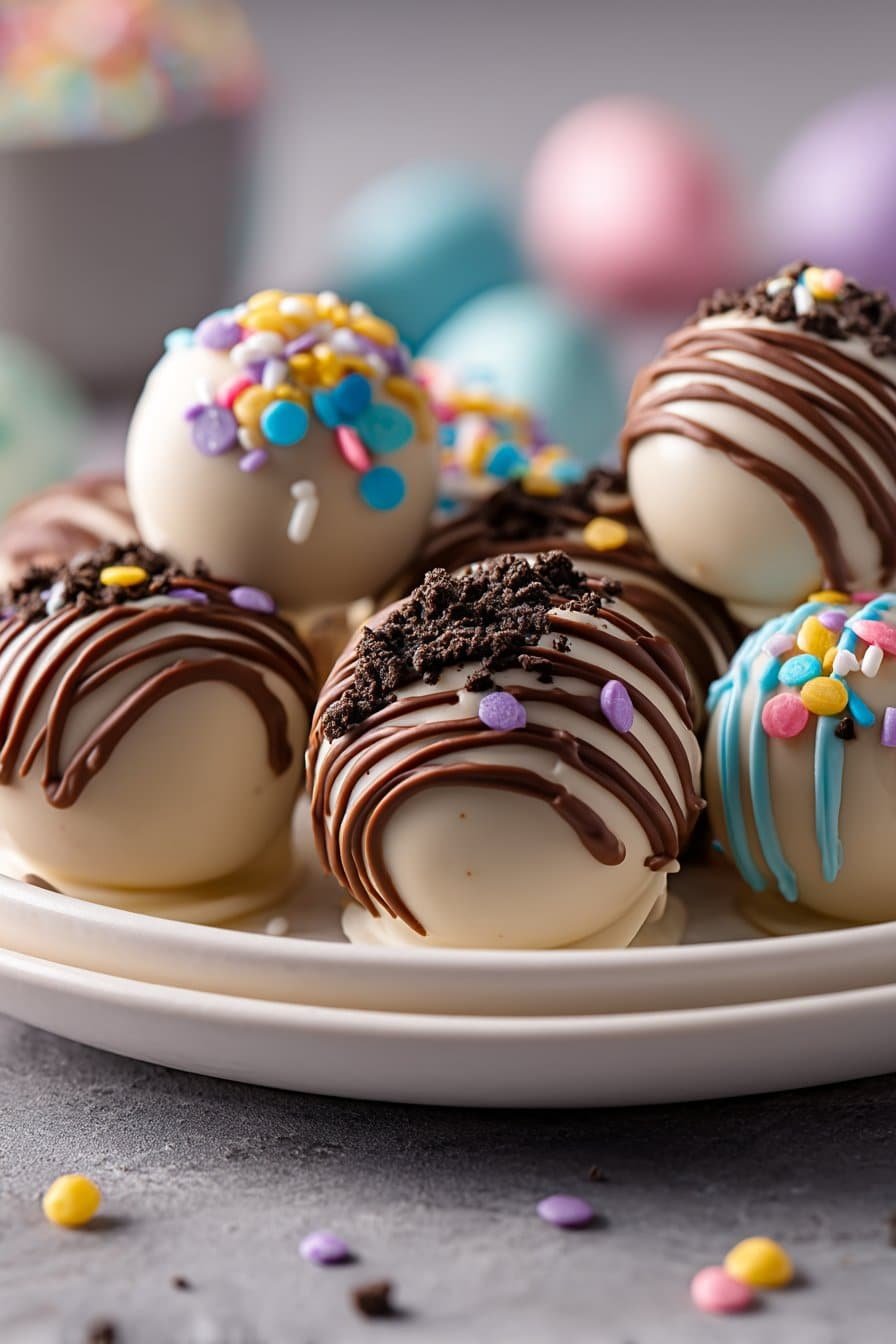
Serving of Easter Egg Oreo Balls
Conclusion
Every time I roll and dip a batch of these Easter Egg Oreo Balls, I’m reminded that the sweetest moments usually happen in the smallest, silliest details—like kids arguing over which sprinkle color is the “luckiest,” or someone sneaking a chilled one from the tray before dessert even starts. This is the kind of recipe that turns an ordinary afternoon into a little celebration, whether you’re filling Easter baskets, hosting brunch, or just sharing a plate on the couch after dinner.
I love that you don’t need fancy tools or hours of prep—just a few simple ingredients, a bit of melting and rolling, and you suddenly have a dessert that looks like it came from a bakery window. These Easter Egg Oreo Balls invite everyone into the kitchen, no matter their age or baking confidence. My hope is that they bring a bit of extra color, comfort, and memory-making magic to your holiday table.
When you make them, I’d love to hear how they turned out and who you shared them with—because that’s the real heart of baking.
For more delicious recipes like this, follow us on social media!
What exactly are Easter Egg Oreo Balls?
Easter Egg Oreo Balls are no‑bake truffles made from finely crushed Oreo cookies mixed with softened cream cheese, then shaped into little egg-like ovals. Once chilled, you dip them in melted candy melts or chocolate and decorate with sprinkles for a pastel, Easter-egg look. They taste like rich, fudgy bite-sized Oreo cheesecake with a crisp candy shell. Because they set in the fridge and require no oven time, they’re perfect for making with kids or when your schedule is busy. You can serve them on dessert trays, tuck them into Easter baskets, or package them as edible gifts.
How do I get the Oreo mixture smooth and easy to shape into eggs?
Start by crushing the Oreos into very fine crumbs; you want them almost like sand so there are no big chunks that crack your coating. A food processor works best, but a heavy rolling pin and a zip-top bag does the job if you go over it several times. Mix the crumbs with fully softened cream cheese so everything blends into a thick, uniform “dough” without dry spots. If the mixture feels too sticky to handle, chill it for 10–15 minutes before shaping. When forming the eggs, scoop even portions (about 1 tablespoon), roll into a ball, then pinch one end slightly to create a classic egg shape.
How do I dip and decorate Easter Egg Oreo Balls without a mess?
Chill or briefly freeze the shaped Oreo eggs for 20–30 minutes before dipping; this keeps them from falling apart in the warm coating. Melt your candy melts slowly, stirring often, and thin with a tiny bit of vegetable oil if they seem too thick. Use a fork to dip each egg, tap gently on the bowl to let the excess drip off, and slide it onto parchment paper using a toothpick. Add sprinkles immediately, while the coating is still wet, so they stick. For drizzles, let the first layer set, then use a contrasting color of melted candy melts in a small piping bag or zip-top bag with a tiny corner snipped off.
Recipe

Easter Egg Oreo Balls
Ingredients
Ingredients
- 36 Oreo cookies
- 8 oz cream cheese softened
- 16 oz pastel candy melts assorted colors
- 1 tsp vegetable oil optional, for thinning candy melts
- Assorted sprinkles edible glitter, and decorations
Instructions
- Line a baking sheet with parchment paper and set aside.
- Place the Oreo cookies in a food processor and pulse into fine crumbs, or crush them in a zip-top bag with a rolling pin.
- Transfer the Oreo crumbs to a medium mixing bowl.
- Add the softened cream cheese to the crumbs and mix with a spatula or clean hands until fully combined and smooth with no visible streaks of cream cheese.
- Scoop about 1 tablespoon of the mixture at a time, roll into a ball, then gently shape each ball into an oval with one end slightly tapered to resemble an egg.
- Arrange the shaped Oreo eggs on the prepared baking sheet in a single layer.
- Place the baking sheet in the freezer for 20 to 30 minutes, until the eggs are firm to the touch.
- Divide the candy melts into separate microwave-safe bowls by color.
- Working with one color at a time, microwave the candy melts in 20- to 30-second intervals, stirring between each, until completely melted and smooth. Stir in a small amount of vegetable oil if needed to thin to a dipping consistency.
- Remove a few Oreo eggs from the freezer at a time, keeping the rest chilled.
- Using a fork or dipping tool, dip one Oreo egg into the melted candy, turning to coat it completely.
- Lift the coated egg from the candy melts, tap the fork gently on the side of the bowl to let excess coating drip off, and place it back on the parchment-lined baking sheet.
- Immediately decorate the coated egg with sprinkles, edible glitter, or contrasting candy drizzle before the coating sets.
- Repeat dipping and decorating with the remaining Oreo eggs, reheating or stirring the candy melts as needed to keep them smooth.
- Once all eggs are coated and decorated, refrigerate the tray for 15 to 20 minutes, or until the candy coating is completely set.
- Transfer the finished Easter Egg Oreo Balls to an airtight container and store in the refrigerator until ready to serve.
Notes
- If the Oreo mixture becomes too soft or sticky while shaping, chill it in the refrigerator for 10 to 15 minutes, then continue.
- For neater dipping, work with well-chilled eggs and thin the candy melts slightly with vegetable oil.
- Store the finished Oreo balls in an airtight container in the refrigerator for up to 5 days.
- For longer storage, freeze the undecorated Oreo balls for up to 2 months and dip them in candy melts after thawing in the fridge.