
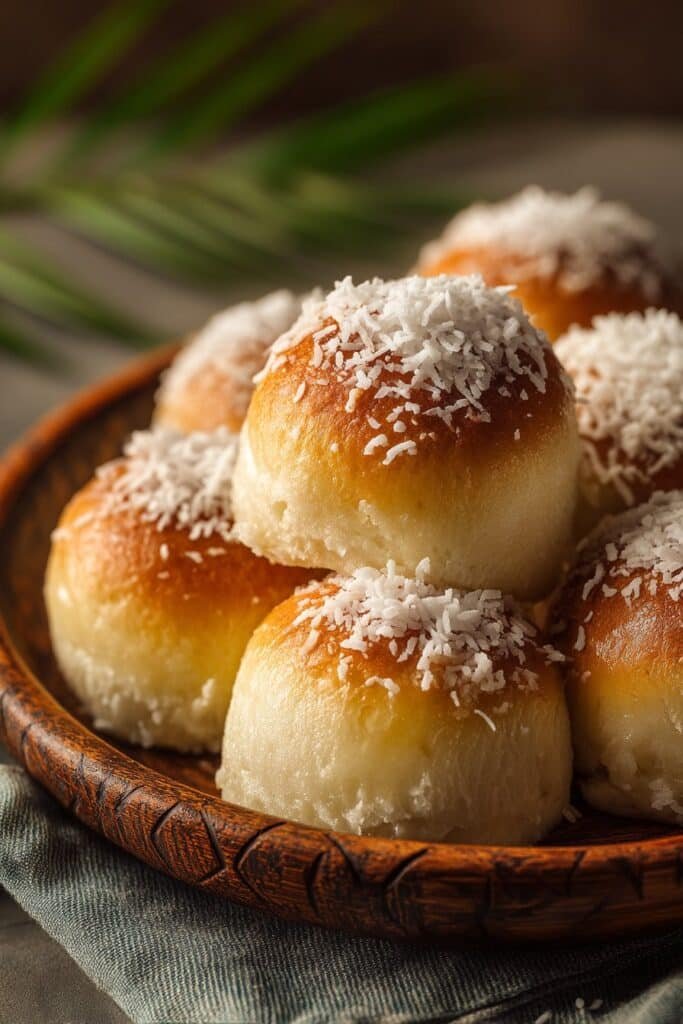
The Memory Behind This Treat
The first time I made Coconut Cream Buns, it was one of those long Sunday afternoons when the house felt a little too quiet and the weather couldn’t decide if it wanted to rain or shine. I remembered a tiny bakery from a trip years ago—tucked between a stationery shop and a fruit stall—where the glass case was always fogged from trays of still-warm buns. Their Coconut Cream Buns were impossibly soft, with airy centers and just enough cream to leave a little mustache on your upper lip. That memory came rushing back while I was staring at a can of condensed milk in my pantry, and I thought, “Okay, let’s bring those bakery buns home.” So I started testing, tweaking the dough, adjusting the hydration, and trying to capture that same soft pull-apart texture in a simple, everyday kitchen.
These Coconut Cream Buns also became my answer to the “we just need a little something” dessert dilemma—too late for a full cake, too early to call it a night. I learned that letting the dough stay slightly sticky (instead of panic-adding flour) was the secret to keeping the buns tender and cloud-like. The first successful batch disappeared at a family tea, right between the second pot of Earl Grey and someone asking if there were any more. Now, they live in the same mental cookbook as my special-occasion treats, right beside my favorite milk bread rolls and jam-filled brioche. Every time I whip the vanilla cream and sprinkle on that toasted coconut, it feels like revisiting that little bakery—but this time, with a warm pan on my own counter and people I love waiting at the table.
How To Make It (Mix & Ingredients)
To start your Coconut Cream Buns, you’ll build a soft, enriched dough that feels almost pillow-like under your hands. In a small bowl or measuring jug, warm the milk until it’s just cozy to the touch (about 100–110°F) and stir in the yeast with a pinch of sugar; give it 5–10 minutes until it looks foamy and smells a bit bready. In your main mixing bowl, add the bread flour, sugar, salt, sweetened condensed milk, melted butter, and 1 egg, then pour in that bubbly yeast mixture and stir until no dry flour remains. At this point the dough will look shaggy and a bit messy—that’s exactly where you want it. Cover the bowl and let it rest for about 20 minutes; this little pause lets the flour hydrate and makes the dough easier to knead.
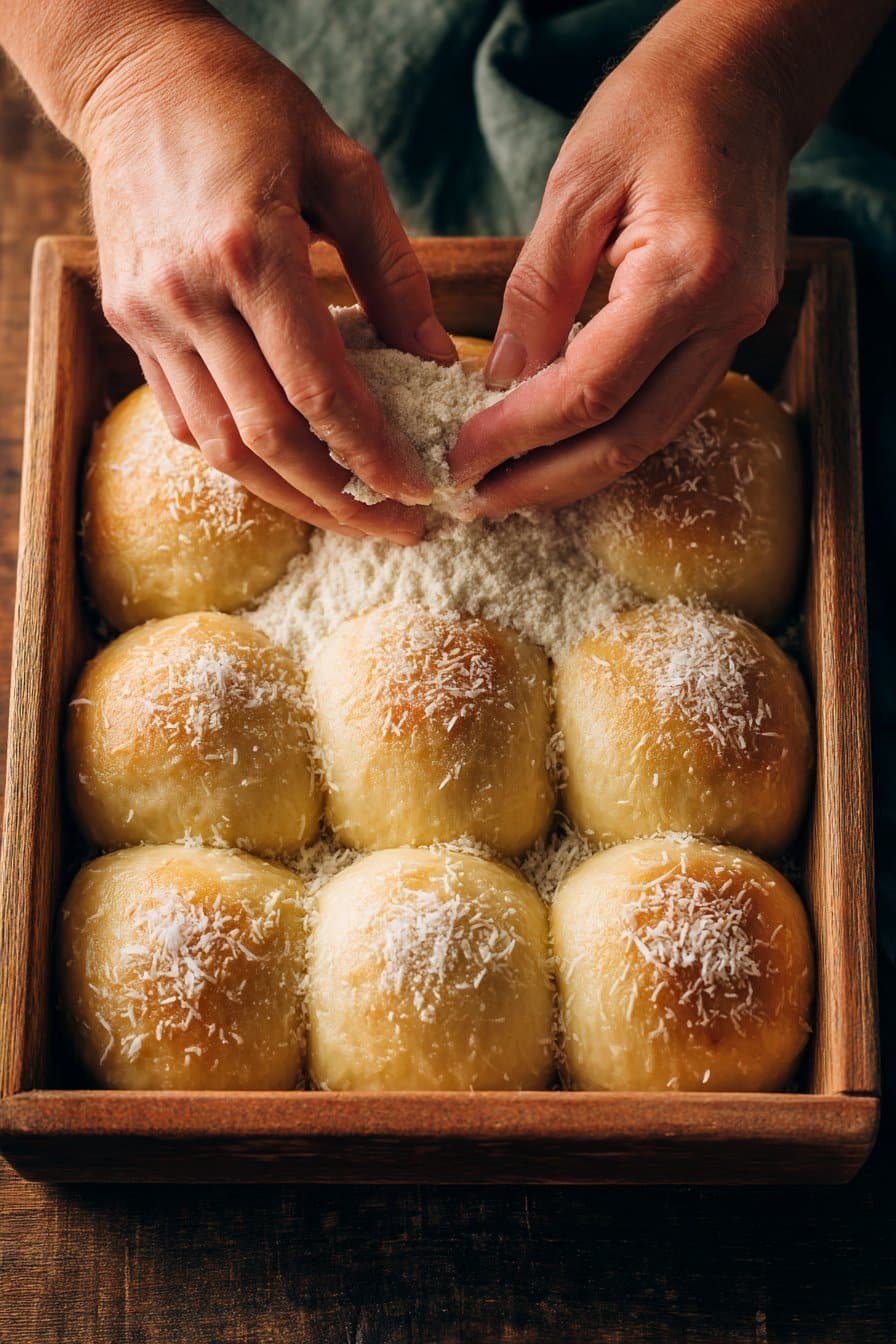
Instructions Process of Coconut Cream Buns
Once the dough has rested, knead it with a stand mixer and dough hook on low, then gradually increase to medium-high until the dough becomes glossy, stretchy, and still slightly sticky—this usually takes around 10–12 minutes. You should be able to stretch a small piece thin enough to see light through it without tearing, a sign you’ll get ultra-fluffy Coconut Cream Buns later. Lightly oil a clean bowl, tuck the dough inside, cover, and let it rise in a warm spot until doubled, about 1 hour. While it rises, get the cream filling and topping components ready: whip the cold heavy cream with vanilla bean paste, powdered sugar, and a pinch of salt until medium-stiff peaks form, and lightly toast the desiccated coconut in a dry pan until golden and fragrant. By the time your buns are baked and cooled, you’ll have everything ready to fill them with that dreamy vanilla cream and shower them with toasty coconut.
Make-Ahead & Storage
Coconut Cream Buns are at their best the day they’re assembled, when the buns are ultra-soft and the cream is cloud-light, but you absolutely can plan ahead. The easiest method is to bake the buns in advance, then fill them closer to serving. Once your buns are baked and completely cooled, store them (unfilled) in an airtight container at room temperature for up to 2 days. To refresh them, warm the plain buns in a 300°F (150°C) oven for 5–7 minutes, then cool completely before adding the whipped cream filling. You can also freeze the baked, unfilled buns for up to 1 month—wrap individually in plastic, pop into a freezer bag, and thaw at room temperature before using.
For the cream, you have two good options: whip it fresh, or whip it slightly ahead and stabilize it. If you’d like to make the cream filling in advance, whip it to medium peaks, cover the bowl tightly, and refrigerate for up to 24 hours. Give it a brief whisk by hand before piping or spooning it into the Coconut Cream Buns so it’s fluffy again. Once the buns are filled with cream and topped with syrup and coconut, store them in a single layer in an airtight container in the refrigerator, and enjoy within 24 hours for the best texture. The buns won’t be ruined after that, but the bread will slowly dry out and the cream may loosen, so think of these as a “bake today, share tonight” kind of dessert.
Best Ingredients & Party Variations
For the softest, dreamiest Coconut Cream Buns, start with bread flour rather than all-purpose; the higher protein gives you that fluffy, pillowy crumb that still holds all the cream. Use whole milk for richness (skim will make the dough sad and a bit dry), and make sure your yeast is fresh and active—if it doesn’t foam, toss it and start again. For the filling, heavy whipping cream (at least 35% fat) is non-negotiable, and I love vanilla bean paste here for those pretty specks and fuller flavor, though good vanilla extract works in a pinch. Choose unsweetened desiccated coconut so the sweetness doesn’t go overboard, and toast it gently until just golden and nutty. If you like that bakery-style shine, don’t skip the light sugar syrup glaze—it helps the coconut cling and adds the softest sheen.
Once you have a good base, Coconut Cream Buns become a little party playground. For a tropical birthday spread, fold a spoonful of crushed pineapple or mango chunks into the whipped cream and top with extra toasted coconut for a “piña colada” vibe. For chocolate lovers, drizzle melted dark chocolate over the buns after glazing, or tuck a tiny strip of chocolate inside each bun before baking for a hidden surprise. If you’re hosting afternoon tea, make mini Coconut Cream Buns by shaping smaller rolls and piping a modest swirl of cream so they’re easy to eat in two bites. You can also create a flavor bar: offer bowls of toasted nuts, lime zest, and even a little passion fruit pulp so guests can customize their own buns.
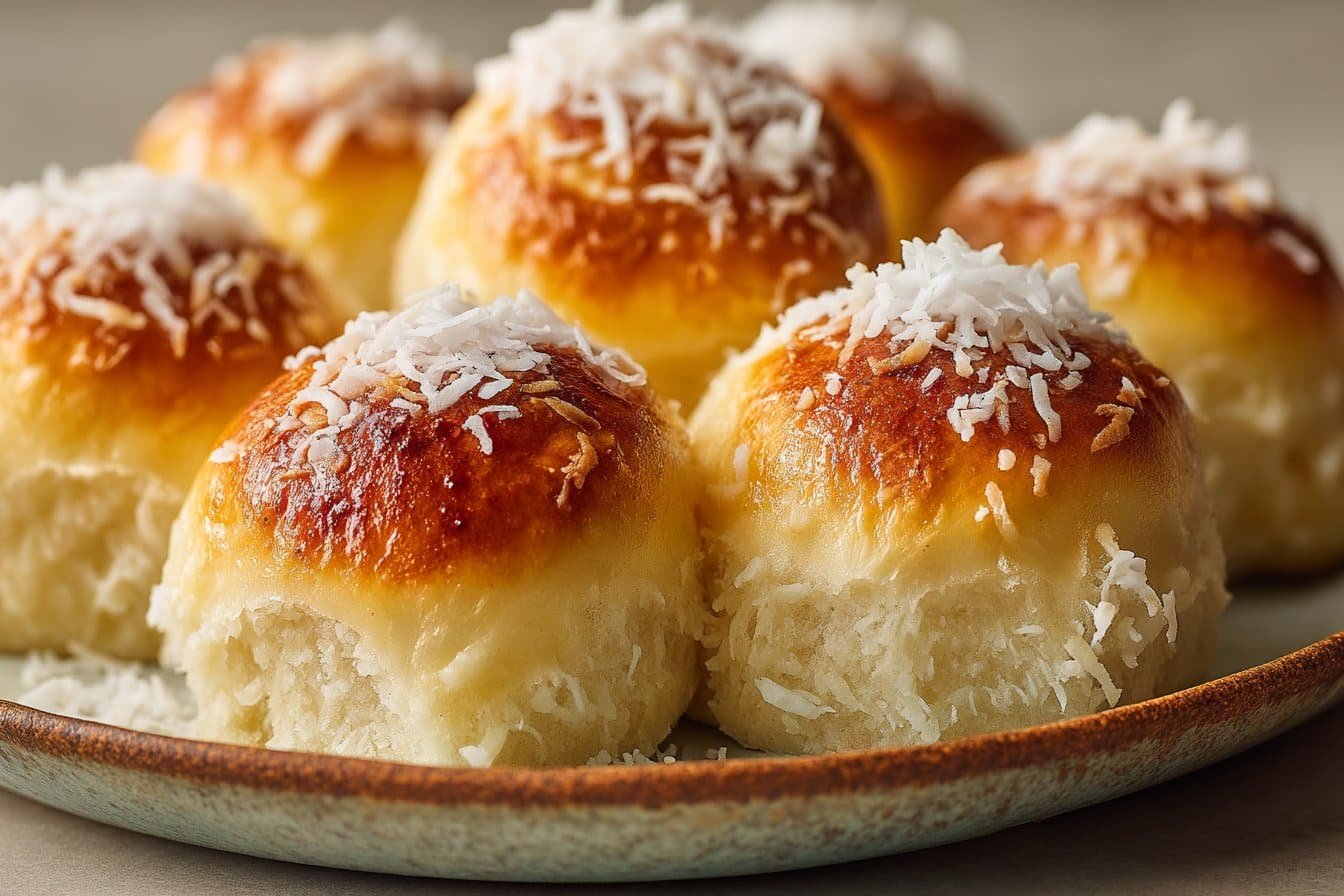
Serving of Coconut Cream Buns
Conclusion
There’s something quietly magical about pulling a tray of warm, golden buns from the oven and knowing you created them with your own two hands. These Coconut Cream Buns aren’t just about soft dough and rich, silky filling—they’re about that moment when everyone leans over the table, reaches in at the same time, and the only sound is happy, buttery silence. That’s the kind of memory that sticks, and the reason I keep coming back to this recipe again and again.
I hope you let this become one of “your” recipes—the one you make for Sunday brunch, for birthdays when someone asks for “something cozy,” or for that friend who needs a little sweetness after a long week. Don’t worry if they’re not perfectly shaped or bakery-pretty; the real beauty is in the warmth, the sharing, and the smiles that follow the first bite.
For more delicious recipes like this, follow us on social media!
What are Coconut Cream Buns and what makes them special?
Coconut Cream Buns are soft, oven-baked milk bread rolls filled with fluffy, coconut-scented whipped cream. The buns bake up golden on top and pillowy inside, almost like a sweet dinner roll crossed with a brioche. Once cooled, they’re split and generously piped or spooned with a lightly sweet vanilla coconut cream, then finished with syrup and toasted coconut. The contrast of warm, tender bread and cool, silky cream makes them feel like a bakery-level treat. They’re especially popular in many Asian bakeries, but very doable in a home oven.
How can I keep my Coconut Cream Buns light and fluffy, not dense?
The biggest keys are proper kneading and proofing. Knead until the dough is smooth, elastic, and can stretch into a thin “windowpane” without tearing, which means the gluten is developed. Let the dough rise until truly doubled in size for both the first rise and after shaping; if your kitchen is cool, this might take longer than the minimum time. Avoid adding lots of extra flour when shaping, or you’ll end up with dry, heavy buns. Also, bake just until the tops are golden, since overbaking will dry out the crumb.
Can I make Coconut Cream Buns ahead and how should I store them?
You can absolutely work ahead by baking the buns earlier and filling them later. Let baked buns cool completely, then store them (unfilled) in an airtight container at room temperature for up to 1 day. Because the whipped coconut cream is dairy-based, you should only fill the buns a few hours before serving and keep them refrigerated. Once filled, store Coconut Cream Buns in a covered container in the fridge and enjoy within 1–2 days for the best texture. If the cream begins to weep a little, you can gently blot the edges with a paper towel before serving.
Recipe
Coconut Cream Buns
Ingredients
Ingredients
- 2 1/2 cups bread flour 300 g
- 1/2 cup whole milk 140 ml
- 1 teaspoon active dry yeast 7 g
- 2 1/2 tablespoons granulated sugar 30 g, plus 1 tablespoon for syrup
- 1 teaspoon salt 5 g
- 1/4 cup sweetened condensed milk 80 g
- 4 tablespoons unsalted butter melted
- 1 large egg
- 1 large egg beaten for egg wash
- 1 tablespoon boiling water
- 2 cups heavy whipping cream
- 1 teaspoon vanilla bean paste
- 1/4 cup powdered sugar
- 1/4 teaspoon salt
- 1/4 cup unsweetened desiccated coconut
Instructions
- Warm the milk to 100–110°F in a small bowl, stir in a pinch of the granulated sugar and the active dry yeast, and let stand for 5 minutes until foamy.
- In the bowl of a stand mixer, combine the bread flour, remaining granulated sugar, salt, sweetened condensed milk, melted butter, and 1 large egg.
- Pour the activated yeast mixture into the flour mixture and stir with a spatula until no dry flour remains. Cover the bowl with plastic wrap and let rest for 20 minutes.
- Attach the dough hook to the mixer and knead on low speed, gradually increasing to medium-high, for 10–12 minutes until the dough is smooth, elastic, and slightly sticky.
- Lightly oil a large clean bowl, transfer the dough to the bowl, cover with plastic wrap, and let rise in a warm place for about 1 hour, until doubled in size.
- Line a 13 x 9 inch baking pan with parchment paper.
- Punch down the risen dough to release air, turn it out onto a lightly oiled surface, and divide into 10 equal pieces of about 65 g each.
- Shape each piece into a smooth ball by tucking the edges underneath and rolling on the work surface until tight and round.
- Arrange the dough balls in the prepared pan, spacing them evenly, cover loosely with plastic wrap, and let rise for 35–45 minutes until nearly doubled.
- Preheat the oven to 350°F. Beat the remaining egg in a small bowl for the egg wash.
- Gently brush the tops of the risen dough balls with the egg wash and bake for 18 minutes, or until the buns are golden brown on top.
- Remove the pan from the oven and let the buns cool completely in the pan on a wire rack.
- In a small bowl, dissolve 1 tablespoon granulated sugar in 1 tablespoon boiling water, stirring until clear, then let the sugar syrup cool to room temperature.
- In a large chilled mixing bowl fitted with a whisk attachment, combine the heavy cream, vanilla bean paste, powdered sugar, and 1/4 teaspoon salt.
- Whip the cream mixture on medium speed until medium-stiff peaks form, then transfer the whipped cream to a piping bag fitted with a 1/2 inch tip or cut opening.
- Once the buns are completely cool, use a serrated knife to slice each bun horizontally, stopping about 1/4 inch before cutting all the way through so the bottoms stay attached.
- Lightly brush the cut surfaces and tops of each bun with the cooled sugar syrup.
- Sprinkle the desiccated coconut over the tops and insides of the buns so it adheres to the syrup.
- Gently open each bun and pipe whipped cream generously into the center, using an S-shaped motion to fill the gap.
- Serve the coconut cream buns immediately, or cover loosely and hold at cool room temperature for a few hours before serving.
Notes
- You can bake the buns a day ahead and store them unfilled in an airtight container; fill with cream and coconut just before serving for best texture.