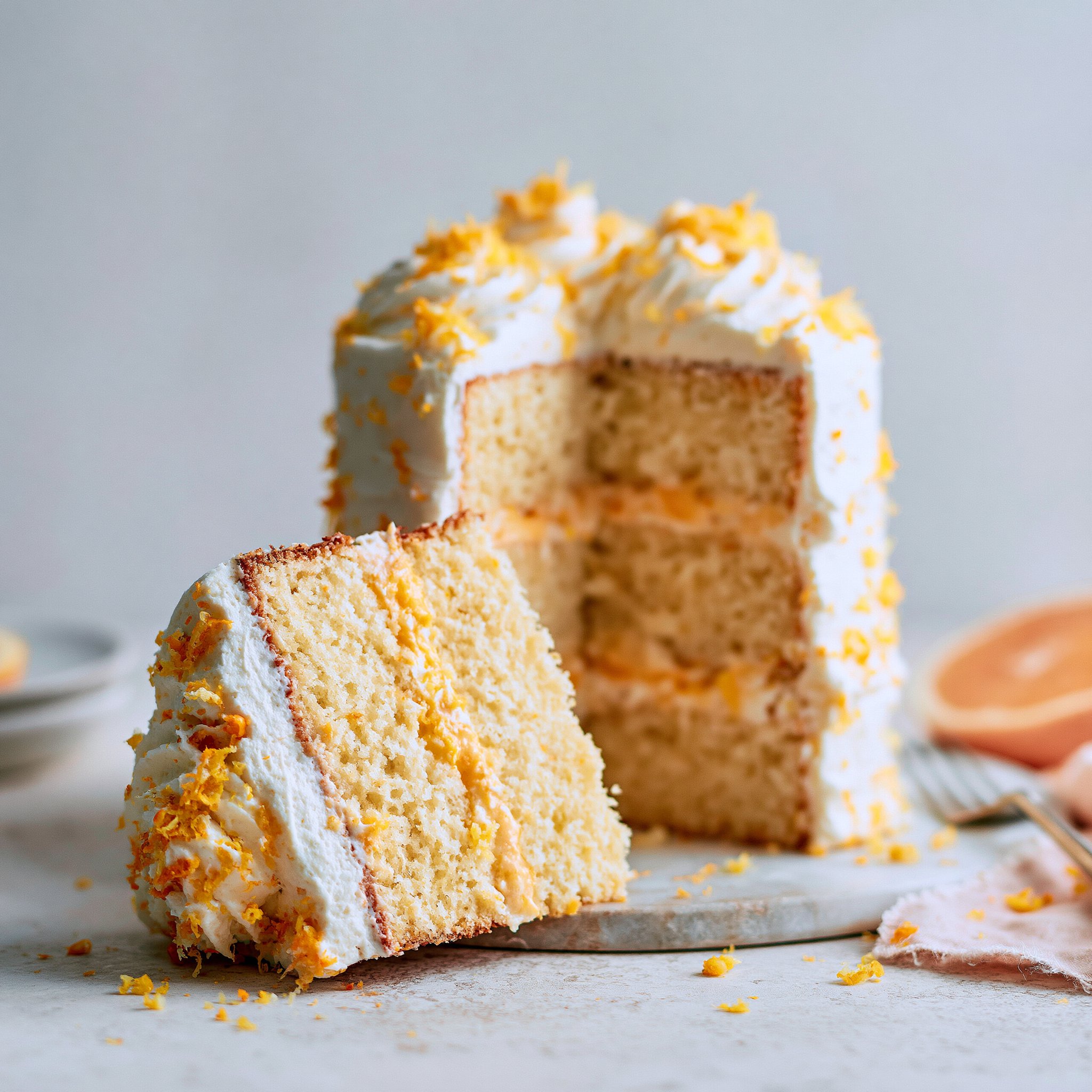
Orange and vanilla is one of those flavor combos that reads simple, but when it’s done right it tastes like you worked harder than you did. This Orange Creamsicle Cake bakes up with tender, citrusy layers (thanks to real orange juice and a full orange’s worth of zest), then gets wrapped in a fluffy orange-cream frosting that’s light but still rich enough to feel like a “real” celebration cake.
If you love bright, clean citrus desserts, this one lands right in the sweet spot: not sour, not cloying, and definitely not heavy. It’s also a great bake when you want something pretty on a stand without fuss—two classic 9-inch layers, a swoosh of frosting, and a few orange slices on top. If you’re on an orange kick lately, you might also like my no-bake Orange Creamsicle cheesecake for a zero-oven option.
Why You’ll Love This Recipe
- Real orange flavor (not “orange candy”) from 1 full cup of orange juice plus the zest of an orange—your kitchen smells like fresh citrus the whole time it bakes.
- Soft, plush crumb: the butter-sugar base keeps the layers tender, while baking powder + baking soda give a gentle lift without drying the cake out.
- Frosting that stays light: whipped cream folded into cream cheese makes it airy and smooth, not dense like a straight cream cheese frosting.
- Easy layer cake structure: two 9-inch rounds bake evenly and stack neatly—no leveling gymnastics required if you divide the batter evenly.
- Best served chilled: the orange-cream frosting firms slightly in the fridge, making slicing cleaner and the “creamsicle” vibe stronger.
- Naturally pretty finish: fresh orange slices on top give you that bright, sunny look with almost zero decorating effort.
The Story Behind This Recipe
I wanted an orange-forward layer cake that didn’t rely on boxed mix vibes—just pantry basics, orange juice, and zest—then paired it with a frosting that tastes like melted vanilla ice cream with a hint of orange extract. If you’re a citrus baker, you’ll recognize the same bright-and-creamy lane as my orange velvet cake, just in a more classic “creamsicle” direction.
What It Tastes Like
It’s sweet but not sugary, with a clean orange aroma that hits first (zest does that), followed by warm vanilla in the cake. The layers are soft and moist with a light, even crumb, and the frosting is cool, fluffy, and gently tangy from cream cheese—like orange cream melted into whipped cream. Chilling the finished cake pulls everything together so each bite feels crisp, creamy, and bright.
Ingredients You’ll Need
Orange juice and zest are doing the heavy lifting here, so use a juice you genuinely like the taste of (it shows). Softened butter helps the sugar whip up light and fluffy, which keeps the cake from baking up tight. For the frosting, the key is whipping the cream to soft peaks first, then folding it in—this is what keeps it cloud-like instead of dense. If you’re looking for another citrus project after this, my blood orange rosemary cupcakes are a fun, slightly more grown-up twist.
- 2 cups all-purpose flour
- 1 1/2 cups granulated sugar
- 1/2 cup unsalted butter, softened
- 1 cup orange juice
- 2 teaspoons baking powder
- 1/2 teaspoon baking soda
- 1/2 teaspoon salt
- 3 large eggs
- 1 teaspoon vanilla extract
- Orange zest from 1 orange
For the frosting:
- 1 cup heavy cream
- 1 cup powdered sugar
- 1/2 cup cream cheese, softened
- 1 teaspoon orange extract
- Fresh orange slices for topping
How to Make Orange Creamsicle Cake
Prep the oven and pans. Heat the oven to 350°F (175°C). Grease and flour two 9-inch round cake pans, tapping out any excess flour so you don’t get white patches baked onto the sides.
Cream butter and sugar until truly fluffy. In a mixing bowl, beat the softened butter and granulated sugar until the mixture looks lighter in color and airy—this usually takes a few minutes. (This step helps the cake bake up soft instead of heavy.)
Add eggs, then flavor. Beat in the eggs one at a time, mixing well after each so the batter stays smooth. Stir in the vanilla extract and orange zest—you should smell that fresh orange immediately.
Mix the dry ingredients. In a separate bowl, whisk together the flour, baking powder, baking soda, and salt so the leaveners are evenly distributed (no bitter pockets).
Alternate dry ingredients and orange juice. Add the dry mix and orange juice to the butter mixture in alternating additions, mixing just until combined each time. The batter should look smooth and creamy—stop as soon as you don’t see dry flour to avoid a tough crumb.
Divide and level. Pour the batter evenly into both pans and smooth the tops. If you eyeball it, take an extra moment here—even layers stack more cleanly.
Bake. Bake for 25–30 minutes, until the tops look set and a toothpick inserted into the center comes out clean. The cakes should spring back lightly when you touch the center.
Cool completely. Let the cakes cool in the pans for 10 minutes, then turn them out onto wire racks to cool all the way. (If they’re even slightly warm, the frosting will loosen and slide.)
Whip the cream to soft peaks. For the frosting, whip the heavy cream until you get soft peaks—it should hold a shape but still look silky, not stiff or grainy.
Make the cream cheese base. In another bowl, beat the softened cream cheese, powdered sugar, and orange extract until smooth and lump-free.
Fold to finish the frosting. Gently fold the whipped cream into the cream cheese mixture until fully combined and fluffy. Keep it light-handed—you want to preserve that airy texture.
Stack and frost. Place one cake layer on a plate or stand. Frost the top, add the second layer, then frost the top and sides. The frosting will look soft and pillowy; a few swoops are perfect here.
Decorate and chill. Top with fresh orange slices. Chill the cake before serving so the frosting sets up slightly and slices come out neat and clean.
Tips for Best Results
- Zest first, juice second. Zest the orange before you cut or squeeze it—it’s much easier, and the zest perfumes the batter in a way juice alone can’t.
- Stop mixing as soon as the flour disappears. Overmixing after adding flour can tighten the crumb; you want a smooth batter, not a heavily beaten one.
- Cool the layers completely before frosting. If the cakes feel even a little warm in the center, the whipped-cream frosting will soften fast.
- Soft peaks matter. Whip the cream just to soft peaks so it folds in smoothly; if it’s too stiff, the frosting can turn slightly grainy when combined.
- Chill for cleaner slices. A cold cake cuts more neatly because the cream cheese–whipped cream frosting firms up in the fridge.
- Orange slices: add close to serving. They look freshest and brightest when they haven’t been sitting too long.
Variations and Substitutions
- Dial the orange up or down: add a touch more zest if you want a more perfumed orange note, or keep it to one orange for a balanced creamsicle flavor.
- Different citrus direction: swap the orange zest for another citrus zest if you’d like a twist (the cake will taste different, but the method holds). For more citrus ideas, my spring cupcake roundup is a good browse.
- Extra-smooth finish: keep the frosting rustic and swirled, or smooth it more firmly after chilling for a sharper edge—either looks great with the orange slices.
How to Serve It
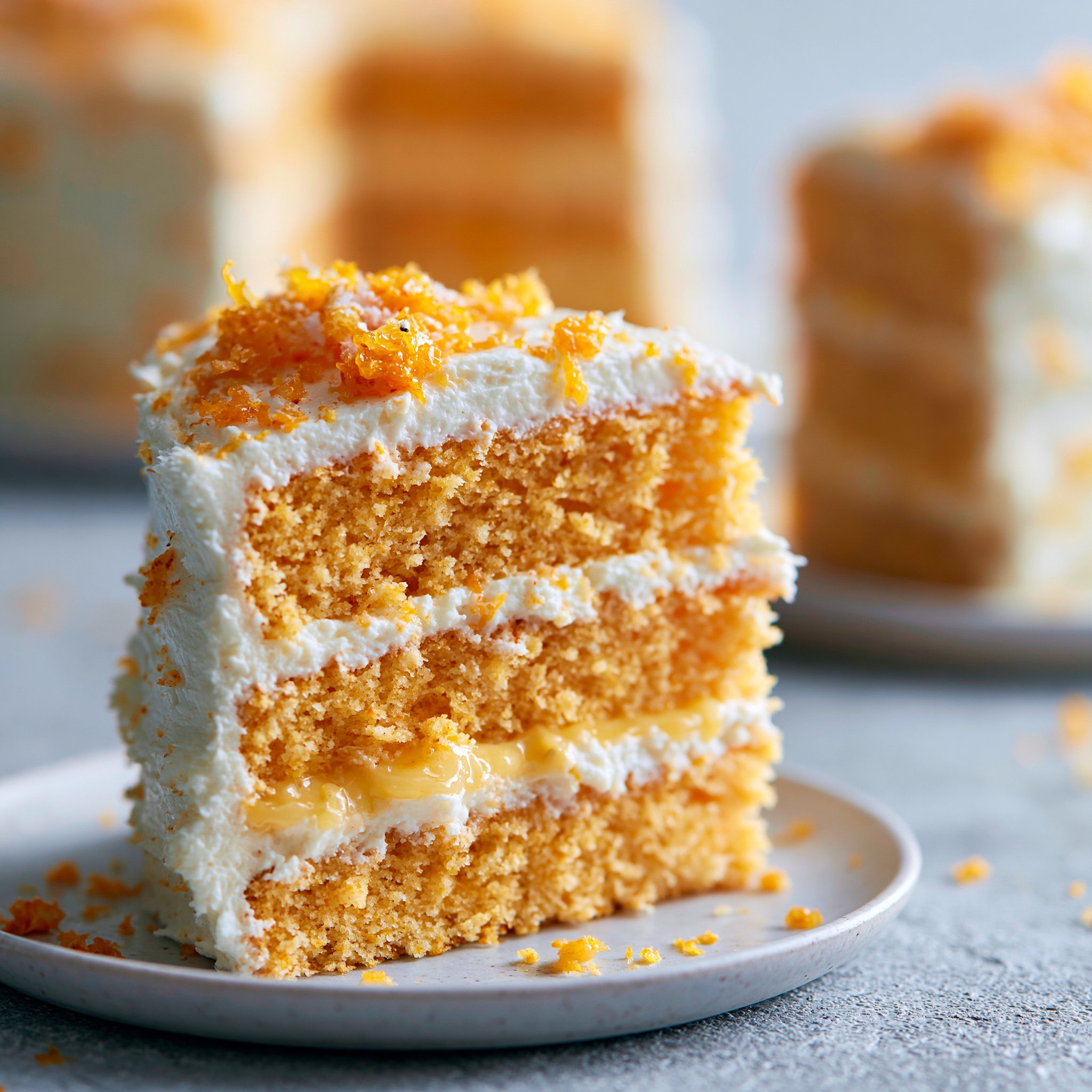
Serve this cake well-chilled for the most “creamsicle” effect—the frosting tastes brighter and the layers slice cleanly. I like cutting generous wedges and letting them sit at room temp for just a few minutes so the cake softens slightly while the frosting stays cool. If you want a more polished dessert plate, add a thin orange slice to each piece right before serving.
How to Store It
Because the frosting is made with whipped cream and cream cheese, store the cake covered in the refrigerator. It’s at its best within a couple of days, when the layers stay moist and the orange aroma is still lively. For make-ahead, you can bake the layers, cool them completely, and keep them chilled until you’re ready to frost; add the fresh orange slices close to serving so they stay vibrant and don’t weep onto the frosting. If you’ve got extra orange desserts on your list, my orange creamsicle macarons are a fun weekend project.
Final Thoughts
If you’re craving something bright and creamy without a complicated method, this is the cake I’d pick—the orange juice and zest make the layers taste sunny and fresh, and that folded whipped frosting keeps everything light. Chill it, slice it, and enjoy the clean orange-vanilla payoff in every bite.
Conclusion
If you’d like to compare a few other approaches to the same flavor profile, you can check out this Orange Creamsicle Cake, this version of Orange Creamsicle Cake with no jello or cake mix, and (for a different format but similar citrus-and-cream appeal) this Creamsicle-inspired dessert.