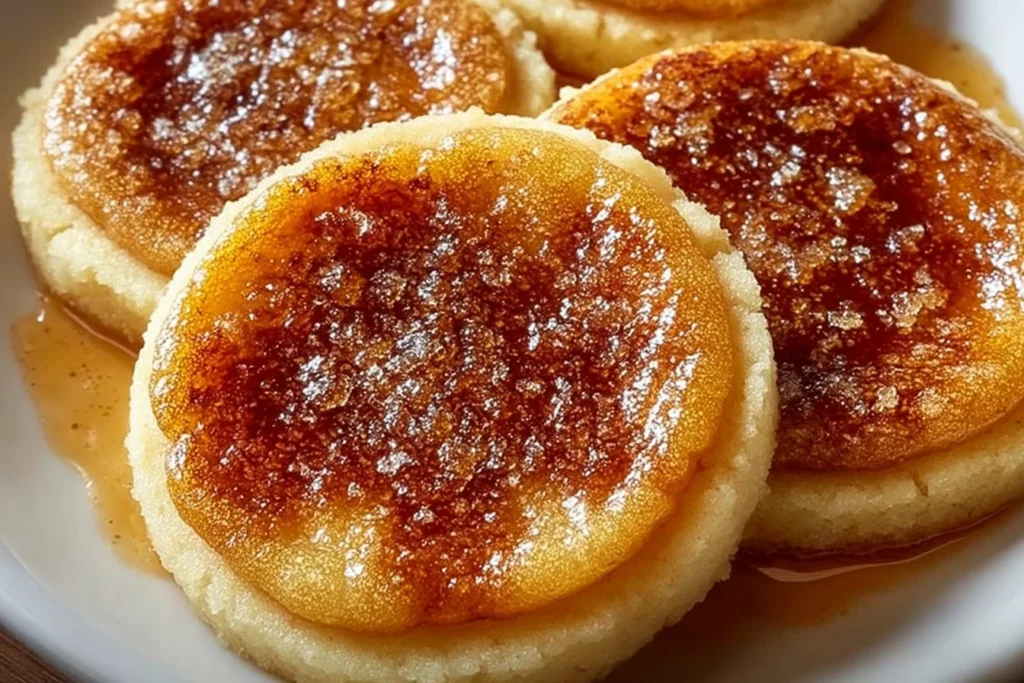
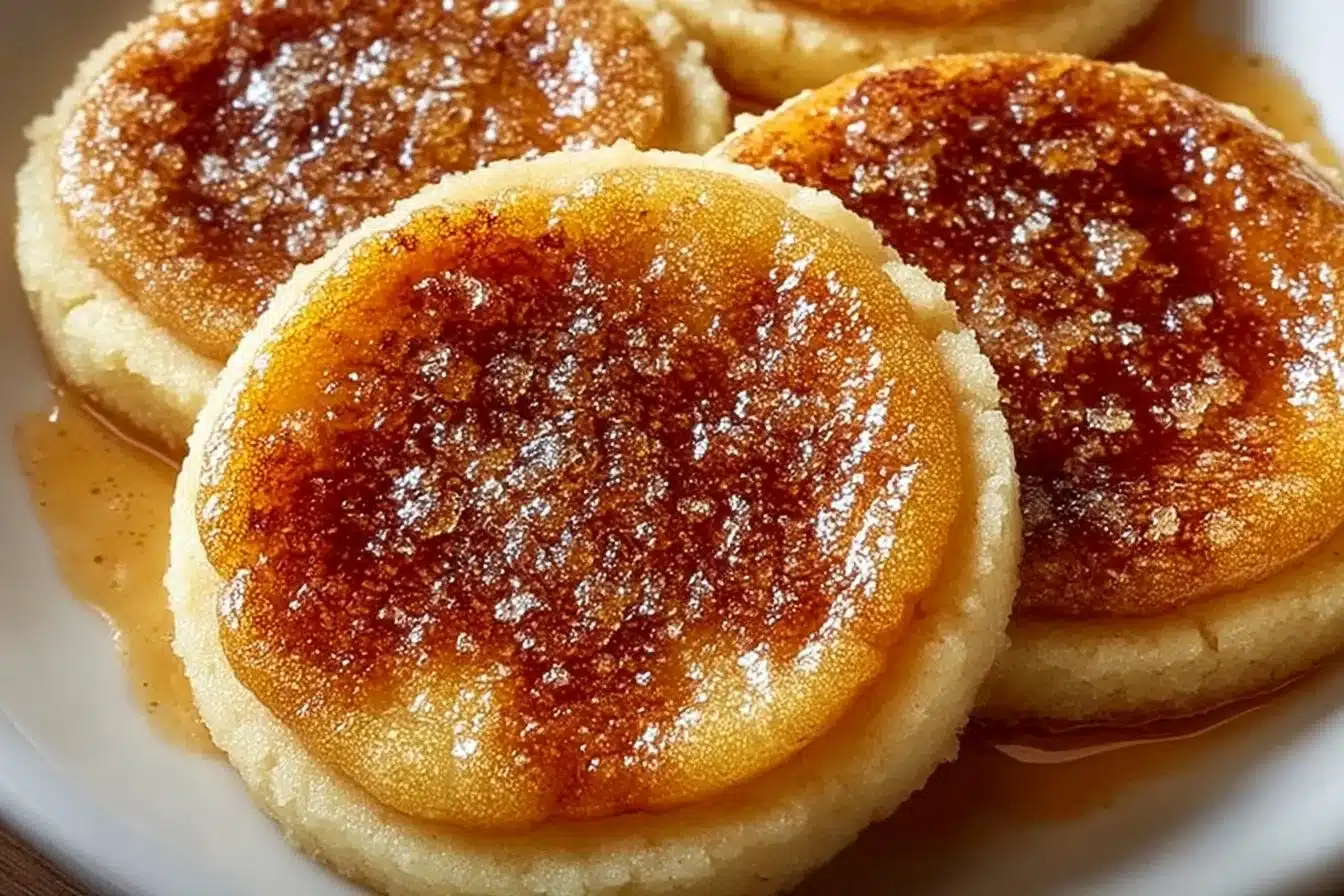
I never planned to turn crème brûlée into a cookie, but one afternoon I wanted the caramelized crunch of brûlée with something a little sturdier than a spoonable custard. These cookies give you that crackly amber top over a tender, buttery base — the sort of cookie that snaps, then gives way to a soft, almost custardy bite.
They’re easy enough to make on a weeknight and showy enough for guests: buttery cookie speckled with warm cinnamon and nutmeg, finished with a rich brown-sugar cream that you torch with the broiler into a thin, shattering caramel. The payoff is a cookie that looks fancy but tastes comfortingly familiar.
Why You’ll Love This Recipe
- A real texture contrast: a crisp, caramelized top over a soft, slightly cakey cookie base — you get a small brûlée in every bite.
- Warm-spiced flavor: 1/4 teaspoon each of cinnamon and nutmeg in the dough gives gentle autumn warmth without overpowering the brown-sugar caramel.
- Simple method, big presentation: straightforward creaming and a quick broil turn ordinary cookies into something impressive. See a step-by-step photo walkthrough on my full Crème Brûlée Cookies post.
- Make-ahead friendly: you can bake the cookies and hold the cream topping separately, then finish under the broiler right before serving.
- Family-friendly size: these 1-inch dough balls make small, elegant cookies — plenty for a plate of 20–24 bites.
The Story Behind This Recipe
I wanted a cookie that delivered the sensory hit of crème brûlée — the smell of warm vanilla and brown sugar, the satisfying snap of caramel — without needing ramekins or a water bath, so I adapted a simple butter-cookie base and topped it with a quick brown-sugar custard that browns under the broiler.
What It Tastes Like
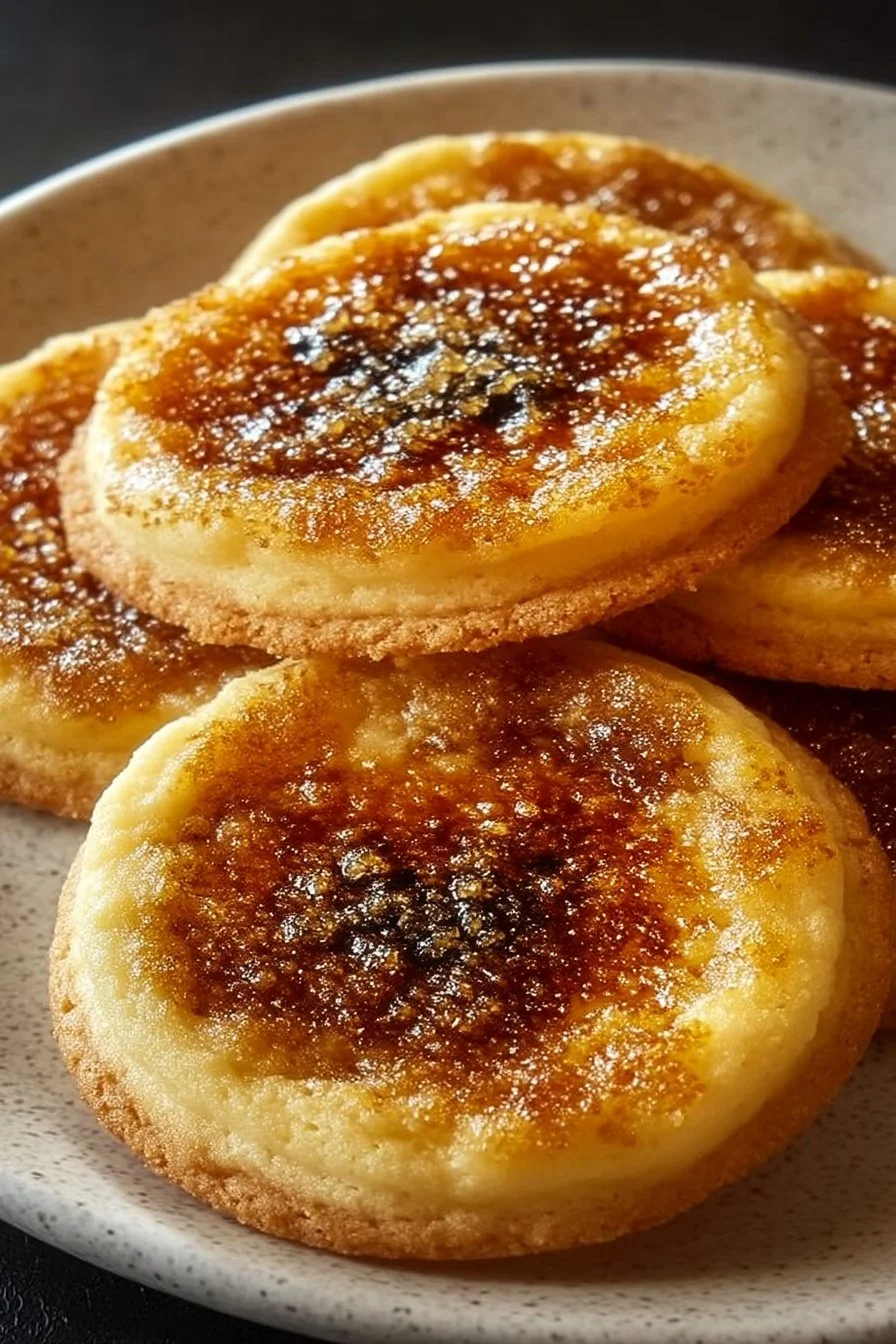
Sweet but not cloying: the cookie itself is mildly sweet and buttery, with warm spice notes from cinnamon and nutmeg. The brown-sugar cream adds molasses depth and a rich, slightly sticky surface that caramelizes to a brittle, nut-brown shell. Together you get a fragrant, rich bite with crisp top, soft interior, and a lingering vanilla finish.
Ingredients You’ll Need
This recipe leans on classic baking building blocks: softened butter for tenderness and flavor, granulated sugar for structure and lift, and a touch of baking soda for just enough rise. The brown-sugar-and-cornstarch mixture cooks into a thickened, brûlée-style topping — cornstarch stabilizes that topping so it won’t be runny when you torch it under the broiler.
- 1 cup unsalted butter, softened
- 1 cup granulated sugar
- 1 tablespoon vanilla extract
- 1 large egg
- 2 cups all-purpose flour
- 1/2 teaspoon baking soda
- 1/2 teaspoon salt
- 1/4 teaspoon ground cinnamon
- 1/4 teaspoon ground nutmeg
- 1/2 cup heavy cream
- 1/4 cup brown sugar
- 1 tablespoon cornstarch
How to Make Irresistible Crème Brûlée Cookies
- Preheat and prepare: Preheat your oven to 350°F (175°C) and line a baking sheet with parchment paper so the cookie bottoms bake evenly.
- Cream butter and sugar: In a large mixing bowl, beat together the softened unsalted butter and granulated sugar until the mixture is light and fluffy — about 2 to 3 minutes with a hand mixer. You want it pale and airy, not greasy.
- Add vanilla and egg: Add the vanilla extract and the large egg to the butter-sugar mixture, and continue to beat until smooth and well combined — stop once the mixture is homogeneous.
- Whisk dry ingredients: In a separate bowl, whisk together the all-purpose flour, baking soda, salt, ground cinnamon, and ground nutmeg so the spices are evenly distributed.
- Combine wet and dry: Gradually add the dry ingredients to the wet mixture, stirring until the dough comes together. The dough should be soft but not sticky; if it clings excessively to your fingers, dust them with a little flour. Don’t overmix — stop once there are no dry streaks.
- Portion the dough: Shape the dough into small 1-inch balls and place them onto the prepared baking sheet, spacing them about 2 inches apart so they don’t touch as they spread. You should get roughly 20–24 cookies depending on exact size.
- Flatten slightly: Use the back of a spoon or your fingers to gently flatten each dough ball into a thick disk about 1/4 inch high — this helps the cookie bake evenly and gives a flat surface for the topping.
- Bake until just set: Bake the cookies in the preheated oven for 10 to 12 minutes, or until the edges are golden and the centers have set. Look for lightly golden rims while the centers look only slightly paler — the cookies will firm up off the heat. Avoid browning the entire surface.
- Cool briefly, then transfer: Once baked, remove the cookies from the oven and allow them to cool on the baking sheet for 5 minutes before transferring them to a wire rack to cool completely; this keeps the bases from getting soggy.
- Heat the cream: While the cookies are cooling, prepare the crème brûlée topping by heating the heavy cream in a small saucepan over medium heat, stirring occasionally until it begins to simmer — you should see tiny bubbles forming at the edges, not a rolling boil.
- Mix sugar and cornstarch: In a separate small bowl, combine the brown sugar and cornstarch, then slowly add this mixture to the simmering heavy cream, whisking constantly to prevent any lumps.
- Thicken the topping: Continue to cook the cream mixture over medium heat for another 2 to 3 minutes until it thickens slightly—when it coats the back of a spoon and leaves a clean line when you run your finger through it, it’s ready. Remove from heat and let cool for a few minutes so it won’t melt the cookies.
- Top the cookies: Once the cookies are completely cool, spoon a small amount (about 1 teaspoon) of the crème brûlée mixture onto the center of each cookie. You want just enough to form a thin layer that will caramelize quickly.
- Caramelize under the broiler: Place the cookies under the broiler in your oven for 1 to 2 minutes, keeping a very close eye on them; the topping will bubble and then turn golden and caramelized. Rotate the pan if your broiler browns unevenly. Warning: broilers vary—stay by the oven since the sugar can go from golden to burnt in seconds.
- Set before serving: Remove the cookies from the oven and allow the caramelized topping to cool and set at room temperature for a few minutes so the sugar hardens into a crisp shell.
Tips for Best Results
- Use room-temperature butter so the creamed mixture can trap air; the dough will be lighter and the cookies won’t be dense.
- Watch the broiler closely — start checking at 60 seconds. The caramelized top should be amber, not dark brown.
- If your topping is too runny after cooling, it needed a little more time cooking on the stove — it should coat a spoon. Reheat gently and boil 30–60 seconds while whisking.
- For the cleanest crunch, let caramelized cookies sit for 10 minutes before stacking to avoid sticky adhesion.
- To make smaller or larger cookies, adjust the baking time slightly: tiny cookies may be done around 8–9 minutes; larger ones may need an extra 2–3 minutes.
Variations and Substitutions
- For a deeper caramel flavor, use dark brown sugar in the topping — it will make the caramel slightly more molasses-forward and darker in color.
- Make mini versions by rolling 3/4-inch balls and reducing bake time; the custard-top-to-cookie ratio becomes more delicate.
- If you prefer a stronger spice note, increase the total of cinnamon and nutmeg to 1/2 teaspoon combined, but keep the balance so the caramel can still shine.
How to Serve It
Serve these cookies at room temperature so the caramel top is crisp and the interior stays soft — they pair beautifully with a small cup of coffee or black tea. For a party tray, arrange them on a shallow plate with a dusting of extra cinnamon on the side for visual warmth and aroma.
How to Store It
- Short term: Store caramelized cookies in a single layer in an airtight container at room temperature for up to 24 hours; the caramel top will begin to soften after that.
- Best method: For longer storage, keep the cookies (baked) and the cooled crème brûlée mixture separate in the refrigerator — the cream mixture keeps 2–3 days chilled. Spoon and broil just before serving to restore the crisp top.
- Freezing: You can freeze baked, un-topped cookies in a single layer, then thaw and add warm crème brûlée topping to finish; do not freeze after caramelizing.
Final Thoughts
These crème brûlée cookies are proof that a small caramelized finish can elevate a classic butter cookie into something special — crisp, fragrant, and surprisingly elegant without extra fuss.
Conclusion
For another take on similarly styled treats, check the classic approach at Crème Brûlée Cookies – Life Love and Sugar.
If you want a variation with a different technique and presentation, see the version at Crème Brûlée Cookies – Julia’s Album.
For a professional recipe reference and additional tips, review Crème Brûlée Cookies Recipe | Food Network Kitchen.