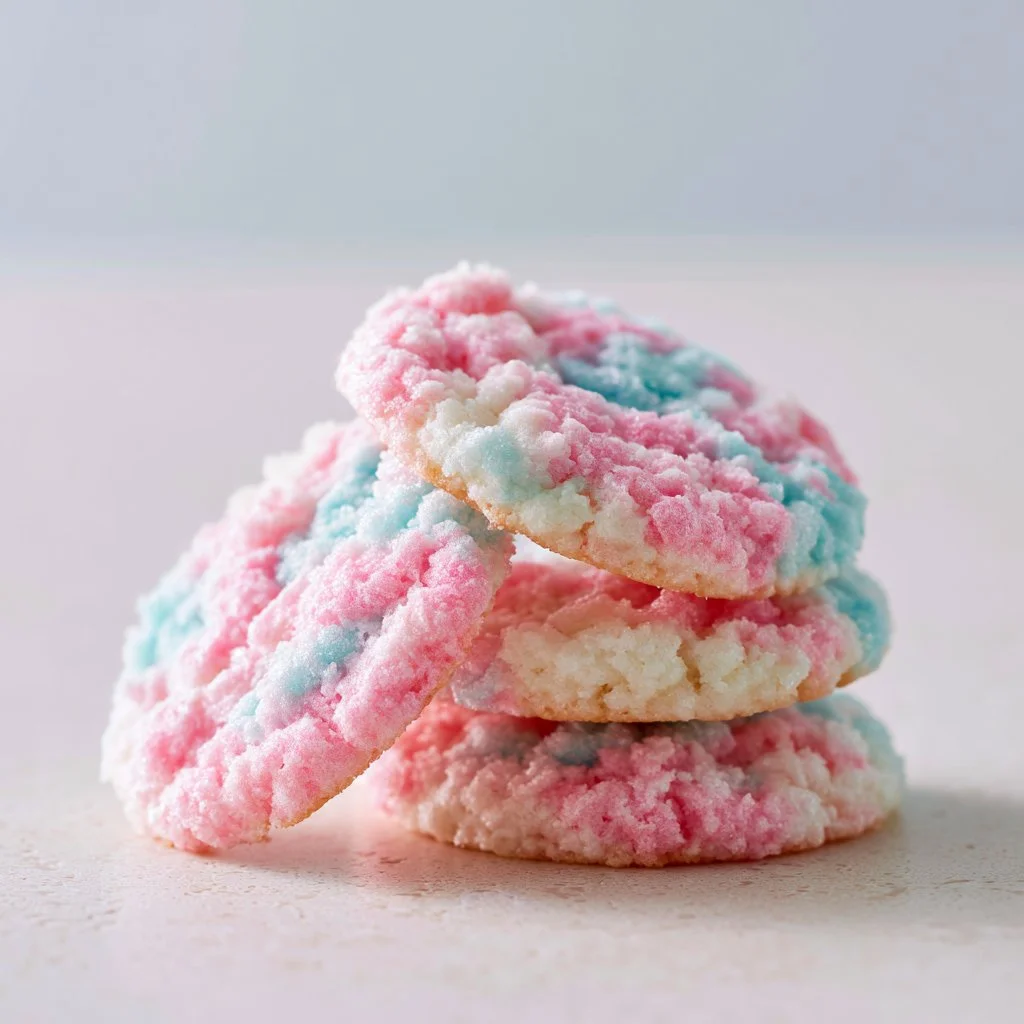

Why You Will Love Mini Lemon Cakes With Lavender Glaze for Spring Baking
Mini Lemon Cakes With Lavender Glaze bring bright citrus, soft floral notes, and a tender crumb together in a way that feels like early spring on a plate. The cakes bake up light and moist, with a fine, velvety texture that comes from creaming butter and sugar properly and using both lemon zest and juice. The lavender glaze adds a pale, glossy finish with a gentle aroma, not a soapy punch, so the cakes taste elegant rather than perfumed. Each mini cake feels special and individual, which makes them ideal for brunch, showers, or a relaxed weekend tea tray.
This recipe also works well for real life, not just pretty photos. The batter comes together with standard pantry ingredients, and you can bake it in a muffin tin, mini bundt pan, or even a square pan if that is what you own. The lavender glaze uses dried culinary lavender steeped in warm cream or milk, so you control how strong the flavor becomes. Once you understand the method, you can adjust the sweetness, the lemon intensity, and the lavender strength to suit your own taste and the preferences of your guests.
Ingredients and Flavor Notes
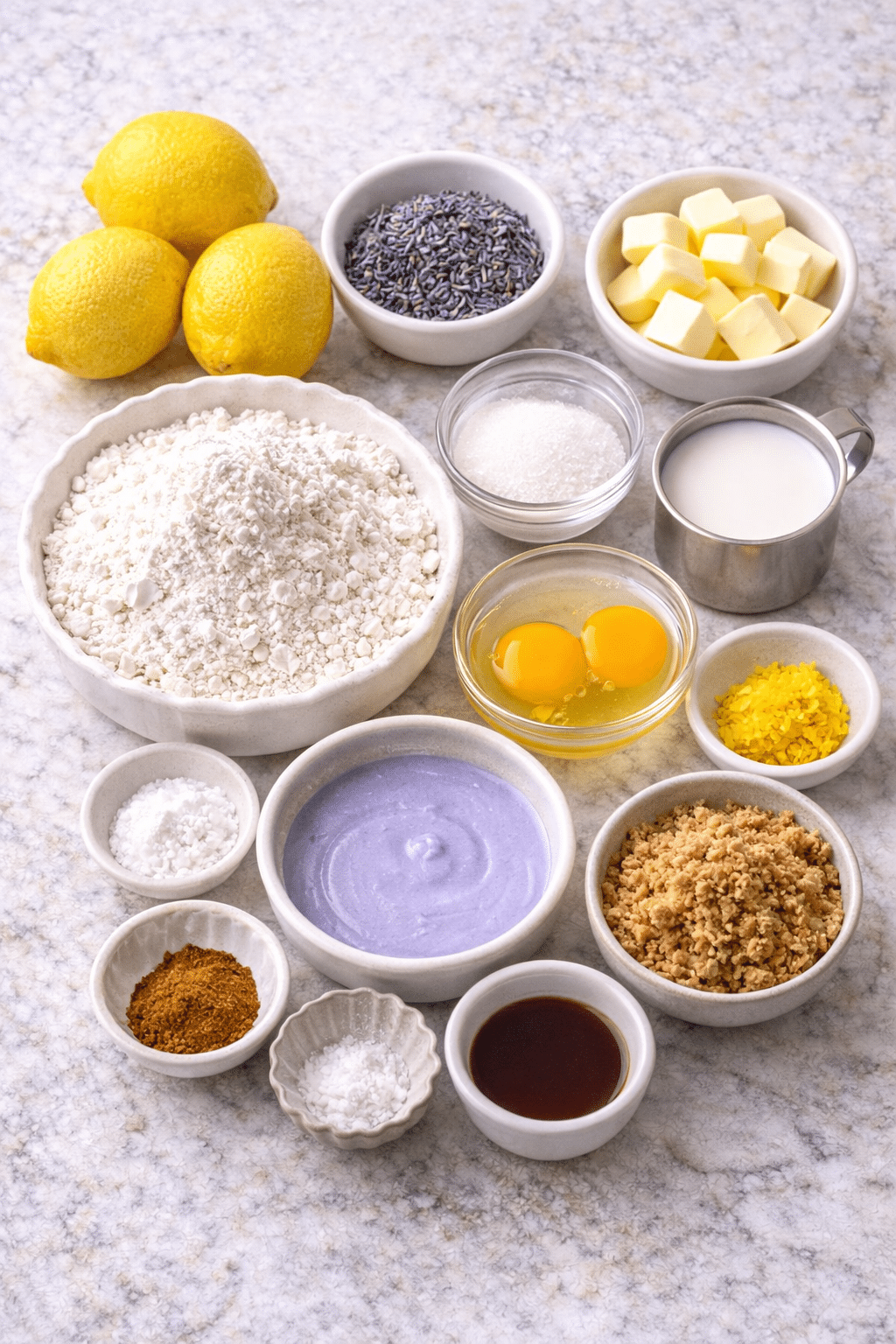
For Mini Lemon Cakes With Lavender Glaze, you need a classic butter cake base with a few citrus focused tweaks. Use unsalted butter, softened but still cool to the touch, so you can cream it with sugar until very pale and fluffy. Granulated sugar gives structure and sweetness, while a bit of fine salt keeps the lemon from tasting harsh. Eggs add richness and help the cakes hold their shape, and using them at room temperature prevents the batter from curdling.
You will rely on both lemon zest and lemon juice for a clean, bright flavor. The zest carries the fragrant oils, so always zest directly over the mixing bowl to catch every drop of aroma. Fresh juice beats bottled by a mile, but if you must use bottled, taste and adjust the sugar slightly, since some brands taste sharper. For the dry ingredients, use all purpose flour, baking powder for lift, and, if you like a softer crumb, a spoonful or two of cornstarch to mimic cake flour.
The lavender glaze needs only a few ingredients, but quality matters. Use culinary grade dried lavender, not the decorative kind from craft stores, which can taste dusty or bitter. You will briefly steep the lavender in warm cream or whole milk, then strain it and whisk the infused liquid into powdered sugar. A squeeze of lemon juice in the glaze ties it to the cakes and keeps the floral note from floating away from the citrus. If you prefer a lighter glaze, thin it with more infused liquid until it runs in a slow ribbon off the whisk.
Swaps stay simple and practical. You can replace some of the lemon juice with buttermilk for extra tenderness and a gentle tang, or use half lemon, half orange for a softer citrus profile. If you cannot find culinary lavender, you can skip it and use a plain lemon glaze, or add a very small drop of food grade lavender extract if you already own it. For dairy free guests, use a neutral oil instead of butter and a rich plant milk in the glaze, but know that the flavor will lean more neutral and you will miss some of the buttery notes.
How to Make Mini Lemon Cakes With Lavender Glaze for Spring Baking
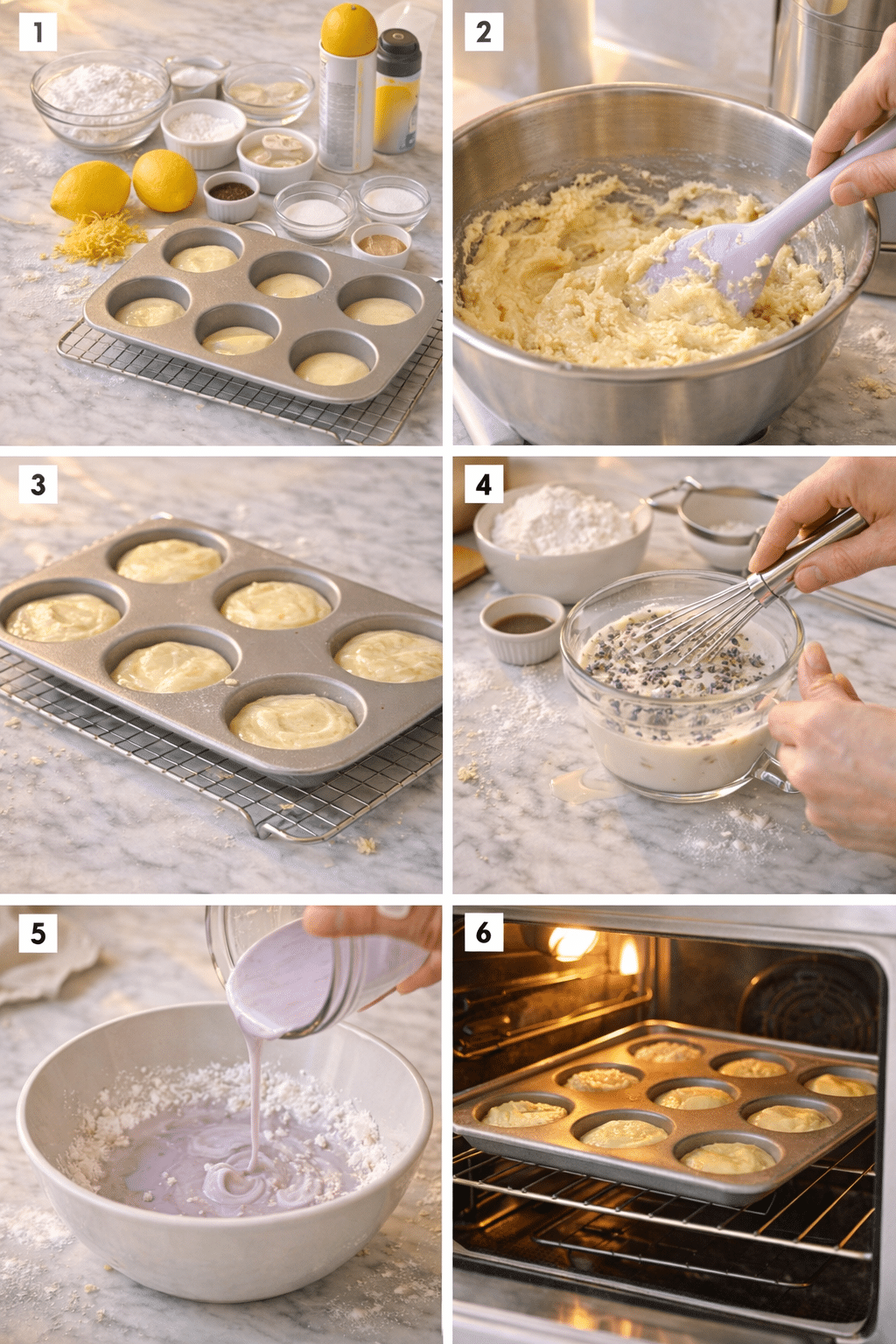
Start by preparing your pan and ingredients so you can work smoothly. Grease a 12 cup muffin tin or mini bundt pan thoroughly, then dust lightly with flour and tap out the excess. Line the bottoms of muffin cups with small parchment circles if sticking worries you. Preheat the oven to 175 °C, and bring your eggs, butter, and any dairy to room temperature for at least 30 minutes so the batter mixes evenly.
In a medium bowl, whisk together the flour, baking powder, salt, and any cornstarch you choose to use. In a larger bowl, beat the softened butter with granulated sugar until it looks very pale and fluffy, which usually takes 3 to 5 minutes with a hand mixer at medium speed. Add finely grated lemon zest directly over the bowl, then beat again so the zest oils distribute through the fat. Add the eggs one at a time, beating well and scraping the bowl after each addition, until the mixture looks smooth and slightly thick.
Stir the lemon juice into your milk or buttermilk, then add the dry ingredients to the butter mixture in 3 parts, alternating with the liquid in 2 parts. Begin and end with the dry ingredients, and mix on low speed or by hand just until no streaks of flour remain. The batter should look smooth and fall from a spoon in thick ribbons, not clumps. If it seems very stiff, fold in a spoonful more milk, but do not overmix or the cakes will bake up tough.
Spoon the batter into your prepared pan, filling each cavity about two thirds full. For even baking, use a small scoop and level the tops gently with the back of a spoon. Bake at 175 °C for 15 to 20 minutes for muffin sized cakes, or up to 22 minutes for mini bundt cakes, until the tops spring back lightly and a toothpick comes out with a few moist crumbs. If the edges brown too fast, tent the pan loosely with foil for the last few minutes.
While the cakes bake, prepare the lavender infusion for the glaze. Warm a small amount of cream or whole milk in a saucepan until it is steaming but not boiling, then remove it from the heat and stir in the dried culinary lavender. Cover and let it steep for 5 to 10 minutes, tasting after 5 minutes to check the strength. Strain the liquid through a fine sieve, pressing gently on the lavender, then discard the flowers and let the infused cream cool slightly.
To make the glaze, sift powdered sugar into a bowl to avoid lumps. Whisk in a few spoonfuls of the warm lavender cream and a teaspoon or two of lemon juice until you reach a thick but pourable consistency. You want the glaze to coat the back of a spoon and drip slowly, not run like water. If it becomes too thin, add more powdered sugar, and if it is too stiff, whisk in a few drops more infused cream. Adjust the lemon juice and lavender to taste, remembering that the flavor will soften once it sets on the cakes.
Let the mini lemon cakes cool in the pan for about 10 minutes, then run a thin knife around the edges and gently turn them out onto a rack. Cool them completely before glazing, or the glaze will slide off and pool around the base. Once cool, place the rack over a sheet of parchment to catch drips, then spoon or drizzle the lavender glaze over the tops. You can let it run naturally for a rustic look or rotate each cake slowly while you drizzle for more even coverage.
Make-Ahead, Storage, and Serving Tips
Mini Lemon Cakes With Lavender Glaze handle make ahead plans quite well if you stagger the steps. You can bake the cakes a day in advance, cool them completely, then wrap them tightly in plastic and store them at room temperature. Wait to glaze until a few hours before serving, so the surface stays glossy and the lavender aroma remains noticeable. If you want to work even further ahead, you can freeze the unglazed cakes for up to 2 months, wrapped in a double layer, then thaw at room temperature before glazing.

For storage, keep glazed cakes in an airtight container at cool room temperature for 1 day, or refrigerate them for up to 3 days. The glaze will firm up in the fridge and may lose a bit of shine, but the flavor holds well. If you refrigerate them, bring the cakes out about 30 minutes before serving so the butter in the crumb softens again. Avoid stacking glazed cakes directly on top of each other, or use parchment between layers to protect the finish.
You can customize this recipe for different crowds and occasions. For stronger citrus, add an extra half teaspoon of lemon zest to the batter and a touch more lemon juice to the glaze, then cut the lavender slightly so the flavors stay balanced. For a softer floral note, reduce the steeping time of the lavender or use part plain milk and part infused milk in the glaze. If you want a showier look, sprinkle a few fresh edible flowers or a tiny pinch of dried lavender buds on the wet glaze, but go light so the texture stays pleasant.
Serving Mini Lemon Cakes With Lavender Glaze works best when you think about contrast. The cakes themselves are sweet, soft, and fragrant, so pair them with something simple like unsweetened hot tea, black coffee, or chilled sparkling water with a lemon slice. On a brunch table, arrange the mini cakes on a platter with fresh berries and a bowl of softly whipped cream that is only lightly sweetened. For a spring dessert plate, serve one cake with a spoonful of macerated strawberries or blueberries, which bring color and a bit of acidity to play against the floral glaze.
FAQ
How strong should the lavender flavor be in the glaze?
Aim for a gentle, background floral note that supports the lemon, not something that dominates the whole bite. When you steep the dried lavender in warm cream or milk, taste the liquid after 5 minutes, then every 2 minutes after that. Stop steeping as soon as it tastes pleasantly floral and slightly sweet, not bitter or medicinal. Remember that the flavor will seem a little milder once you mix it with powdered sugar and lemon juice and once it sets on the cakes. If you accidentally go too strong, dilute the infusion with plain milk before whisking it into the sugar.Can I bake this recipe as a full size cake instead of mini cakes?
Yes, you can bake the batter in a standard 20 centimeter round or square pan, greased and lined with parchment. The baking time will increase to about 25 to 35 minutes, depending on your oven and pan material, so start checking at 25 minutes. Look for lightly golden edges, a springy top, and a tester that comes out with a few moist crumbs. Cool the cake in the pan for 15 minutes, then turn it out and cool completely before glazing. For a full size cake, you may want to make a slightly thicker glaze so it stays on top in a smooth layer rather than running down the sides too quickly.What if my mini lemon cakes come out dry or dense?
Dry or dense Mini Lemon Cakes With Lavender Glaze usually mean overbaking or overmixing. Check your oven temperature with an oven thermometer, since many home ovens run hot, and pull the cakes as soon as the tops spring back and the tester shows moist crumbs. When you mix the batter, stop as soon as the flour disappears, and scrape the bowl well so you do not need extra mixing later. Measure flour by spooning it into the cup and leveling it, rather than scooping, which packs in too much. If your cakes still feel a bit dry, you can brush them lightly with warm lemon syrup before glazing to add moisture and flavor.How can I make these cakes suitable for guests with dietary restrictions?
For gluten free guests, use a good quality 1 to 1 gluten free flour blend that includes xanthan gum, and let the batter rest for 10 minutes before baking so the starches hydrate. For dairy free needs, swap the butter for a neutral flavored oil or a dairy free baking margarine, and use plant milk in both the batter and glaze. The texture will be slightly different, more tender and less buttery, but still pleasant. If you need to reduce sugar, you can cut the sugar in the batter by about 15 percent without major texture issues, and make a thinner glaze layer instead of a thick coat. Always label the cakes clearly so guests know which version they are choosing.
Conclusion
Mini Lemon Cakes With Lavender Glaze bring together bright citrus, gentle floral notes, and a tender crumb in a format that feels both pretty and practical for spring baking. With straightforward ingredients and a clear method, you can produce individual cakes that look polished enough for company but do not demand professional pastry skills. The key steps stay simple, from proper creaming and careful mixing to a brief lavender infusion that you can adjust to your own taste.
Once you understand the balance between lemon, sweetness, and lavender, you can adapt this recipe to many occasions, from brunch trays to afternoon tea or a light dessert after a rich meal. The cakes store and freeze well, which makes them friendly for advance planning and relaxed entertaining. Set them out on a platter, let the glaze catch the light, and enjoy how these small cakes quietly steal the show without much fuss.
Recipe

Mini Lemon Cakes With Lavender Glaze for Spring Baking
Ingredients
- 1 1/2 cups all-purpose flour
- 2 tbsp cornstarch
- 1 1/2 tsp baking powder
- 1/2 tsp fine sea salt
- 1/2 cup whole milk or buttermilk at room temperature
- 1/4 cup fresh lemon juice about 2 lemons
- 1/2 cup unsalted butter softened
- 3/4 cup granulated sugar
- 1 tbsp finely grated lemon zest from 1–2 lemons
- 2 large eggs at room temperature
- 1 tsp vanilla extract optional
- 1/4 cup heavy cream or whole milk
- 1 tsp dried culinary lavender
- 1 1/2 –2 cups powdered sugar sifted
- 1 –2 tbsp fresh lemon juice
- Pinch fine sea salt optional
Instructions
- Preheat the oven to 350°F (175°C). Grease a 12-cup muffin tin or mini bundt pan thoroughly, dust lightly with flour, and tap out the excess. Line muffin cup bottoms with parchment circles if desired.
- In a medium bowl, whisk together the flour, cornstarch, baking powder, and 1/2 teaspoon salt until well combined; set aside.
- In a small measuring cup or bowl, stir together the milk or buttermilk and 1/4 cup lemon juice; let sit a few minutes while you prepare the batter.
- In a large mixing bowl, beat the softened butter and granulated sugar with a hand mixer on medium speed until very pale and fluffy, 3–5 minutes, scraping down the bowl as needed.
- Add the lemon zest directly over the butter-sugar mixture so the oils fall into the bowl, then beat again to distribute the zest evenly. Beat in the vanilla extract if using.
- Add the eggs one at a time, beating well after each addition and scraping down the bowl, until the mixture is smooth and slightly thick.
- Add one-third of the flour mixture to the butter mixture and mix on low just until combined. Add half of the lemon-milk mixture and mix gently. Repeat with another third of the flour, the remaining lemon-milk, then the final third of flour, mixing on low or by hand just until no dry streaks remain.
- Check the batter consistency; it should be smooth and fall in thick ribbons from a spoon. If it seems very stiff, gently fold in an extra tablespoon of milk, taking care not to overmix.
- Spoon or scoop the batter into the prepared pan, filling each cavity about two-thirds full. Smooth the tops lightly with the back of a spoon for even baking.
- Bake for 15–20 minutes, or until the tops are lightly golden, the cakes spring back when gently pressed, and a toothpick inserted in the center comes out clean.
- Let the cakes cool in the pan for 5–10 minutes, then carefully loosen the edges with a thin knife and transfer to a wire rack to cool completely before glazing.
- While the cakes cool, warm the 1/4 cup cream or milk in a small saucepan or microwave-safe bowl until steaming but not boiling. Stir in the dried lavender, cover, and let steep for 5–10 minutes, depending on how strong you want the flavor.
- Strain the lavender-infused cream through a fine mesh sieve into a clean bowl, pressing gently on the lavender to extract the liquid; discard the solids.
- In a medium bowl, whisk 1 1/2 cups powdered sugar with 2–3 tablespoons of the warm lavender-infused cream, 1 tablespoon lemon juice, and a pinch of salt if using. Add more infused cream or lemon juice a teaspoon at a time until the glaze is smooth and flows in a slow ribbon from the whisk. If too thin, whisk in additional powdered sugar.
- Place the cooled mini cakes on a wire rack set over a sheet of parchment or a tray. Spoon the lavender glaze over the tops of each cake, letting it drip down the sides. For a more opaque finish, let the first layer set slightly, then add a second spoonful of glaze.
- Allow the glaze to set for at least 15–20 minutes before serving. Serve at room temperature.
Notes
For a softer, cake-flour-like texture, keep the cornstarch in the recipe; it helps create a finer crumb.
Adjust the lavender strength by steeping a shorter or longer time, or by using slightly less or more lavender to taste.
If you prefer a stronger lemon flavor, add an extra 1/2 tablespoon lemon zest to the batter or an additional teaspoon of lemon juice to the glaze.
These mini cakes are best the day they are glazed but keep well in an airtight container at room temperature for up to 2 days.