Why This One Delivers
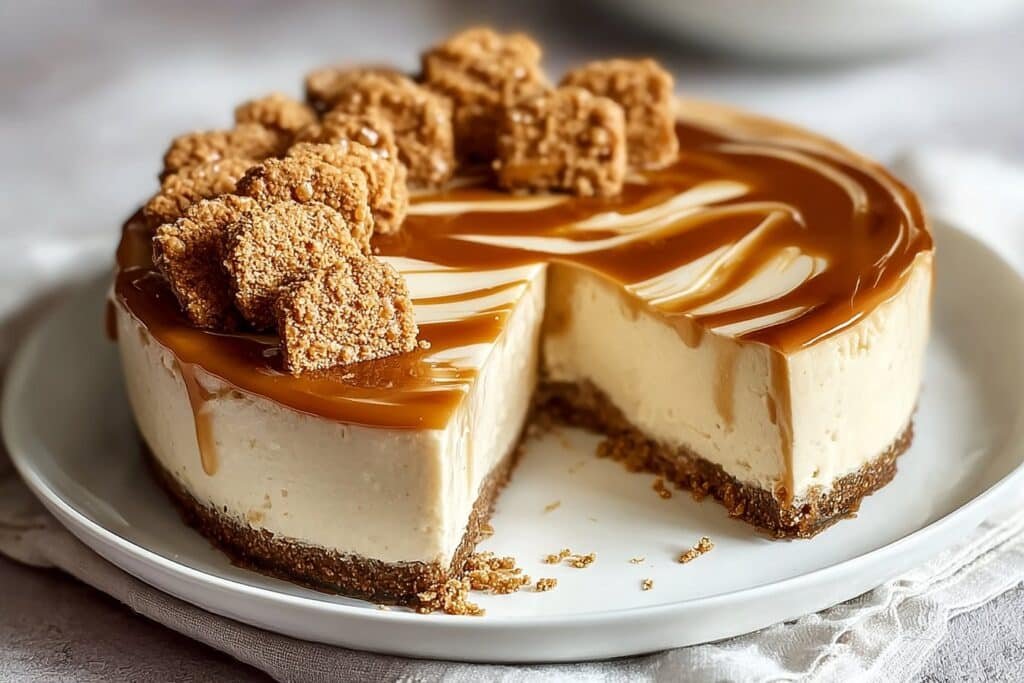
If you want a show stopping Biscoff Salted Caramel Cheesecake that slices cleanly, tastes like it came from a bakery case, and does not require a fussy water bath, this one is for you. You get that rich, velvety texture and glossy caramel finish using simple, grocery store ingredients and straightforward steps you can actually follow on a busy day.
This Biscoff Salted Caramel Cheesecake starts with a generous 200 grams of Biscoff cookies and real melted butter, so the crust bakes up sturdy enough to hold tall slices but still tastes like a buttery cookie instead of dry crumbs. The filling relies on full fat cream cheese and sour cream, so it stays luxuriously smooth, bakes evenly, and never turns chalky or rubbery. You mix the eggs in gently, one at a time, which keeps extra air out of the batter so the cheesecake bakes level, with fewer cracks.
The salted caramel comes together in a single saucepan with sugar, cream, and sea salt. You build it from scratch, so you control how dark, deep, and salty it tastes. Letting the caramel cool and thicken slightly before you drizzle creates slow moving ribbons that cling to every slice instead of sliding right off. Baking at 350°F, using a simple jiggle test, keeps the method approachable but still precise, and the long chill time means clean, confident slices instead of a soft slump on the plate. A final sprinkle of crumbled Biscoff cookies over the top adds crunch, visual contrast, and that warm, spiced aroma that hits you before the first bite, exactly what you want from a bakery style cheesecake.
From Prep to Finish
Once you gather everything for this Biscoff Salted Caramel Cheesecake, think of the process in three calm stages: crust, filling, and caramel. Start with the crust so your kitchen already smells cozy while you prep the rest. Crush the Biscoff cookies finely, almost like sand, so they pack tightly and bake into a firm base. When you mix the crumbs with melted butter, the texture should feel like slightly damp sand that holds together when you pinch it between your fingers. Press the mixture firmly into your springform pan with the bottom of a measuring cup so the crust is even and compact, then bake until it darkens slightly and smells toasty.
While the crust cools, you build the creamy center. For a smooth cheesecake, make sure your cream cheese, sour cream, and eggs are all at room temperature, or you risk a lumpy batter and more surface cracks. Beat the cream cheese and sugar together until the mixture looks glossy and there are no visible specks. Gently blend in the sour cream and vanilla until the batter looks uniform and silky. When you add the eggs, mix slowly and stop as soon as each one disappears into the batter. Overmixing whips in too much air, which can cause puffing in the oven and sinking later. Pour the filling over the cooled crust, smooth the top with an offset spatula, then bake just until the edges are set and the middle still has a soft wobble, like set agar-agar powder in the center when you nudge the pan.
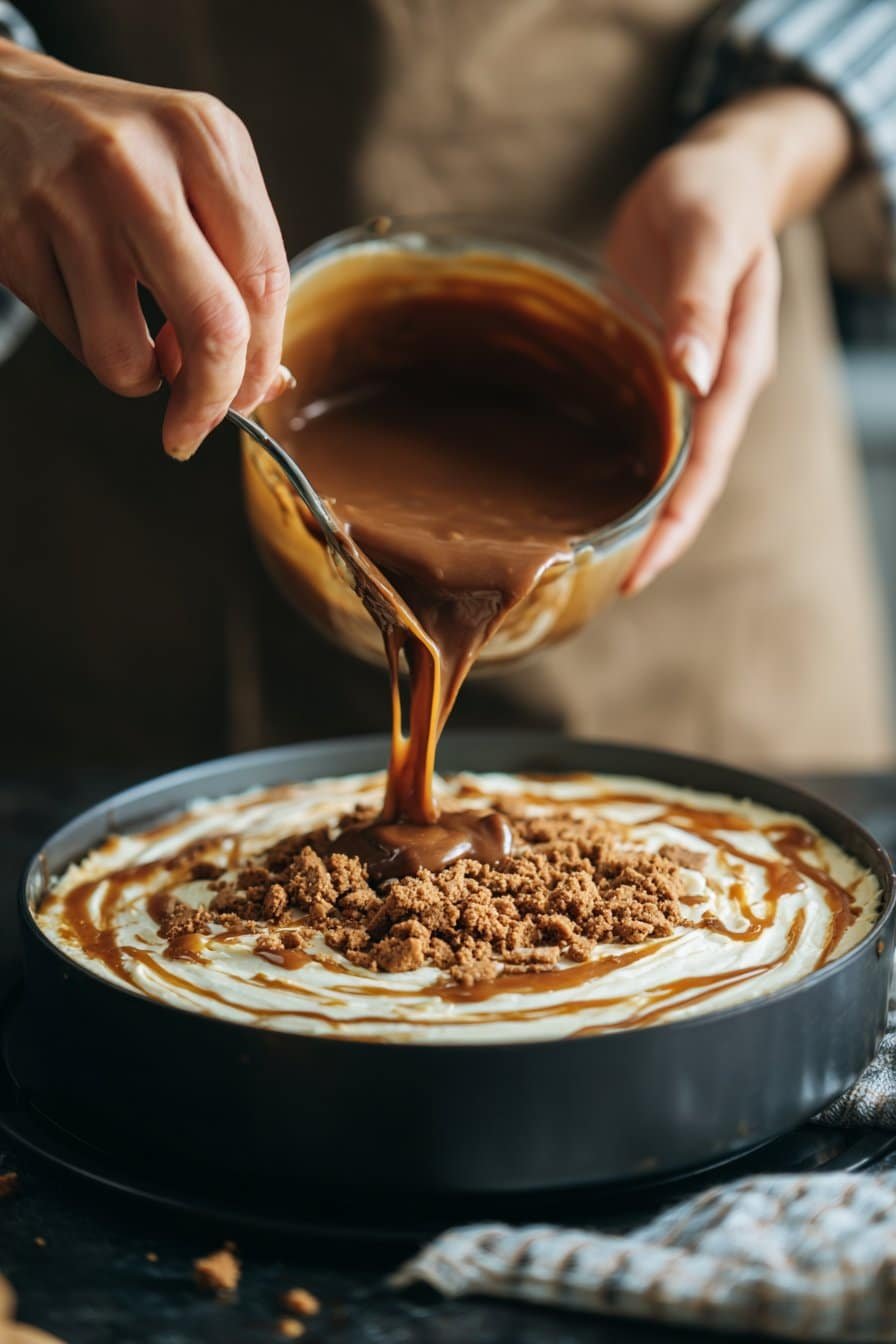
For the salted caramel, patience and attention are your best tools. Add the sugar to a saucepan and melt it over medium heat, watching closely since it moves from pale to amber to burnt very quickly. Rotate the pan or gently stir once it starts to melt so it colors evenly. When it reaches a deep golden shade and smells nutty but not bitter, carefully whisk in the cream. The mixture will bubble up vigorously, so keep your hands protected and whisk steadily. Stir until the caramel looks smooth and glossy, then season with sea salt a little at a time, tasting as you go so it does not become too salty. Let the caramel cool until it thickens to a slow, steady pour. Once your chilled cheesecake is set, ripple the caramel over the top, scatter crumbled Biscoff cookies, and finish with an extra drizzle of caramel so it looks like it came straight from a pastry shop.
Timing, storage, and make ahead
This cheesecake needs a bit of planning, but the timeline is simple and very forgiving. After baking for about 50 to 60 minutes, turn off the oven and crack the door. Let the cheesecake cool inside for about 30 minutes so the temperature drops gradually and the surface stays smoother. Move the pan to a cooling rack and let it sit at room temperature for another hour, until it no longer feels warm to the touch. Once it reaches that point, cover the pan and chill for at least 4 hours, though overnight gives you the cleanest slices and the best flavor. If you are serving guests, bake it the day before and keep the caramel and cookie crumbles separate in the fridge until just before serving so they stay glossy and crisp.
For storage, keep your cheesecake covered in the refrigerator, either in the springform pan wrapped tightly in plastic or transferred to a cake container. It stays fresh for about 4 to 5 days. Hold off on the final caramel drizzle and Biscoff cookie crumbles until right before serving so the caramel does not weep and the crumbs do not soften too much. If you want easy individual treats for the week, slice the chilled cheesecake, separate the slices with pieces of parchment, and store them in an airtight container. A cold slice beside a cup of coffee is pure comfort on a weekday afternoon.
To freeze, chill the cheesecake completely first. Then freeze the whole cake or individual slices on a baking sheet until firm. Wrap tightly in a double layer of plastic, then in foil, and freeze for up to 2 months. Thaw overnight in the refrigerator, then add fresh caramel and Biscoff cookie crumbles on top before serving. The texture stays silky and rich, which makes this cheesecake a wonderful make ahead dessert for holidays, birthdays, or any night that needs a little extra sweetness and ceremony.
Ingredient Swaps and Serving Options
You can keep the cozy flavor of this dessert and still play around quite a bit. If you are out of Biscoff cookies, you can use any crisp spiced cookie or graham crackers and stir a teaspoon of ground cinnamon into the crumbs to mimic that warm flavor. Swap the sour cream with full fat Greek yogurt for a slightly tangier note, or use mascarpone for a richer, silkier base. If you do not have vanilla bean paste, use vanilla bean paste and add a tiny splash of almond extract for a bakery style aroma. For a softer caramel that flows more easily, add a little extra cream. For a deeper, more intense taste, cook the sugar just a shade darker before you add the cream. You can also use flaky sea salt instead of fine salt and sprinkle a pinch over the cheesecake just before serving for a pretty sparkle and a gentle crunch.
To lighten things up, replace part of the cream cheese with Neufchâtel and go a bit thinner with the caramel drizzle. Gluten free cookies work nicely in the crust as long as they are crisp, not cakey, which makes this cheesecake easy to adapt for gluten sensitive guests. Dress the top with crushed Biscoff cookies, a ring of whipped cream swirls, or a pile of caramel coated pecans if you want extra crunch and drama. Serve neat slices on their own, with cold brewed coffee, or beside a scoop of vanilla or Biscoff ice cream for a restaurant style dessert plate. For parties, cut the cheesecake into slim bars or bite size squares, chill them well, then spoon caramel on right before they go out so the edges stay sharp and tidy. If you love this flavor combination, you can carry it into other treats too, like a Biscoff blondie base or a layered no bake caramel cheesecake parfait for warm summer days.
Instructions Process of Biscoff Salted Caramel Cheesecake
Conclusion
I hope you can already imagine that first forkful of cool, silky cheesecake, the crunch of Biscoff crumbs, and the slow pull of salted caramel. There is something so grounding about taking a little time to stir, bake, and wait, then cutting into a dessert that feels like it belongs in a glass display case.
A homemade Biscoff Salted Caramel Cheesecake has a quiet kind of magic. It turns an ordinary evening into a small celebration and makes simple gatherings feel a little more special. I picture you setting this down in the middle of the table and hearing that soft pause, followed by, “That looks incredible.” Someone goes back for just a sliver more, the conversation stretches out, and suddenly no one is in a hurry to leave.
You are not just following a set of steps here, you are creating a sweet little pause in the middle of real life. I hope you feel confident enough to bring this cheesecake into your own kitchen, tweak it to your taste, and share it with the people you love.
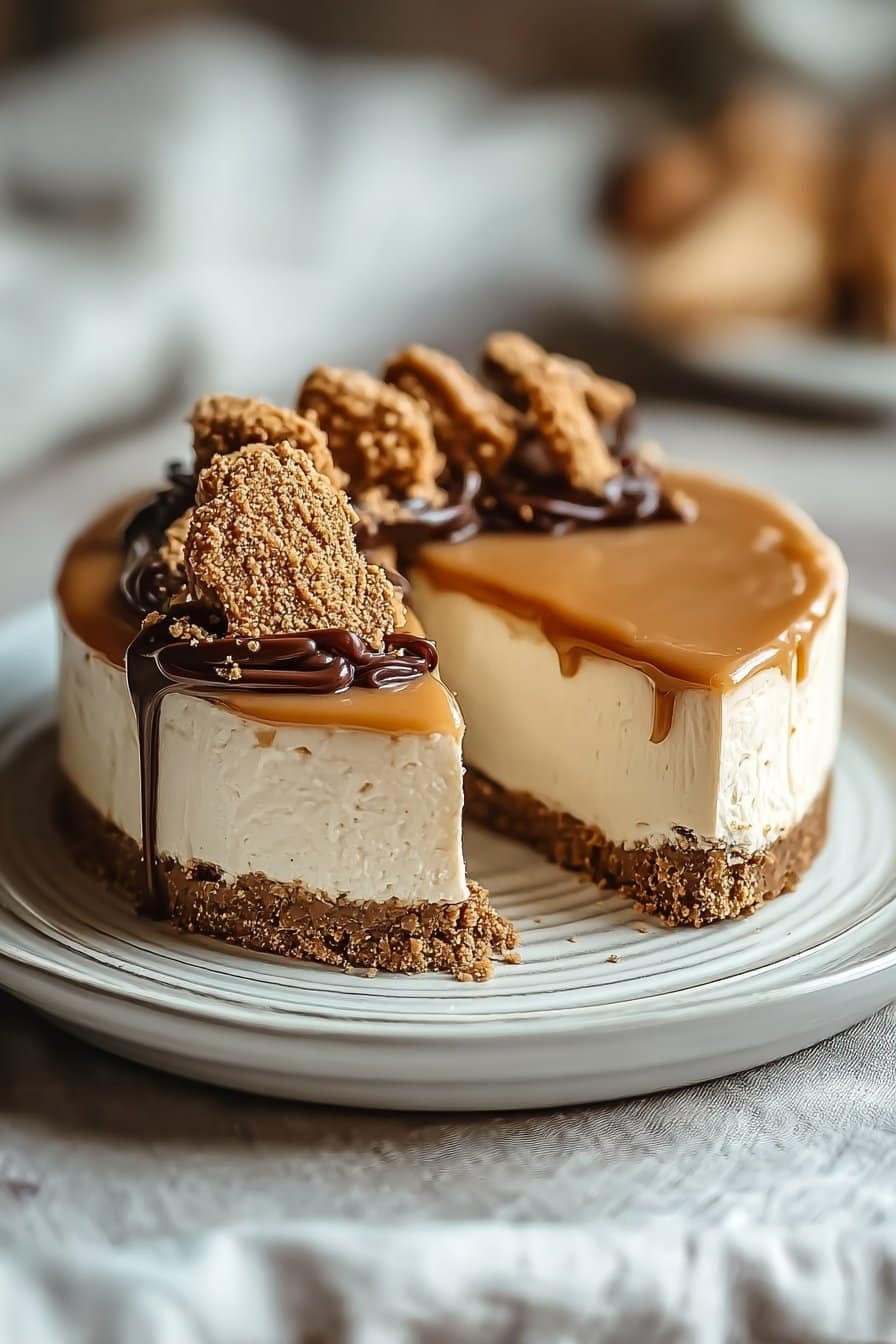
Serving of Biscoff Salted Caramel Cheesecake
Recipe
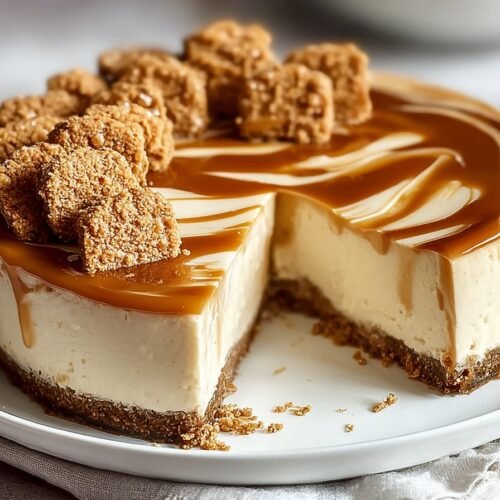
Biscoff Salted Caramel Cheesecake
Ingredients
Ingredients
- 7 ounces Biscoff cookies crushed into fine crumbs (about 200 grams)
- 7 tablespoons unsalted butter melted (about 100 grams)
- 18 ounces full fat cream cheese softened (about 500 grams)
- 3/4 cup granulated sugar about 150 grams
- 7 ounces sour cream at room temperature (about 200 grams)
- 2 teaspoons vanilla bean paste
- 3 large eggs at room temperature
- 1 cup granulated sugar about 200 grams
- 1/3 cup heavy cream at room temperature (about 100 milliliters)
- 1 teaspoon sea salt
- 4 Biscoff cookies crumbled, for topping
- 1/3 cup caramel sauce for extra drizzle (optional, can use reserved homemade caramel)
Instructions
- Preheat the oven to 350°F and grease a 9 inch springform pan.
- In a medium bowl, combine the crushed Biscoff cookies and melted butter and stir until the crumbs are evenly coated and the mixture looks like damp sand.
- Press the crumb mixture firmly into the bottom of the prepared pan in an even layer, then bake for 10 minutes. Remove from the oven and let the crust cool while you prepare the filling.
- In a large mixing bowl, beat the softened cream cheese and 3/4 cup granulated sugar with a hand mixer or stand mixer on medium speed until smooth and creamy, with no lumps remaining.
- Add the sour cream and vanilla bean paste to the cream cheese mixture and mix on low speed until fully combined and silky.
- Add the eggs one at a time, mixing on low just until each egg is incorporated and stopping to scrape down the sides of the bowl as needed. Do not overmix.
- Pour the cheesecake batter over the cooled crust in the springform pan and smooth the top with a spatula.
- Place the pan in the oven and bake at 350°F for 50 to 60 minutes, until the edges are set and the center still has a gentle jiggle when you nudge the pan.
- Turn off the oven, crack the oven door slightly, and let the cheesecake cool inside the oven for 30 minutes.
- Remove the cheesecake from the oven, place the pan on a wire rack, and let it cool at room temperature for about 1 hour, until no longer warm to the touch.
- Cover the pan and refrigerate the cheesecake for at least 4 hours, or until fully chilled and firm, preferably overnight.
- While the cheesecake cools, make the salted caramel. Add 1 cup granulated sugar to a medium heavy bottomed saucepan and set over medium heat. Cook, stirring occasionally as it starts to melt, until the sugar is fully melted and turns a deep golden amber color.
- Carefully pour in the heavy cream while whisking constantly. The mixture will bubble vigorously. Continue whisking until the caramel is smooth and combined.
- Remove the pan from the heat and stir in the sea salt until dissolved. Let the caramel cool at room temperature until it thickens to a slow, pourable consistency.
- When the cheesecake is fully chilled, release it from the springform pan and transfer it to a serving plate. Pour a generous amount of the cooled salted caramel over the top, letting it drip slightly over the edges.
- Sprinkle the crumbled Biscoff cookies over the caramel and finish with an extra drizzle of caramel sauce, if desired. Slice with a sharp knife and serve.
Notes
- For the cleanest slices, chill the cheesecake overnight and wipe the knife clean between cuts.
- If you prefer a deeper caramel flavor, cook the sugar until it reaches a slightly darker amber, but take care not to let it burn.
- Store leftover cheesecake covered in the refrigerator for up to 5 days; add fresh caramel and cookie crumbs just before serving for best texture.