The Memory Behind This Treat
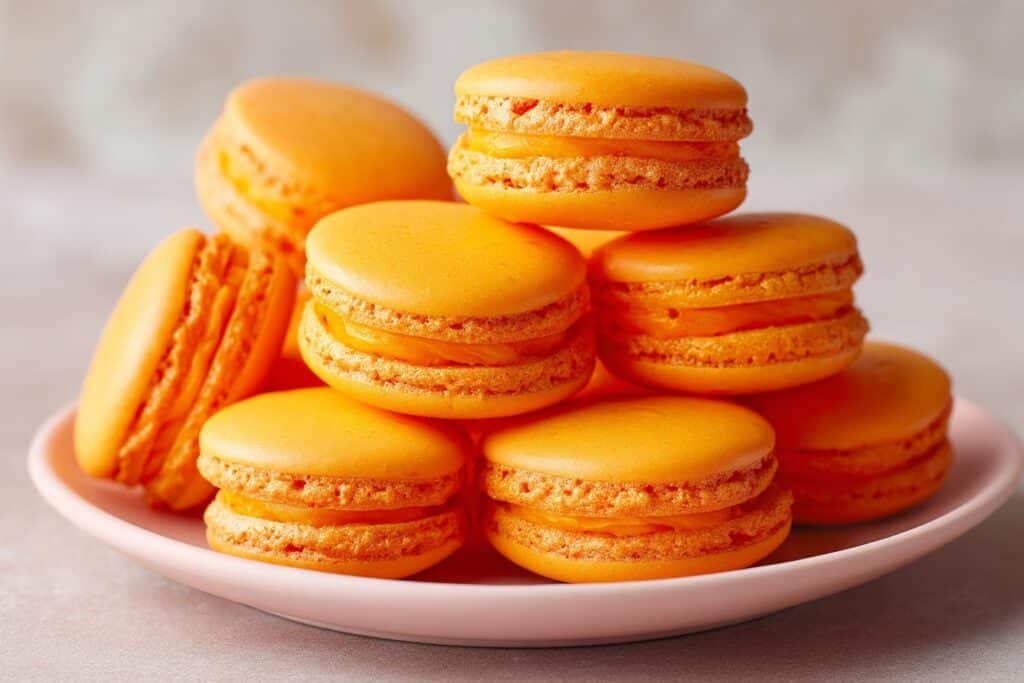
The very first batch of these Mandarin Orange Macarons happened by accident on a winter afternoon when my kitchen was filled with holiday chaos and way too many citrus fruits. My mom had dropped off a bag of mandarins “because they were on sale,” and I already had a bowl of aging egg whites on the counter from a failed meringue the night before. I remember zesting that first mandarin and being surprised by how the oils misted the air, soft and floral, not sharp like a regular orange. The zest slipped into the buttercream, and suddenly the whole kitchen smelled like sunshine and sugar. When I sandwiched those pale orange shells around the filling, they looked like tiny, glossy mandarins lined up on the tray, button-sized but so full of promise.
What I love most about these Mandarin Orange Macarons is how they’ve become a “just because” dessert in my family. They started as a fancy holiday experiment and turned into the treat we make for Sunday coffee, report card celebrations, and the occasional rough week pick-me-up. My sister insists they taste like “a creamsicle that went to Paris,” and she’s not wrong. The crisp almond shell, the gentle chew in the center, and that smooth, citrusy buttercream make them feel special without being fussy. Every time I pipe those little 1-inch circles, I think of that first messy attempt—orange gel food coloring on my fingers, powdered sugar footprints on the floor, and the moment I bit into one and knew this recipe was a keeper.
How To Make It (Mix & Ingredients)
To get those classic, smooth-shelled Mandarin Orange Macarons, you’ll start by building two main components: the almond meringue shells and the citrusy buttercream filling. For the shells, you’ll whisk room-temperature, aged egg whites with granulated sugar until you reach glossy stiff peaks—think shiny and able to stand straight up when you lift the whisk. In another bowl, you’ll sift almond flour and powdered sugar together twice; this step feels fussy, but it’s what gives you those delicate, even tops instead of bumpy cookies. Once your meringue is ready, you’ll gently fold the dry ingredients into it in two additions, using a soft figure-eight motion so you don’t deflate everything too quickly. Stop mixing when the batter flows off your spatula in a slow, lava-like ribbon that disappears back into itself in about 10 seconds.
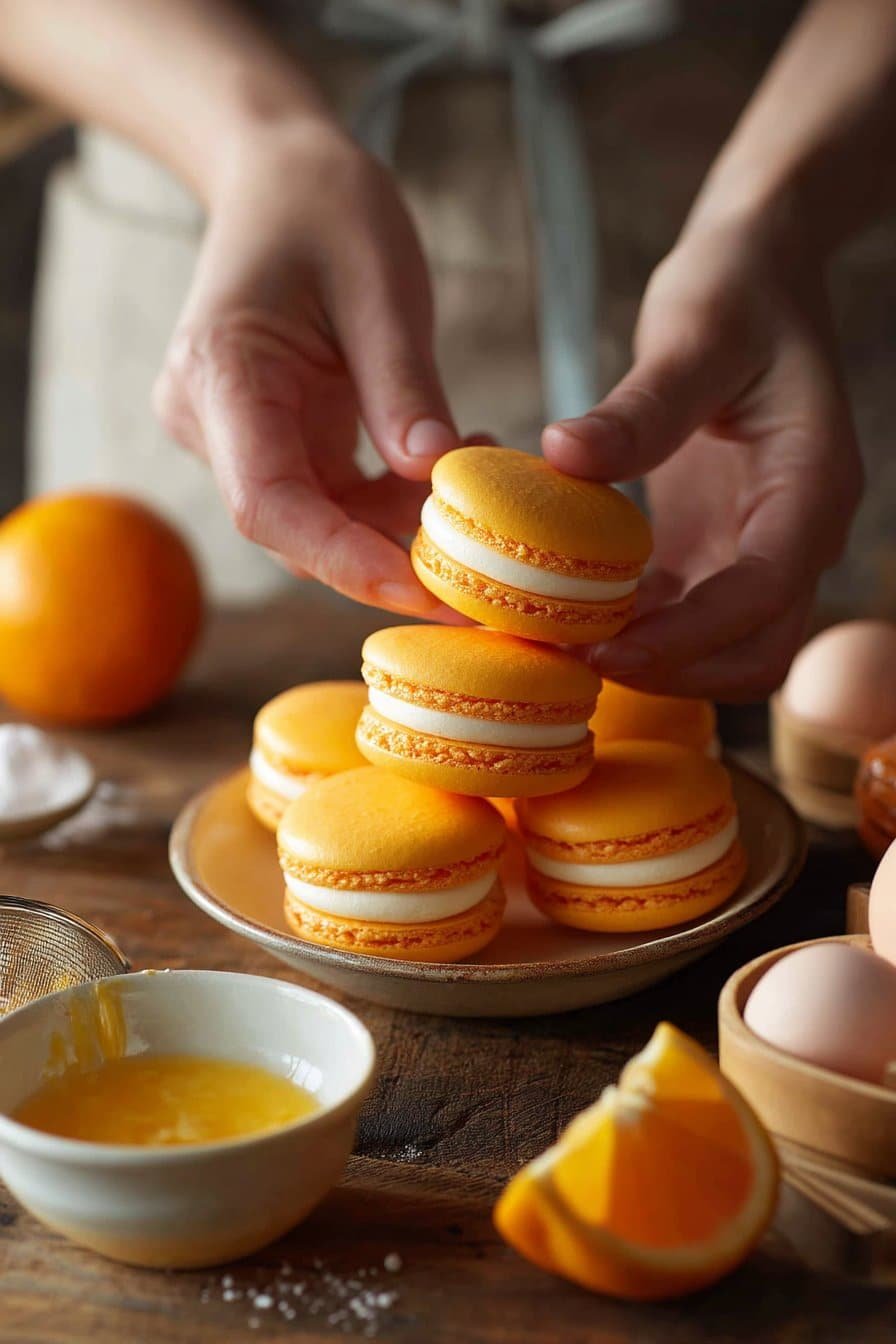
Instructions Process of Mandarin Orange Macarons
The filling for these Mandarin Orange Macarons comes together like a classic buttercream with a bright twist. You’ll beat room-temperature unsalted butter until it’s pale and fluffy, then slowly add powdered sugar so it stays smooth, not grainy. From there, in goes the vanilla bean paste, finely grated mandarin orange zest, and fresh mandarin orange juice—add the juice a little at a time so the buttercream doesn’t turn runny. If it does look too soft, pop the bowl in the fridge for 10–15 minutes, then whip it again until thick and spreadable. When your shells are baked and cooled, you’ll pipe or spread a small dollop of the mandarin buttercream onto one macaron shell and gently sandwich it with another, giving them a quick twist so the filling spreads just to the edges without oozing out.
Make-Ahead & Storage
Mandarin Orange Macarons are actually one of those desserts that taste better the next day, so they’re perfect for making ahead. Once your filled macarons have rested in the fridge for at least 12–24 hours, the shells absorb a bit of moisture from the mandarin orange buttercream and become wonderfully tender and chewy. To store, place them in a single layer in an airtight container, or use parchment between layers to prevent sticking and smudged tops. Keep them in the refrigerator for up to 4–5 days. Before serving, let the Mandarin Orange Macarons sit at room temperature for about 15–20 minutes so the citrus flavor and buttercream texture can fully shine.
If you love to plan ahead, you can store the elements separately. Unfilled shells keep well in an airtight container at room temperature for 2 days, or in the fridge for up to 1 week. For longer storage, freeze the shells in a flat, well-sealed container for up to 2 months, then thaw them (still covered) in the fridge to avoid condensation on the delicate tops. The mandarin orange buttercream can be made up to 5 days ahead and stored in the fridge; just bring it back to cool room temperature and re-whip briefly if it looks firm or separated. Filled Mandarin Orange Macarons also freeze beautifully for about 1 month—just freeze them in a single layer until solid, then transfer to a container. Thaw in the refrigerator overnight and bring to room temperature before serving, and nobody will guess you didn’t make them that morning.
Best Ingredients & Party Variations
For the best Mandarin Orange Macarons, quality ingredients matter more than fancy equipment. Choose super-fine almond flour (often labeled as “almond meal, blanched & finely ground”) so your shells bake up smooth, not speckled. Sift your almond flour and powdered sugar at least twice to avoid lumpy tops. Use aged egg whites at room temperature so they whip into a strong, glossy meringue; I usually crack my eggs the day before and loosely cover the whites in the fridge. For flavor, go for fresh mandarin orange zest and juice—bottled juice tastes flat and can dull that bright citrus snap. And when it comes to color, always use gel food coloring, not liquid, so you don’t throw off the batter consistency.
Once you’ve mastered the base Mandarin Orange Macarons, they turn into the most charming little party showpieces. For a birthday, roll just the buttercream edges in sparkling sugar or finely chopped candied orange peel for a jeweled rim. For a brunch spread, pipe a tiny dot of mandarin buttercream on one shell, add a sliver of dark chocolate ganache or a micro-thin slice of candied mandarin, then top with another shell for a layered boutique look. You can also tint half the shells a soft vanilla-beige and leave half orange, then alternate them on a platter beside something like lemon bars or vanilla cupcakes for a citrus dessert bar. For holidays, add a whisper of ground cardamom or ginger to the shells, or swap half the mandarin juice with cranberry juice for a deeper, festive hue—just keep the total liquid the same to protect that classic macaron texture.
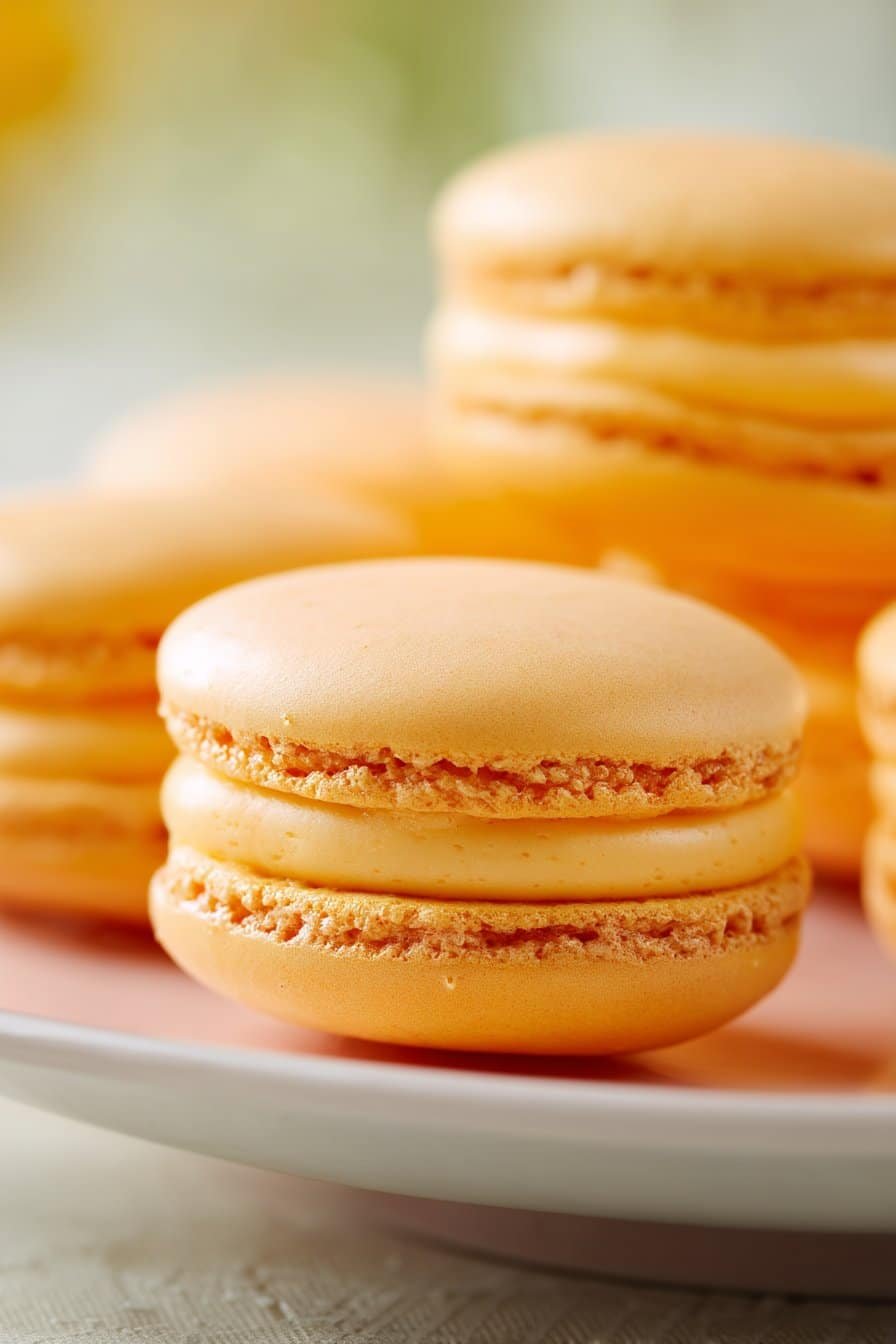
Serving of Mandarin Orange Macarons
Conclusion
If you’ve made it this far, I hope you’re feeling inspired, a little more confident, and maybe already preheating your oven. There’s something almost magical about the quiet focus of piping shells, waiting for those little feet to appear, and then sandwiching them together into tiny bites of citrusy joy. These mandarin orange macarons are the kind of treat that turns an ordinary afternoon into a memory—and I truly believe the real sweetness comes from the time and care you put into them.
Whether you’re baking for a birthday, a holiday, or just a cozy Sunday at home, this recipe has a way of bringing people closer. There’s always that shared pause before the first bite, the delighted crunch, the soft chew, and then the “Wait, you made these?” moment. Don’t worry if your first batch isn’t perfect—each tray is a little lesson, and every attempt is worth celebrating.
I’d love for you to grab your whisk, zest those oranges, and give this recipe a try. For more delicious recipes like this, follow us on social media!
What gives Mandarin Orange Macarons their signature flavor?
The signature flavor in Mandarin Orange Macarons comes from **fresh mandarin orange zest and juice** in the buttercream filling. The zest brings bright, fragrant citrus oils, while the juice adds a gentle tang that cuts through the sweetness. Together they create a sweet, floral, citrusy note that feels lighter than regular orange. For the best flavor, use freshly squeezed mandarin juice rather than bottled. If your mandarins are very tart, you can add a teaspoon of powdered sugar to the filling to balance the acidity.
Why do the egg whites need to be aged before making macarons?
Aging egg whites for about 24 hours helps some of the moisture evaporate, which makes them whip into a more stable meringue. A stronger meringue means smoother shells, better “feet,” and fewer cracks in your Mandarin Orange Macarons. It also makes the batter easier to control during the folding stage. To age them safely, separate the egg whites, cover, and refrigerate, then bring them back to room temperature before whipping. You can skip the aging in a pinch, but the results are less predictable.
How should I store Mandarin Orange Macarons and can I make them ahead?
Mandarin Orange Macarons actually taste better the next day, after they “mature” in the fridge. Once filled, place them in a single layer (or separated by parchment) in an airtight container and refrigerate for 24 hours. This rest lets the citrus buttercream gently soften the shells, giving you that classic crisp-outside, chewy-inside texture. They keep well in the fridge for up to 4–5 days. For longer storage, you can freeze filled macarons for up to 1 month, then thaw in the fridge before serving.
Recipe
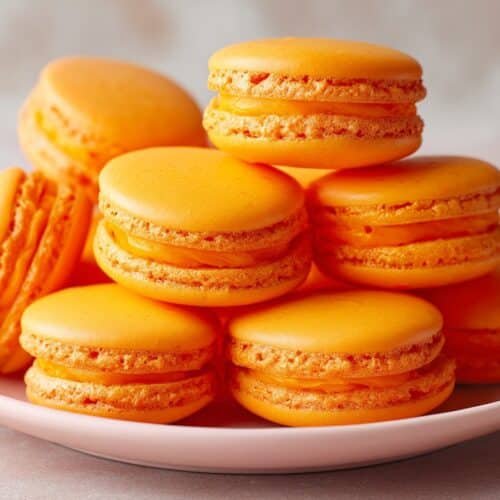
Mandarin Orange Macarons
Ingredients
Ingredients
- 85 g almond flour
- 150 g powdered sugar
- 90 g egg whites room temperature and aged
- 80 g granulated sugar
- Orange gel food coloring
- 115 g unsalted butter room temperature
- 135 g powdered sugar
- 1 tsp vanilla bean paste
- 1 tsp mandarin orange zest
- 2 tbsp mandarin orange juice freshly squeezed
Instructions
- Line two baking sheets with parchment paper, making sure the paper lies flat, and set aside.
- Sift the almond flour and 150 g powdered sugar together through a mesh sieve, discarding any large bits. Repeat the sifting once more and set aside.
- In a large mixing bowl, beat the egg whites on medium speed until they look frothy, like cappuccino foam.
- Gradually add the granulated sugar in three additions while beating on high speed until soft peaks form.
- Add a small amount of orange gel food coloring and continue beating until the meringue forms stiff, glossy peaks.
- Gently fold half of the almond flour mixture into the meringue with a spatula until mostly combined.
- Add the remaining almond flour mixture and continue folding in a gentle figure-eight motion until the batter flows off the spatula in a smooth ribbon that slowly disappears back into itself.
- Transfer the batter to a piping bag fitted with a round tip. Pipe 1-inch circles onto the prepared baking sheets, spacing them about 1 inch apart.
- Firmly tap the baking sheets on the counter several times to release any air bubbles from the batter.
- Let the piped shells rest at room temperature for 30 to 60 minutes, until the tops are dry to the touch and no longer sticky.
- Heat the oven to 300°F.
- Bake one tray at a time on the middle rack for 15 to 16 minutes, until the shells have developed feet and release cleanly from the parchment when gently lifted.
- Allow the macaron shells to cool completely on the baking sheets before filling.
- For the buttercream, beat the unsalted butter on medium-high speed until light and creamy.
- Gradually add 135 g powdered sugar, mixing on low to medium speed until smooth and fully combined.
- Beat in the vanilla bean paste and mandarin orange zest until evenly distributed.
- Add the mandarin orange juice 1 teaspoon at a time, mixing until the buttercream is smooth and thick yet pipeable.
- Transfer the buttercream to a piping bag fitted with an open star tip or round tip.
- Match the cooled macaron shells in pairs by size. Flip one shell of each pair over and pipe a small dollop of mandarin buttercream in the center, leaving a narrow border around the edge.
- Gently place the second shell on top and twist slightly to spread the filling to the edges without squeezing it out.
- Arrange the filled macarons in a single layer in an airtight container and refrigerate for at least 24 hours to mature before serving. Let them sit at room temperature for about 15 minutes before enjoying.
Notes
- Proper macaronage is key: stop folding the batter as soon as it flows in a slow, continuous ribbon; overmixing can cause flat shells.