The Memory Behind This Treat
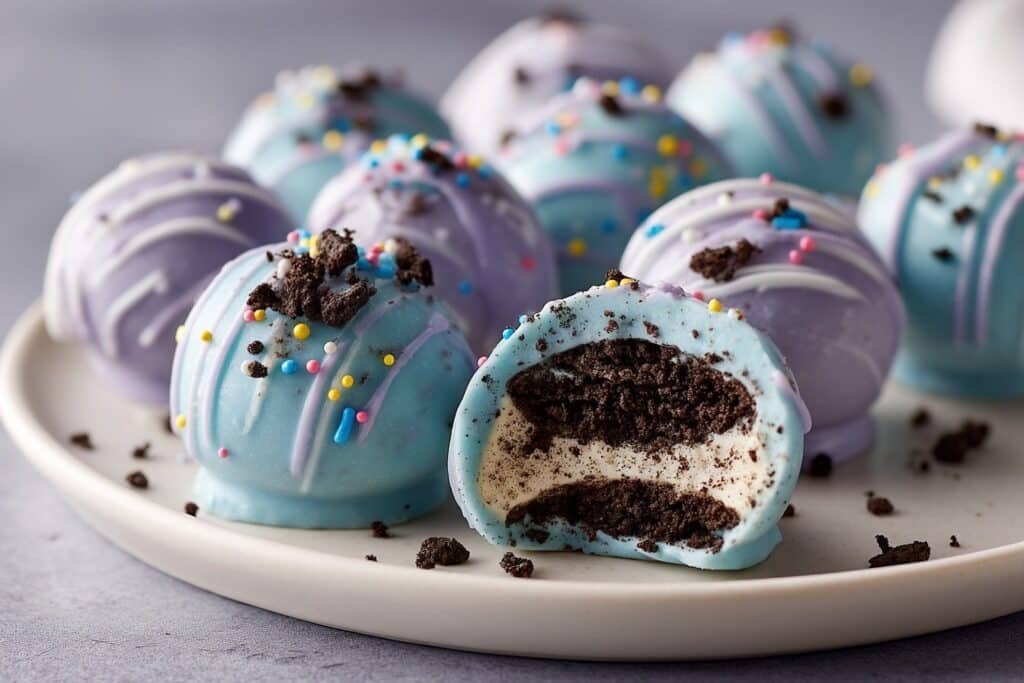
The first time I made Easter Egg Oreo Balls, my kitchen looked like a pastel tornado had blown through. I had bowls of melted candy in soft pink, mint, and buttery yellow lined up like paint pots, and my kids were perched on stools with spoons in hand, absolutely vibrating with sugar-fueled excitement. We had decided that year to skip the store-bought Easter candy and make our own “candy shop” at home. Somewhere between rolling the Oreo mixture into wobbly little eggs and arguing over who got to use the blue drizzle, I realized this recipe wasn’t just easy—it was a memory-maker. The Oreo-and-cream-cheese smell, rich and chocolatey, made the whole kitchen feel warm and cozy, even without turning the oven on.
These Easter Egg Oreo Balls actually started as a happy accident. I had leftover Oreos from testing a cookies and cream cheesecake recipe and a half-open bag of pastel candy melts from decorating a spring sugar cookie batch. I didn’t want to waste them, so I mashed the Oreos with cream cheese like I would for classic Oreo truffles, but this time I shaped them into eggs for a friend’s Easter brunch. They disappeared from the dessert table faster than the lemon bars and carrot cake, and more than one person quietly asked if I’d bought them from a bakery. Now they’ve joined our regular holiday lineup alongside my layered no-bake chocolate cheesecake and fudgy brownie bites, and every Easter, those messy little decorating bowls come out again, ready for new memories—and usually a few sticky fingerprints on the fridge handle.
How To Make It (Mix & Ingredients)
To start your Easter Egg Oreo Balls, you only need 3 main ingredients: Oreo cookies, cream cheese, and pastel candy melts. Crush the Oreo cookies into very fine crumbs—either in a food processor or in a zip-top bag with a rolling pin. You want the texture to look like potting soil, with no big chunks left; this helps the mixture hold together without cracking. In a medium bowl, mix the Oreo crumbs with softened cream cheese using a spatula or clean hands. It will look too soft at first, but keep going until it turns into a thick, uniform “dough” that you can pinch and shape.
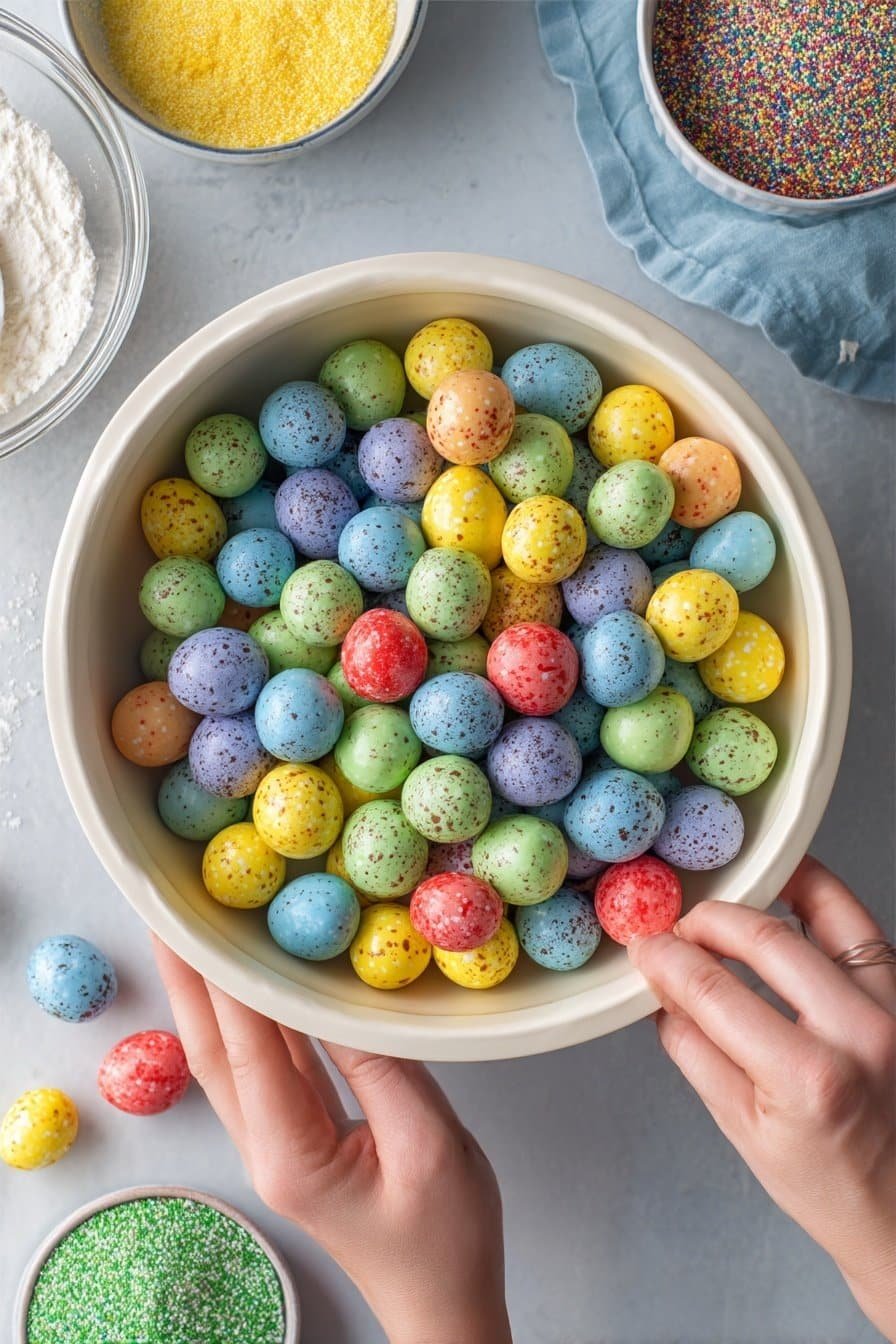
Instructions Process of Easter Egg Oreo Balls
Once your mixture is smooth, scoop out small portions (about 1 tablespoon each) and roll them into ovals, gently pressing the tops and bottoms to create that classic egg shape. If the mixture feels sticky, pop the bowl in the fridge for 10–15 minutes to firm up before shaping. Line a baking sheet with parchment paper, and arrange your Oreo “eggs” in a single layer so they’re not touching. Freeze them for 20–30 minutes; this step is key so they don’t fall apart when you dip them. Meanwhile, melt your pastel candy melts in separate bowls, microwaving in 20–30 second bursts and stirring until silky smooth.When your Easter Egg Oreo Balls are firm and the candy melts are ready, it’s time to dip and decorate. Use a fork or dipping tool to lower each egg into the melted candy, gently tapping off the extra coating on the side of the bowl. Lay them back on the parchment and immediately add sprinkles, edible glitter, or drizzle a contrasting color on top before the coating sets. If you’d like a mix of textures, you can roll a few in finely crushed Oreos or colored sugar as well. Let them set at room temperature or chill them in the fridge for a quicker finish, just like you would with simple truffles or no-bake cookie balls.
Make-Ahead & Storage
Easter Egg Oreo Balls are a dream dessert for planners because they’re perfectly make-ahead friendly. You can prepare the Oreo and cream cheese mixture, shape them into eggs, and chill them on a parchment-lined baking sheet for up to 2 days before dipping. Just cover the tray tightly with plastic wrap so they don’t dry out or absorb fridge odors (looking at you, leftover garlic pasta). When you’re ready to decorate, let the chilled eggs sit at room temperature for 5–10 minutes so the candy coating doesn’t crack from extreme temperature contrast. This is especially helpful if you’re prepping a big Easter spread with things like carrot cake or mini cheesecakes and want dessert done in stages.
Once your Easter Egg Oreo Balls are fully dipped and the candy coating has set, transfer them to an airtight container in a single layer. If you need to stack them, separate layers with parchment or wax paper so the decorations don’t smudge. They’ll keep in the refrigerator for about 5–7 days, and the texture actually improves slightly after the first day as the centers settle into that rich, truffle-like bite. For longer storage, you can freeze them for up to 2 months: freeze on a tray until solid, then move to a freezer bag or container. Thaw in the fridge overnight before serving, and if a little condensation appears on the candy coating, just gently blot with a paper towel before putting them out on your Easter dessert table.
Best Ingredients & Party Variations
For the very best Easter Egg Oreo Balls, start with classic Oreo cookies, not the thin or double-stuf versions. The regular stuffing gives you the right balance of moisture once it mixes with the softened cream cheese. Use full-fat cream cheese from a block (not the tub) so your eggs hold their shape and slice cleanly when bitten. For coating, choose good-quality candy melts in soft Easter pastels—pale pink, lavender, butter yellow, and mint. If your candy melts seem too thick, stir in 1–2 teaspoons of neutral oil to get that smooth, shiny dip.
When you want to dress these up for a party, think in themes and colors. For a classic Easter brunch dessert board, make a mix of pastel-coated Easter Egg Oreo Balls and decorate with tiny stripes, dots, or zigzags, just like real dyed eggs. Kids love a “speckled egg” version—dip in white or pale blue, then flick on a little cocoa powder mixed with vanilla extract using a clean brush. For a more grown-up spread, try a cookies-and-cream bar look: drizzle dark chocolate over white-coated eggs and top with a light sprinkle of crushed Oreos. You can even match the colors to your table decor or other treats like lemon bars or carrot cake cupcakes so everything feels like one big, coordinated Easter party.
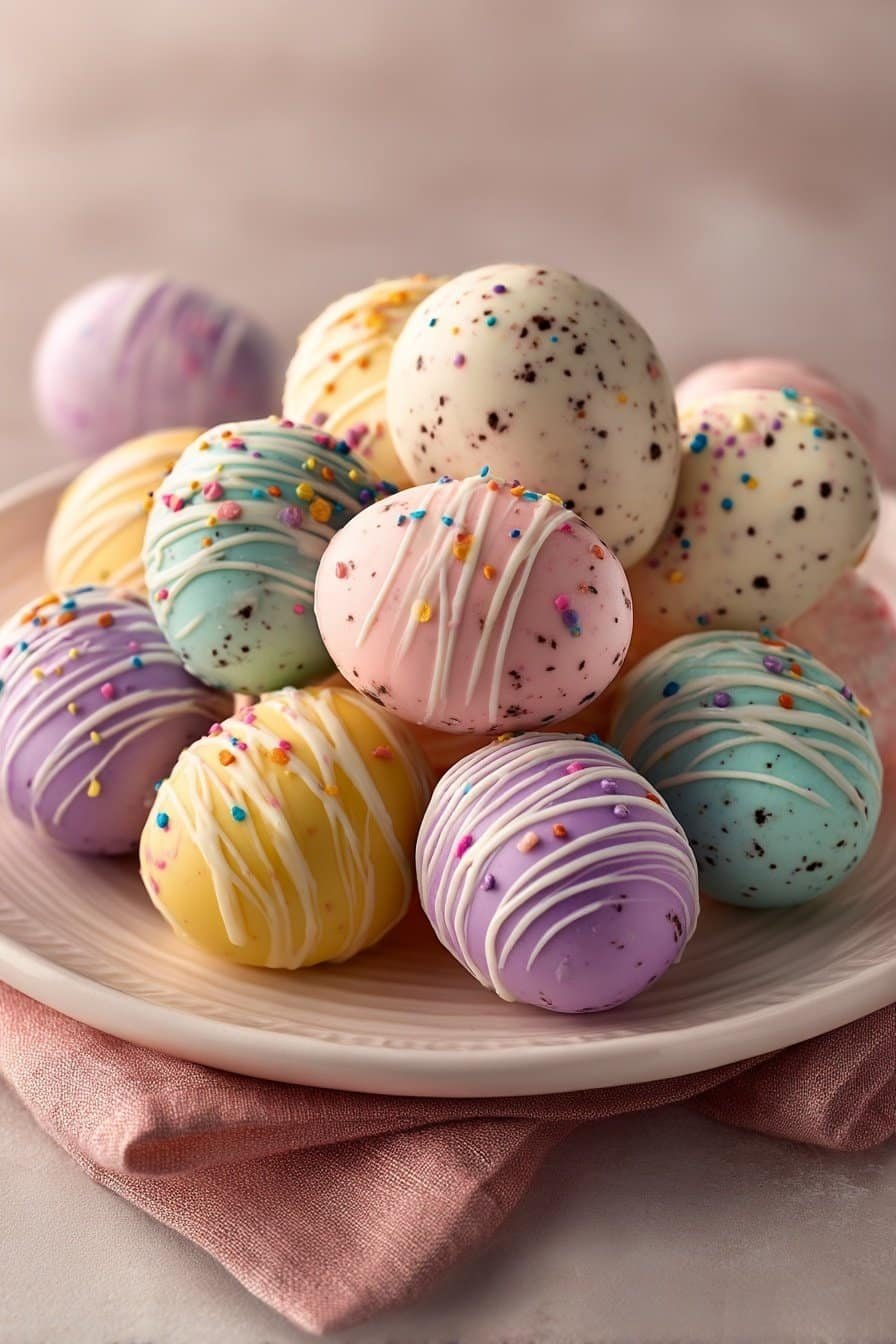
Serving of Easter Egg Oreo Balls
Conclusion
Every time I make these Easter Egg Oreo Balls, I’m reminded that the sweetest moments usually come with chocolate-smeared fingers and a kitchen full of laughter. This is one of those playful, low-stress recipes that somehow turns an ordinary afternoon into something a little magical—whether you’re decorating with kids, sharing a plate after brunch, or sneaking one from the fridge late at night.
I hope this recipe becomes one of those traditions you come back to year after year. It’s simple, forgiving, and endlessly customizable, which makes it perfect for family gatherings, classroom treats, or just a fun baking day for you. Most of all, it’s a delicious excuse to slow down, get a little creative, and make something beautiful together.
If these Easter Egg Oreo Balls brought a bit of joy to your kitchen, I’d love for you to try them, share them, and make them your own.
For more delicious recipes like this, follow us on social media!
What exactly are Easter Egg Oreo Balls?
Easter Egg Oreo Balls are a simple no-bake treat made from crushed Oreo cookies mixed with softened cream cheese, then shaped into cute little egg shapes. Once the “eggs” are firm, you dip them in melted pastel candy melts to give them that Easter-egg shell look. They’re finished with sprinkles, drizzles, or edible glitter for a fun, festive touch. The center is rich, fudgy, and truffle-like, while the outside has a sweet, snappy coating. They’re perfect for Easter dessert tables, gifting, or tucking into baskets.
Can I use different Oreo flavors in Easter Egg Oreo Balls?
You can absolutely swap in different Oreo flavors, and it’s a great way to customize your Easter Egg Oreo Balls. Golden Oreos give a vanilla, cake-like flavor, while flavored varieties (like mint or carrot cake, if you find them) add their own twist. Just keep the cookie count the same so the mixture doesn’t get too soft or too dry. If you use Oreos with extra filling, you may need 1–2 extra cookies to balance the cream cheese. Always check the texture: it should be soft and truffle-like, but able to hold an egg shape without oozing.
How far in advance can I make Easter Egg Oreo Balls and how should I store them?
You can make Easter Egg Oreo Balls up to 3–4 days ahead and store them in the refrigerator. Place them in a single layer in an airtight container, or separate layers with parchment so the coatings don’t stick together. They stay freshest and prettiest when kept chilled, but they can sit out at room temperature for a couple of hours when serving. For longer storage, freeze them for up to 2 months, then thaw in the fridge overnight. Add any delicate decorations like luster dust or extra drizzle after thawing so they stay neat.
Recipe

Easter Egg Oreo Balls
Ingredients
Ingredients
- 36 Oreo cookies
- 8 oz cream cheese softened
- 16 oz pastel candy melts assorted colors
- 1/4 cup assorted sprinkles
- 1 tbsp edible glitter optional
- 2 tbsp additional crushed Oreos for garnish optional
Instructions
- Line a baking sheet with parchment paper and set aside.
- Add the Oreo cookies to a food processor and process into very fine crumbs.
- Transfer the Oreo crumbs to a medium mixing bowl.
- Add the softened cream cheese to the crumbs and mix with a spatula or clean hands until a smooth, thick dough forms with no visible streaks.
- Scoop about 1 tbsp of the mixture for each ball and shape into an oval egg shape, gently pressing the ends to resemble eggs.
- Place each shaped egg on the prepared baking sheet in a single layer without touching.
- Freeze the tray for 20 to 30 minutes, until the eggs are firm enough to handle without crumbling.
- While the eggs chill, place each color of candy melts in separate microwave-safe bowls.
- Microwave one bowl of candy melts at a time in 20 to 30 second intervals, stirring between each interval, until completely melted and smooth.
- Remove a few Oreo eggs from the freezer at a time, keeping the rest chilled so they stay firm for dipping.
- Using a fork or dipping tool, lower one Oreo egg into the melted candy, turning to coat completely.
- Lift the coated egg out, gently tap the fork on the edge of the bowl to remove excess coating, and slide it back onto the parchment-lined baking sheet.
- Immediately decorate the coated egg with sprinkles, glitter, or a pinch of crushed Oreos before the candy sets.
- Repeat the dipping and decorating process with the remaining eggs, reheating candy melts in short bursts if they begin to thicken.
- Optional: For drizzle accents, melt a contrasting color of candy melts, transfer to a small piping bag or zip-top bag with the corner snipped off, and drizzle over the set eggs.
- Let the Easter Egg Oreo Balls set at room temperature for 20 to 30 minutes or refrigerate for 10 to 15 minutes until the coating is firm.
- Store the finished Oreo balls in an airtight container in the refrigerator until ready to serve.
Notes
- Soften the cream cheese to room temperature so it mixes smoothly with the Oreo crumbs.
- If the mixture is too soft to shape, refrigerate the bowl for 10 to 15 minutes before forming the eggs.
- Keep the un-dipped eggs chilled and work in small batches to prevent them from getting too soft while dipping.
- You can use white chocolate or almond bark instead of candy melts if desired, but add a little vegetable oil for smoother dipping.
- Store Oreo balls in the refrigerator for up to 5 days or freeze for up to 2 months; thaw in the fridge before serving.